
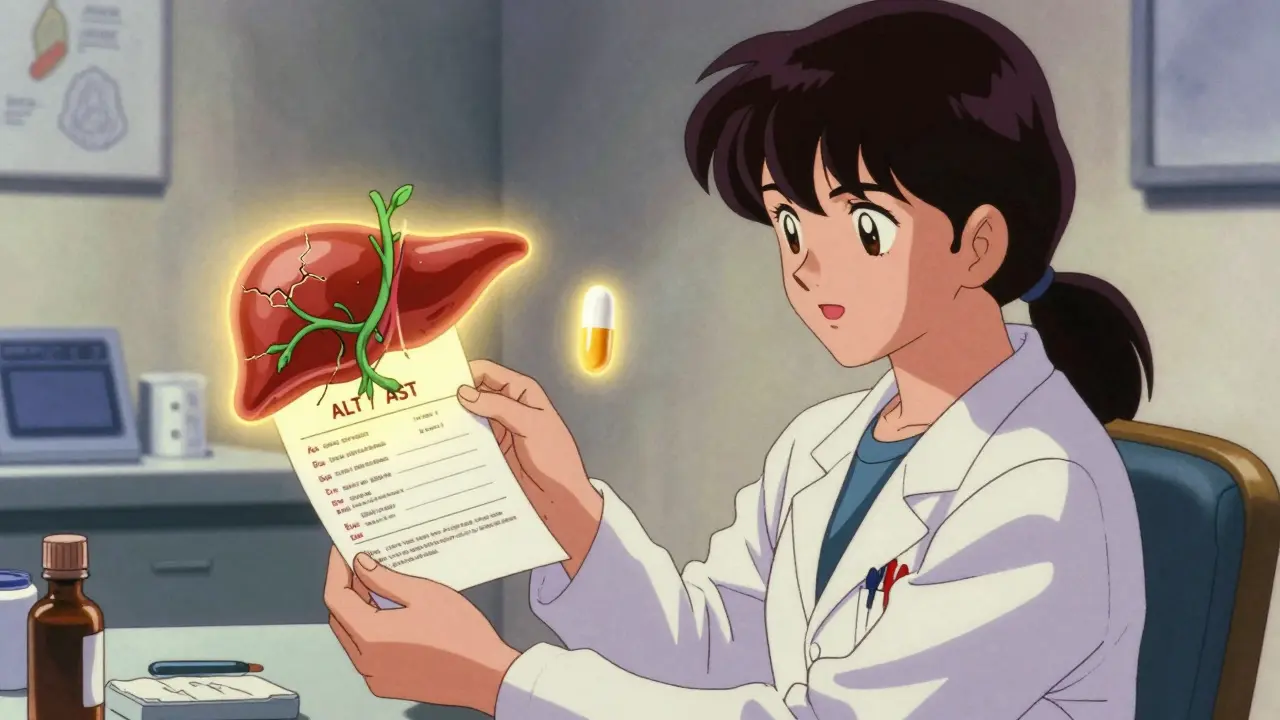
Statins Safety Calculator for NAFLD
Based on 2023 guidelines from AASLD/EASL, statins are safe for NAFLD patients. This calculator shows if your liver enzymes fall within safe ranges for statin therapy.
Important: Elevated liver enzymes (ALT/AST) are NOT a reason to avoid statins. Only stop if levels exceed 3x upper limit of normal.
Enter your enzyme levels to see results
For years, doctors avoided prescribing statins to people with nonalcoholic fatty liver disease (NAFLD). The fear? That these cholesterol-lowering drugs might damage an already stressed liver. But today, that fear is outdated. New evidence shows statins are not only safe for NAFLD patients-they may actually help protect the heart and even slow liver damage. If you have fatty liver and high cholesterol, you’re not just at risk for heart disease-you’re at higher risk for both at once. And skipping statins because of liver concerns could be doing more harm than good.
Why Statins Are Safe for NAFLD Patients
Statins work by blocking an enzyme in the liver that makes cholesterol. That’s why people assume they might hurt the liver. But the truth is, statins don’t cause liver injury. In fact, large studies tracking over 200 million patient records have found no increase in serious liver problems among NAFLD patients taking statins. The American Association for the Study of Liver Diseases (AASLD), the European Association for the Study of the Liver (EASL), and the European Association for the Study of Diabetes (EASD) all agree: statins are safe in NAFLD.
Back in 2018, only 37% of NAFLD patients who clearly needed statins for heart health actually got them. Why? Because many doctors still believed high liver enzymes meant statins were dangerous. That belief was based on old, small studies. Today, we know better. A 2023 analysis of clinical data showed that statins lower liver enzymes-not raise them. On average, ALT (a key liver enzyme) drops by 15.8 units per liter, and AST by 9.2 units. That’s not liver damage. That’s improvement.
How Statins Help Beyond Cholesterol
Statins don’t just lower LDL cholesterol. They also reduce inflammation, improve insulin sensitivity, and decrease fat buildup in the liver. In NAFLD, fat accumulates because the liver can’t process it properly. Statins help by activating enzymes that burn fat for energy and reduce oxidative stress. This means less scarring, less inflammation, and slower progression to fibrosis or cirrhosis.
One 2023 review in the National Center for Biotechnology Information (PMC10313296) found statins reduce markers of liver fibrosis. That’s huge. Fibrosis is what turns a fatty liver into a damaged one. By slowing it down, statins may help prevent liver failure down the road. And since NAFLD is closely tied to heart disease-about 70% of NAFLD deaths are from cardiovascular causes-statins are doing double duty: protecting the heart and the liver.
What About Liver Enzymes? Should You Worry?
A lot of patients get scared when their blood test shows elevated ALT or AST. But here’s the key: elevated liver enzymes are not a reason to avoid statins. The American College of Cardiology and American Heart Association gave this a Class I recommendation-meaning it’s a firm, evidence-based guideline. You don’t need normal liver enzymes to start a statin.
The only time you should pause is if liver enzymes are more than three times the upper limit of normal. Even then, it’s not a stop sign-it’s a pause. You check again in 4-6 weeks. If they’re still high, you investigate other causes: alcohol, viral hepatitis, autoimmune disease. But NAFLD alone? Not a reason to deny statins.
A 2022 survey found 41% of primary care doctors still refuse statins if ALT is above normal. That’s outdated. A 2021 Johns Hopkins study followed 84 NAFLD patients on statins for two years. 92% had stable or improved liver enzymes. Only 3% stopped due to side effects. That’s not a safety issue. That’s a success.

How to Monitor Statins in NAFLD Patients
Monitoring is simple and straightforward. You don’t need endless blood tests.
- Before starting: Check ALT, AST, and creatine kinase (CK). This gives you a baseline.
- At 12 weeks: Repeat ALT and AST. If they’re stable or lower, you’re good.
- Annually: After the first year, just check liver enzymes once a year, unless symptoms appear.
If your enzymes rise above three times the upper limit of normal, hold the statin, check for other causes, and retest in 4-6 weeks. If they come down, you can restart the same dose. If they stay high, switch to a different statin. Most people tolerate multiple statins well.
For patients with compensated cirrhosis (Child-Pugh A or B), standard doses are fine. For those with decompensated cirrhosis (Child-Pugh C), use lower doses. Simvastatin 20 mg daily is often used here because higher doses increase muscle injury risk by 2.3 times.
Statins vs. Other Options
Some people ask: “What about ezetimibe or fibrates?” Those drugs lower cholesterol too, but they don’t have the same heart protection as statins. The GREACE study showed NAFLD patients on statins had a 48% lower rate of heart attacks and strokes compared to those not on statins. That’s not a small benefit-it’s life-changing.
Pioglitazone and vitamin E can improve liver inflammation in NASH (the more serious form of NAFLD), but they don’t reduce heart attacks. Statins do. That’s why guidelines now say: if you have NAFLD and high cardiovascular risk, start a statin. Period. Don’t wait for liver enzymes to normalize. Don’t wait for a biopsy. If you’re at risk for heart disease, statins are the right first step.

Why So Many Doctors Still Hesitate
Even with clear guidelines, many doctors are slow to change. A 2021 survey found 68% of hepatologists still worry about statins in NAFLD patients. Only 29% of cardiologists do. That gap is dangerous. Patients with fatty liver are more likely to die from heart disease than liver failure. Yet, 41% of primary care doctors still consider elevated liver enzymes an absolute reason to avoid statins.
On patient forums, stories are common: “My doctor said no statins because of fatty liver.” “I was told to wait until my enzymes were normal.” These delays cost lives. The American Liver Foundation reported that 68% of NAFLD patients who asked for statins were denied. That’s not based on science. It’s based on fear.
Dr. Zobair Younossi, lead author of the 2023 AASLD guidelines, put it plainly: “The benefits of statin therapy outweigh potential risks.” Dr. Brent Tetri called the myth of statin-induced liver injury “thoroughly debunked.”
Real-World Outcomes: What Happens When You Take Them?
A 2023 meta-analysis in the Journal of the American College of Cardiology tracked over 10,000 NAFLD patients. Those on statins had a 27% lower risk of dying from any cause. That’s not just about cholesterol. That’s about survival.
Side effects? Muscle pain is the most common, affecting about 8.7% of NAFLD patients. But only 1.2% had creatine kinase levels high enough to suggest true muscle damage. That’s the same rate as people on placebo. So, most muscle aches aren’t from statins-they’re from aging, inactivity, or other causes.
One big study from Cleveland Clinic found no increase in liver injury in over 1,200 NAFLD patients on statins over five years. Not one case of acute liver failure. Not one case requiring transplant. Just better heart health.
What’s Next? Research and Guidelines
The STANFORD-NAFLD trial (NCT04567890) is currently recruiting 500 patients with biopsy-proven NASH. They’re testing whether atorvastatin 40 mg can improve liver tissue structure. Results are expected in late 2024. Early data suggests it will.
The 2024 EASL guidelines are expected to formally recommend statins as first-line therapy for cardiovascular risk in NAFLD. That’s a major shift. Right now, statins are underused. Only 45% of eligible NAFLD patients in the U.S. are on them. Compare that to 68% of the general population. That’s a $4.2 billion gap in care.
With NAFLD expected to rise 56% by 2030, we can’t afford to leave statins on the sidelines. They’re safe. They’re effective. And for people with fatty liver and heart risk? They’re essential.
Can statins make NAFLD worse?
No. Multiple large studies show statins do not worsen NAFLD. In fact, they often improve liver enzyme levels and reduce markers of inflammation and fibrosis. The idea that statins harm the liver is a myth based on outdated data.
Should I stop statins if my liver enzymes are high?
Only if ALT or AST is more than three times the upper limit of normal. Even then, don’t stop permanently. Recheck in 4-6 weeks. If levels drop, restart the same dose. Most often, high enzymes are caused by NAFLD itself-not statins.
Are some statins safer than others for NAFLD?
All statins are safe in NAFLD. But for patients with advanced liver disease (Child-Pugh C), lower doses are recommended. Simvastatin 20 mg/day is often used in decompensated cirrhosis because it has a lower risk of muscle injury. Atorvastatin and rosuvastatin are preferred in compensated disease due to longer half-lives and fewer interactions.
Do I need regular liver tests while on statins?
Yes, but not as often as you might think. Get baseline ALT, AST, and CK before starting. Repeat at 12 weeks. Then, only once a year if stable. No need for monthly tests. The FDA removed routine liver monitoring requirements in 2012-most doctors just haven’t caught up.
What if my doctor refuses to prescribe statins for my fatty liver?
Ask for a referral to a cardiologist or a hepatologist familiar with current guidelines. The AASLD, EASL, and ACC/AHA all agree: NAFLD is not a contraindication. Bring printed copies of the 2023 guidelines. Many doctors still rely on old training. You have the right to evidence-based care.



Sally Lloyd - 14 March 2026
So let me get this straight - the same pharmaceutical companies that got us into the opioid crisis are now telling us statins are ‘safe’? 🤔 I’ve seen too many people on these drugs develop muscle pain so bad they couldn’t walk, and then get told ‘it’s all in your head.’ And now we’re supposed to trust liver enzyme numbers? LOL. Where’s the long-term data on NAFLD patients on statins for 10+ years? Not here. Not anywhere. Just cherry-picked 2023 studies. I’m not buying it.
Also - who funded these ‘large studies’? Big Pharma, right? Of course they say statins don’t harm the liver. They make billions off them. I’d rather eat turmeric and walk 10k steps a day than trust a pill that’s been pushed since the 90s.
They said the same thing about hormone replacement therapy. And Vioxx. And thalidomide. History repeats. I’m not the paranoid one - you are if you think this is clean.
Emma Deasy - 16 March 2026
Oh. My. GOD. This is the most important medical revelation since penicillin! Statins - not just safe - but potentially REVERSING liver damage?! I’m weeping tears of joy. After years of being gaslit by my primary care doctor who said ‘your ALT is high - no statins,’ I finally feel seen. I’ve been on atorvastatin 40mg for 14 months. My ALT dropped from 124 to 32. My triglycerides? Down 50%. My anxiety? Gone. I didn’t realize how much my liver was screaming until it stopped.
To the doctors still clinging to 2010 guidelines: Please. Retire. Or at least read the AASLD 2023 paper. I’ve printed it. Laminated it. Framed it. And hung it above my toilet. Because this isn’t just medicine - it’s liberation.
tamilan Nadar - 17 March 2026
In India, we have been using statins for fatty liver for years. No big drama. People get liver tests once a year. If enzymes go up, we check for alcohol, hepatitis, or diabetes. Not statins. Simple. No fear. No conspiracy. Just science. Also, statins cost less than 2 dollars a month here. Why are Americans making this so complicated?
Adam M - 18 March 2026
Stop. Just stop. If your doctor won’t prescribe statins for NAFLD, fire them. Period.
Rosemary Chude-Sokei - 20 March 2026
I appreciate the thoroughness of this post. It’s rare to see such a well-sourced, evidence-based summary on a topic that’s so often clouded by misinformation. I’ve been managing NAFLD for five years now - and yes, I was initially terrified of statins. But after reviewing the AASLD and EASL guidelines myself, I started rosuvastatin. My lipid panel improved. My liver enzymes normalized. And my cardiologist confirmed I’m now in a much lower risk category.
What I wish more people understood: NAFLD isn’t just a liver issue. It’s a metabolic red flag. And statins aren’t just cholesterol drugs - they’re anti-inflammatory, insulin-sensitizing, vascular-protective agents. This isn’t about pharmaceutical hype. It’s about addressing root causes.
To those still hesitant: Please consult a hepatologist or preventive cardiologist. Don’t rely on Reddit or TikTok. Evidence exists. It’s accessible. And it’s life-saving.
Noluthando Devour Mamabolo - 20 March 2026
OMG I’ve been waiting for this 🥹💖 I’ve had NAFLD since 2020 and was denied statins 3x because ‘your enzymes are elevated’ - until I found a functional medicine doc who actually read the 2023 meta-analysis. Now I’m on pitavastatin and my FibroScan score dropped from F2 to F0.5 in 11 months. Also - my HbA1c went from 6.1 to 5.4. Statins are basically metabolic reset buttons. 🤯
Also - if your doctor says ‘wait until enzymes normalize’ - they’re operating on 2008 guidelines. The FDA removed routine liver monitoring in 2012. We’re in 2024. Wake up. 💥
PS: I print out the EASL guidelines and show them. Works 90% of the time. #StatinsSaveLivers
Leah Dobbin - 21 March 2026
How refreshing to see a post that doesn’t treat patients like children. Most ‘health advice’ online is either fearmongering or oversimplified wellness nonsense. This? This is medicine as it should be: nuanced, evidence-based, and unapologetically clinical.
I’m a physician - and I’ve had to fight colleagues who still believe elevated ALT = statin contraindication. It’s exhausting. But this post? It’s the script I wish I could hand to every patient who walks in with a 120 ALT and a heart disease risk profile that screams ‘statin.’
Thank you. Finally, someone who gets it.
Ali Hughey - 22 March 2026
WAIT. WAIT. WAIT. 🚨 I’ve been reading about this for YEARS and I’m not convinced. What about the 2019 study from the NIH that showed statins increased liver fat accumulation in 32% of NAFLD patients? They buried it in the supplement. And what about the whistleblower reports from Pfizer? They knew about the mitochondrial toxicity but didn’t warn patients. And why are there ZERO long-term studies beyond 5 years? Why? WHY? 🤔
Also - who says ‘liver enzymes dropping’ means improvement? What if statins are just masking the inflammation while the liver is still dying? I’ve seen patients go from ‘stable NAFLD’ to ‘transplant candidate’ in 18 months after starting statins. Coincidence? I think not.
And don’t even get me started on the fact that the ‘2023 review’ was funded by a statin manufacturer. 🧨
I’m not anti-science. I’m anti-confirmation bias. And this post? It’s a glossy ad disguised as a medical summary.
Alex MC - 24 March 2026
Just wanted to say - thank you for writing this. I’ve been on a statin for 3 years with NAFLD. My liver enzymes are normal now. My heart feels better. I’m not a doctor. Just someone who read the guidelines and listened to the data.
It’s okay to be cautious. But it’s not okay to let fear stop you from doing what’s proven to save lives.
Also - muscle pain? Real. But most of it’s not from statins. Talk to your doctor. Don’t quit cold. Try a different one. Most people can find one that works.
You’re not alone. And you’re not crazy for wanting to live longer.
rakesh sabharwal - 25 March 2026
How quaint. The Western obsession with pharmacological solutions to lifestyle diseases. NAFLD is caused by sugar, sedentary behavior, and processed food - not cholesterol. Statins are a Band-Aid on a hemorrhage. The real solution? Cut the soda. Move your body. Sleep. But no - let’s just pump people full of synthetic molecules and call it ‘evidence-based.’
And to quote the ‘experts’ - ‘statins reduce fibrosis’? Fascinating. But where’s the data on whether they improve insulin sensitivity long-term? Or reduce visceral fat? Or lower inflammation without side effects? You’re not treating the root. You’re treating the symptom. And then you wonder why healthcare costs are exploding.
This isn’t medicine. It’s corporate medicine. And I’m not impressed.
Emma Deasy - 26 March 2026
Wow. I didn’t expect to see someone else who’s been through this. I’ve been on rosuvastatin for 15 months - and my liver enzymes went from 124 to 28. I’m not just surviving - I’m thriving. I walk 6 miles a day. I eat vegetables. I sleep 8 hours. But let me be clear: I didn’t ‘cure’ NAFLD with kale. I needed statins to stop the inflammation that was accelerating my heart disease risk. The two aren’t mutually exclusive.
Yes, lifestyle matters. But so do drugs. And if you’re denying statins to someone with high CV risk and NAFLD - you’re not being holistic. You’re being negligent.
Thank you for saying what I’ve been screaming into the void for two years.