
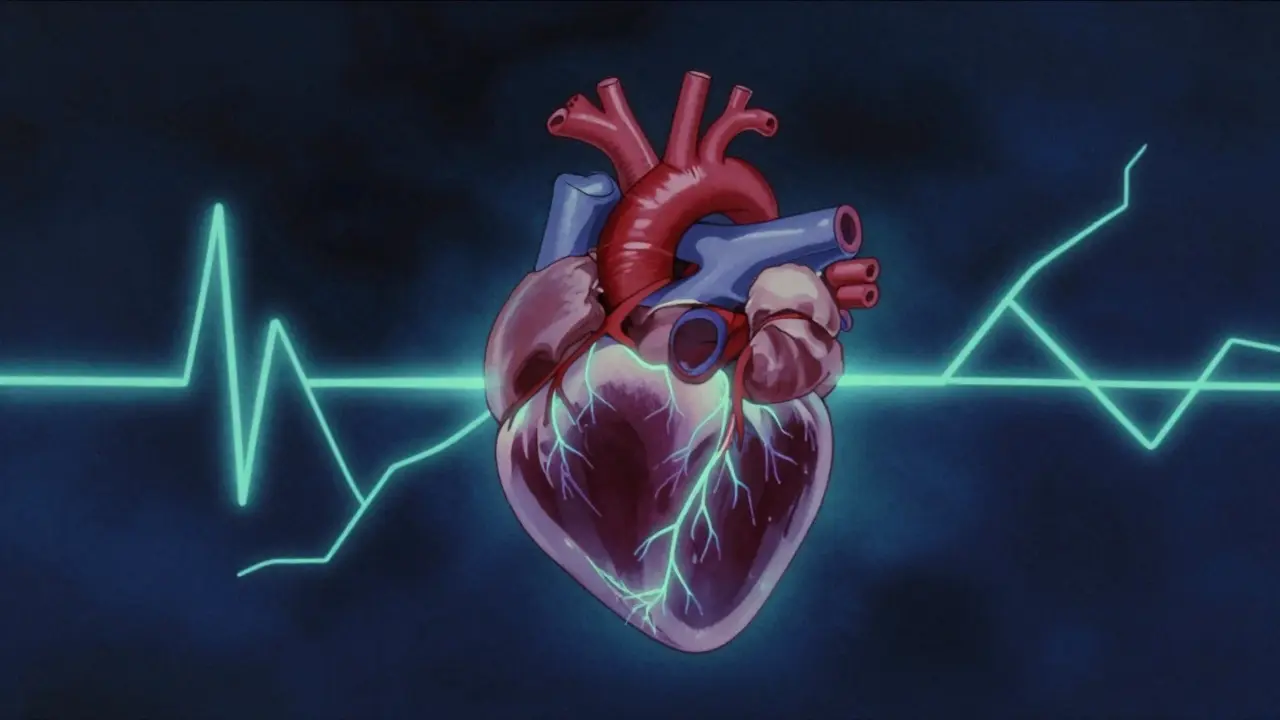
Imagine a heart beating in a steady, rhythmic dance. Now imagine that rhythm stumbling, creating a pause that lasts just a fraction of a second too long. In the medical world, this is known as QT prolongation is a cardiac electrophysiological abnormality where the heart's ventricles take longer than normal to recharge after each beat. While it sounds technical, for someone taking both psychiatric and heart medications, it's a critical safety concern. If the pause becomes too long, it can trigger a chaotic heart rhythm called Torsades de Pointes, which can lead to sudden cardiac arrest.
| QTc Measurement | Clinical Action Required | Risk Level |
|---|---|---|
| 450ms (Men) / 470ms (Women) | Increased monitoring | Low to Moderate |
| > 500ms or > 60ms increase | Medical intervention / Dose adjustment | High |
| > 550ms | Immediate medication discontinuation | Critical |
The Link Between Brain Health and Heart Rhythm
It might seem strange that a pill for schizophrenia or bipolar disorder affects the heart, but many antipsychotics interact with potassium channels in the cardiac cells. When these channels are blocked, the electrical reset of the heart slows down. This is why we look at the QTc interval, which is the QT interval corrected for the patient's heart rate using formulas like Bazett's. Because a fast heart rate naturally shortens the QT interval, correcting it ensures the doctor is seeing the real risk, regardless of whether your heart is racing or slow.
Not all antipsychotics are created equal. Some are like a gentle nudge to the heart's timing, while others are a heavy shove. For example, older "first-generation" drugs often carry higher risks. A classic example is thioridazine, which was so aggressive in prolonging the QT interval (by about 35ms) that it was eventually pulled from the U.S. market. Newer agents, like lurasidone, have a much smaller footprint on cardiac timing, making them a safer bet for people with existing heart conditions.
Comparing Antipsychotic Risk Levels
If you're trying to figure out where a specific medication fits, the CredibleMeds criteria provide a helpful roadmap. They categorize drugs based on how likely they are to cause this specific type of heart rhythm instability.
| Risk Level | Examples of Medications | Typical QTc Impact |
|---|---|---|
| High | Thioridazine, Haloperidol, Ziprasidone | Significant prolongation |
| Moderate | Quetiapine, Risperidone, Iloperidone | 5-15 ms increase |
| Low | Lurasidone, Aripiprazole, Paliperidone | Minimal to no effect |
The Danger of the "Double Hit": Polypharmacy
The risk doesn't just come from one pill. The real danger often lies in polypharmacy-taking multiple medications that all push the heart in the same direction. If you are taking an antipsychotic along with certain cardiac medications, antibiotics, or antidepressants, you are essentially stacking risks. A study from Toulouse University Hospital found that nearly 19% of psychiatric inpatients developed a clinically significant QTc interval, and a staggering 68% of those cases were because the patients were taking multiple QT-prolonging drugs at once.
Think of it like a bridge with a weight limit. One heavy truck (a high-risk antipsychotic) might be fine. But if you add another truck (a cardiac medication) and a few heavy vans (electrolyte imbalances), the bridge is much more likely to collapse. This is why a full medication review is non-negotiable when starting a new psychiatric treatment.

Who Is Most at Risk?
Beyond the medications themselves, your own biology plays a huge role. Certain "red flags" make you more susceptible to QT prolongation. Age is a big one; people over 65 have a significantly higher risk. Biological sex also matters, as women generally have slightly longer baseline QT intervals than men, making them more prone to crossing the danger threshold.
Then there are the "invisible" risks: electrolytes. Your heart relies on a precise balance of minerals to fire correctly. If your potassium levels drop below 3.5 mmol/L or your magnesium falls below 1.8 mg/dL, your heart becomes electrically unstable. This makes it much easier for a medication to trigger an arrhythmia. In fact, over half of the cases where QT prolongation was successfully managed involved fixing these mineral imbalances first.
Balancing Heart Risk Against Mental Health Crisis
You might wonder: if these drugs are risky, why use them? This is where the "U-shaped mortality curve" comes in. While high doses of antipsychotics can increase cardiac risk, having no medication for severe schizophrenia is actually more dangerous. People with untreated severe mental illness face high rates of suicide and accidental death. Research shows that patients using antipsychotics actually have a 40% lower overall mortality rate than those who don't.
The goal isn't to avoid these life-saving medications entirely, but to use them smartly. By choosing a low-risk agent like aripiprazole or lurasidone for someone with a history of heart disease, doctors can treat the mind without endangering the heart. It's about precision, not avoidance.

Practical Steps for Safe Monitoring
If you or a loved one are on these medications, there is a standard safety protocol you should expect. It usually starts with a baseline ECG (electrocardiogram) before the first dose. This tells the doctor where your "normal" is. If you're starting a moderate-to-high risk drug, another ECG should happen within a week of reaching your full therapeutic dose.
For long-term maintenance, an annual heart check is the gold standard. If you notice symptoms like sudden fainting, dizziness, or a feeling that your heart is "skipping beats," don't ignore them. These can be early warnings that your QTc interval is stretching too far. Be sure to mention any new supplements or over-the-counter meds to your pharmacist, as even some common supplements can interfere with heart rhythms.
What exactly is a QTc interval?
The QT interval is the time it takes for your heart's lower chambers (ventricles) to electrically reset after a beat. Since this time changes based on how fast your heart is beating, doctors use a "corrected" version called the QTc. This allows them to see if a medication is slowing down the heart's recharge process regardless of your current heart rate.
Can I stop my medication if my ECG shows a long QT?
Never stop psychiatric medication abruptly, as this can cause severe withdrawal or a relapse of symptoms. Instead, talk to your doctor. They may simply lower the dose, switch you to a low-risk alternative like lurasidone, or give you supplements to fix your potassium levels.
Are all antipsychotics equally dangerous for the heart?
No. There is a huge gradient. Some older drugs like thioridazine cause massive prolongation (up to 35ms), while newer "second-generation" drugs often cause very little change (4-6ms). Many modern antipsychotics are considered very low risk and are safe for most patients.
Why do electrolytes like potassium matter?
Potassium and magnesium act like the "electricity controllers" for your heart. When these levels are too low, the heart cells become "leaky" and slow to reset. This makes the heart much more sensitive to the effects of antipsychotics, turning a moderate risk into a high risk.
How often should I get an ECG?
Generally, you should have one before starting a new medication and again shortly after reaching your full dose. After that, a yearly check-up is usually sufficient unless you have other heart conditions or are taking multiple medications that affect heart rhythm.
Next Steps and Troubleshooting
If you are currently managing a complex medication regimen, here are a few practical moves:
- The Med List Check: Create a comprehensive list of every pill, vitamin, and herbal supplement you take. Take this to both your psychiatrist and your GP.
- Request a Baseline: If you are starting a new antipsychotic and haven't had an ECG in the last year, ask for one. It's a quick, non-invasive test that provides a vital safety baseline.
- Monitor Your Diet: Ensure you're getting enough potassium (found in bananas, spinach, and potatoes) and magnesium, especially if you are taking diuretics (water pills) for blood pressure.
- Symptom Tracking: Keep a log of any "lightheaded" episodes. If you feel a sudden drop in blood pressure or a fluttering heart, document the time and what you were doing; this is invaluable data for your cardiologist.


Jon lee - 16 April 2026
It is so important to remember that we are all partners in our own healthcare and keeping a detailed med list is a great way to empower yourself and your doctors 😊
Rob Schlautman - 17 April 2026
honestly this whole thing just feels like another way for doctors to make us feel anxious about pills that we probably need anyway and i mean i guess the science is there but the way they frame these risks is just so dramatic when most people just go through life without ever having a heart attack on a tuesday
Agatha Deo - 17 April 2026
Oh sure, just trust the 'CredibleMeds' roadmap without questioning who funds the research or why certain drugs are 'pulled' only when the liability becomes too expensive for the pharma giants to ignore
It is truly precious how people believe these charts are the absolute truth and not just carefully curated data to keep the masses compliant and mildly terrified of their own heartbeats
Nell O'Leary - 17 April 2026
The emphasis on the Bazett's formula for QTc correction is spot on since heart rate variability can really skew the raw QT data 📈
I totally agree that managing hypokalemia and hypomagnesemia is the first line of defense before jumping to aggressive dose titration 💊✨
Nathan Berlin - 19 April 2026
typical western medicine trying to lecture us when india is leading the way in pharmaceutical accessibility anyway 🇮🇳
you think your aripiprazole is special but we have the best doctors in the world who know how to balance these things without needing a thousand page manual 🙄🔥
Maggie Graziano - 20 April 2026
they just want us on ecgs so they can track our biology 👁️
Colleen Tankard - 21 April 2026
Eating more bananas and spinach sounds like a lovely, natural way to support the body while dealing with the heavy stuff 🍌🥗
Sophia Rice - 21 April 2026
I tried talkin to my doctor about this last month and he was super helpful with the ECG checkup!! Its scary but better to be safe thn sorry ❤️
Theresa Griffin MEP - 22 April 2026
Rigorous monitoring is mandatory. Safety must remain the absolute priority.
Rock Stone - 24 April 2026
Just take it one step at a time, everyone. If you're feeling a bit overwhelmed by the risks, just know that the monitoring is there to keep you safe and keep you moving forward in your journey
It is all about finding that sweet spot where your mind feels clear and your heart stays steady
Bonnie Piersall - 24 April 2026
Managing this delicate dance between neurochemistry and cardiac electrophysiology is a real tightrope walk. It is absolutely imperative that patients do not succumb to the temptation of abrupt cessation, as the rebound effects can be a total nightmare for the psyche. One must maintain a clinical vigilance that is both steadfast and precise. If the QTc interval begins to stretch, the strategy must shift toward a more cardioselective agent without compromising the psychiatric stability of the patient. It is a complex puzzle where the stakes are literally life and death. Proper titration, combined with rigorous electrolyte replacement, often mitigates the most severe risks. The integration of cardiology and psychiatry is not just helpful, it is a fundamental necessity for survival in polypharmacy scenarios. We cannot afford to overlook the subtle signs of Torsades de Pointes until it is too late. The baseline ECG is the cornerstone of this safety architecture. Regular intervals of monitoring ensure that any drift toward the critical threshold is caught in time. A proactive approach is the only way to ensure that the benefits of antipsychotic therapy are not eclipsed by cardiac catastrophe. Patience and precision in dosing are the hallmarks of a successful treatment plan. Let us advocate for a system where every single patient on these medications receives the cardiac oversight they deserve. It is about the quality of life and the longevity of the patient's health.