
Imagine filling a prescription for a life-saving heart medication, only to find out later that the pills contain nothing but sugar and chalk. It sounds like a scene from a movie, but it is a very real risk when you buy from an unlicensed pharmacy. With the U.S. prescription drug market valued at $575 billion in 2023, the stakes are incredibly high. The FDA estimates that illegitimate operations account for 1-3% of this massive market, representing potential public health threats worth billions annually. Knowing how to spot a licensed pharmacy isn't just bureaucratic homework; it is your first line of defense against counterfeit drugs.
You might think that if a website looks professional, it must be safe. That is a dangerous assumption. In fact, one in four online medication sellers operates without proper licensure, according to FDA enforcement actions. As someone who lives in Melbourne, Australia, I see how strict our local regulations are under the Therapeutic Goods Administration (TGA). But many Australians order from the U.S., or Americans travel abroad and bring meds back, blurring the lines of jurisdiction. Whether you are buying locally or online, understanding the licensing framework is crucial.
What Makes a Pharmacy "Licensed"?
A licensed pharmacy is not just a store with shelves of medicine. It is an entity that has passed rigorous checks by a government regulatory body. In the United States, this system is coordinated by the National Association of Boards of Pharmacy (NABP), which was established in 1904 to coordinate the 50+ state and territorial pharmacy boards.
For a pharmacy to be legitimate, it must hold a valid license issued by a state board. This process is expensive and time-consuming. For example, in California, the annual fee can reach up to $409, while Texas charges around $100. These fees aren't arbitrary; they fund inspections and background checks. Pharmacists themselves must pass the North American Pharmacist Licensure Examination (NAPLEX) with a minimum score of 75 out of 150. Many states also require a jurisprudence exam, ensuring the pharmacist knows the local laws.
The goal here is simple: competence and safety. Dr. Matthew Salo, Executive Director of the National Pharmaceutical Association, notes that this licensure system prevents medication errors and the diversion of controlled substances. Without these checks, you are essentially gambling with your health.
| Feature | Licensed Pharmacy | Unlicensed / Illegitimate Pharmacy |
|---|---|---|
| Prescription Requirement | Always requires a valid prescription from a doctor | Often sells meds without a prescription or with a fake one |
| Physical Address | Verifiable physical location (often visible on Street View) | P.O. Box only, or no address listed |
| Pharmacist Access | Provides contact info for a licensed pharmacist for consultation | No pharmacist available, or uses automated chatbots only |
| Regulatory Oversight | Listed on State Board of Pharmacy or NABP VIPPS | No record in any government database |
| Pricing | Competitive but realistic prices | Suspiciously low prices (e.g., 80% off brand name drugs) |
Why Verification Matters More Than Ever
The rise of digital pharmacies has made verification tricky. You don't walk into a building anymore; you click a button. This convenience comes with risks. Dr. Lucinda L. Maine, CEO of the American Society of Health-System Pharmacists (ASHP), warned in a 2023 JAMA editorial that the digital shift has created significant verification challenges.
Here is a hard truth: pharmacies operating without proper licensure are 4.7 times more likely to dispense incorrect medications and 8.2 times more likely to be involved in controlled substance diversion, based on NABP's 2022 enforcement data. When you skip the verification step, you increase your odds of getting contaminated, expired, or fake drugs.
Consider the case of Maria Chen, a California resident who verified her new pharmacy's license in March 2024. She discovered through the California Board of Pharmacy website that the pharmacist-in-charge had resigned without proper notification. If she hadn't checked, she might have received care from an unqualified staff member. On the flip side, a Better Business Bureau report documented a consumer losing $850 to an online pharmacy that displayed a falsified accreditation seal. Multi-source verification saved others; lack of it cost her money and peace of mind.
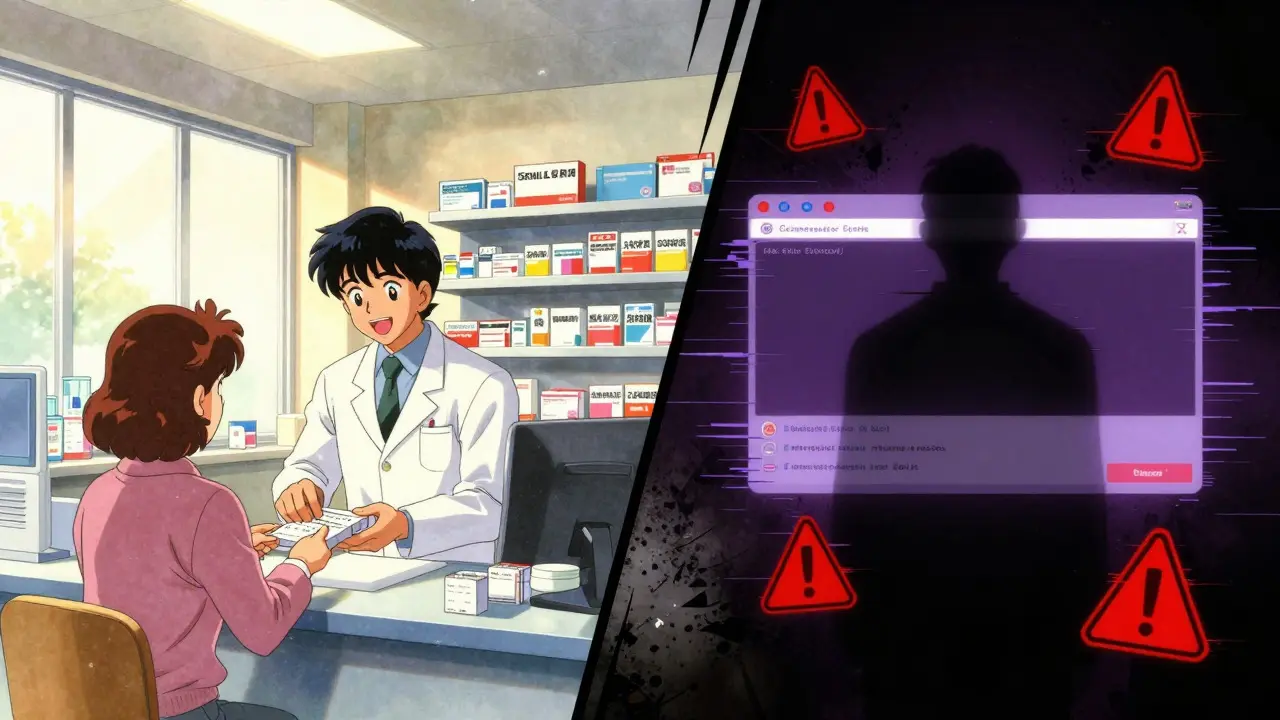
How to Verify a Pharmacy in 5 Minutes
You don't need to be a detective to check if a pharmacy is legit. The FDA recommends a five-step process that takes less than five minutes. A 2023 University of Florida study found that 92% of consumers could successfully verify legitimacy within this timeframe using state board websites.
- Check for a Prescription Requirement: If a site lets you buy antibiotics or blood pressure meds without talking to a doctor, run. Legitimate pharmacies always require a valid prescription.
- Verify the Physical Address: Use Google Maps Street View. Does the building look like a pharmacy? Or is it an empty lot? If there is no physical address, it is a major red flag.
- Search the State Board Database: Most states have online portals. For example, the California Board of Pharmacy allows you to search by name or license number. Note: California instructs users to enter the number only, without prefixes. Results show license status, expiration, and disciplinary history.
- Confirm Pharmacist Availability: Look for a phone number or email for a licensed pharmacist. Are they willing to answer questions about your medication? Legitimate pharmacies must have a pharmacist available as required by 45 states.
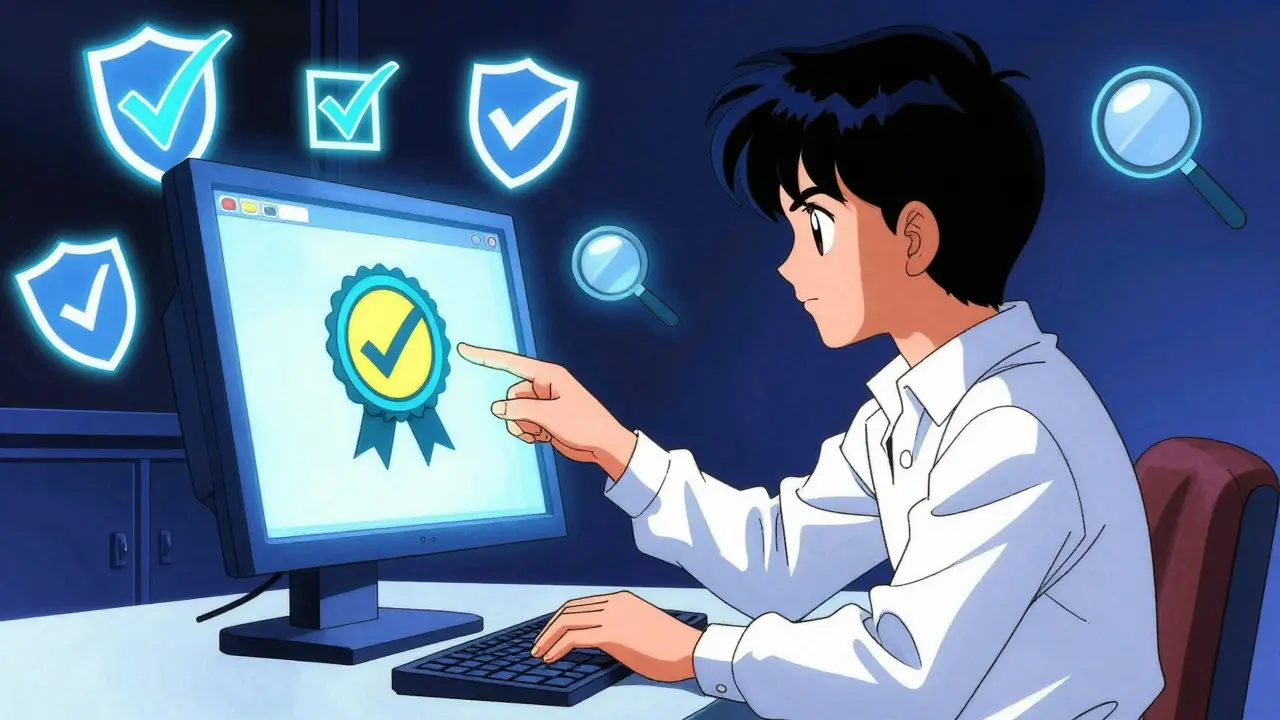
- Validate Accreditation: Look for the VIPPS (Verified Internet Pharmacy Practice Sites) seal from the NABP. Click the seal to ensure it links directly to the NABP website, not just a picture on the page.
If you are dealing with multi-state operations, the NABP's License Verification portal allows searches across all participating jurisdictions. Results are typically available within 24 hours. For those who manage multiple licenses, the NABP Verify program offers ongoing monitoring, though it costs $125 annually for pharmacists.
Red Flags That Scream "Counterfeit"
Even if a pharmacy claims to be licensed, look for these warning signs. They often indicate that the operation is cutting corners or is entirely fraudulent.
- Too Good to Be True Prices: If a drug costs 50% less than everywhere else, ask why. Counterfeiters use low prices to lure victims.
- Pop-up Ads and Aggressive Marketing: Legitimate pharmacies rarely spam you with pop-ups claiming "miracle cures."
- Spelling Errors: Professional healthcare providers proofread their sites. Typos suggest a rushed, unprofessional operation.
- No Contact Information: If you can't find a phone number or physical address, they want to stay hidden.
- Fake Accreditations: Scammers copy seals from organizations like LegitScript or VIPPS. Always click the seal to verify it leads to the official source.
Dr. Kevin T. Fuji of Pacific University College of Pharmacy noted that the average consumer spends only 2.7 minutes verifying a pharmacy's legitimacy. That is barely enough time to read a paragraph. Take that extra minute. It could save your life.
The Future of Pharmacy Verification
Regulators are catching up. The NABP launched Phase 2 of its InterConnect system in January 2024, enabling real-time license status updates across 43 states. This means if a pharmacist loses their license in one state, other states know immediately.
California implemented new nonresident pharmacy requirements effective January 1, 2024. Out-of-state pharmacies shipping to Californians must now maintain an 800 number for consumer access to a pharmacist and comply with patient-centered labeling. This is a huge win for transparency.
The FDA's 2024 Strategic Plan includes a $15 million initiative to enhance detection of illegitimate online pharmacies, aiming for a 40% reduction in consumer harm by 2026. Dr. Carmen Catizone, Executive Vice President of NABP, predicts that by 2027, national licensure standards will emerge, reducing verification complexity by 60%. Until then, the burden remains partly on you, the consumer.
Don't let convenience override caution. A quick check of a pharmacy's license ensures that the medication you take is safe, effective, and exactly what your doctor prescribed. Your health is worth the five minutes.
How do I check if an online pharmacy is licensed?
You can verify an online pharmacy by checking the NABP's VIPPS list or searching the specific state board of pharmacy where the pharmacy claims to operate. Enter the pharmacy's name or license number into the state's verification portal. If the pharmacy is not listed, or if the license shows as "inactive" or "suspended," avoid using it.
What is the difference between a licensed and unlicensed pharmacy?
A licensed pharmacy has been vetted by a government regulatory body (like a state board of pharmacy) to ensure it meets safety, hygiene, and professional competency standards. An unlicensed pharmacy operates without this oversight, increasing the risk of dispensing counterfeit, expired, or incorrect medications. Licensed pharmacies also require valid prescriptions and provide access to licensed pharmacists for consultation.
Are all online pharmacies scams?
No, not all online pharmacies are scams. Many legitimate brick-and-mortar pharmacies offer online services. However, approximately 1 in 4 online medication sellers operate without proper licensure. To ensure safety, look for the VIPPS seal from the NABP or verify the pharmacy's license through your state's board of pharmacy website.
Why do some online pharmacies sell drugs so cheaply?
Suspiciously low prices are a major red flag. While legitimate pharmacies may offer discounts, prices that are significantly lower than the market average often indicate counterfeit drugs. These fake medications may contain incorrect dosages, wrong ingredients, or harmful substances like fillers such as chalk or sugar.
What should I do if I suspect my pharmacy is selling counterfeit drugs?
If you suspect your medication is counterfeit, stop taking it immediately and consult your doctor. Report the pharmacy to the FDA via their MedWatch program and to the state board of pharmacy where the pharmacy is located. Providing details like the website URL, product photos, and batch numbers can help authorities investigate and shut down illegitimate operations.



Prashant Shishodia - 19 July 2026
Simple advice but it saves lives. Check the license.
Patrick Meyer - 20 July 2026
Look, its not that hard to figure out if a place is legit or just some fly by night operation. Most people are too lazy to do the basic research required to ensure their own safety. The FDA has made it incredibly easy with these databases, yet here we are discussing it as if it's rocket science. It's pathetic really. One would think adults could handle checking a website before popping pills into their mouths. But no, everyone wants instant gratification and zero effort. That's why you end up with chalk instead of medicine. Just use your brain for once.
Autumn LW - 21 July 2026
You are absolutely right about the laziness factor. It is truly disheartening how many people ignore basic due diligence. I had a colleague who bought insulin from a site that looked 'cute' because it had pastel colors. Do you know what was in those vials? Who knows. Probably nothing but saline and hope. We need to stop coddling consumers. If you can't be bothered to verify a license, maybe you shouldn't be managing your own healthcare. It is that simple. The VIPPS seal isn't a decoration; it is a badge of honor that most scammers fake poorly. Learn to spot the difference.
Paul Lyons - 23 July 2026
This whole situation is a disaster caused by big pharma prices! Why do we even need to check licenses when the real crime is the cost of living in this country? I swear, every time I go to a local pharmacy, they look at me like I'm stealing bread. And then you have these online guys trying to help people save money, and suddenly they are criminals? It's all rigged. The government doesn't care about us; they care about the corporations. My uncle bought meds from a guy in his garage, and he's fine! Better than paying $500 for a script that costs pennies to make. Wake up sheeple!
Crystal Tadlock - 23 July 2026
My uncle is probably dead by now and you didn't even notice. You are so blind to the truth. The government is watching everything anyway. They put microchips in the vaccines and now they want to track your prescriptions too. If you buy from an unlicensed site, they can't track you. That is freedom. These licensed pharmacies are just fronts for the deep state to monitor your health data. I only buy cash on delivery from places that don't ask questions. Stay free.
Tad Cronn - 24 July 2026
Let's analyze the psychology behind this fear-mongering article. It preys on insecurity. By telling you that 1-3% of the market is illegitimate, they create a sense of imminent danger that forces compliance. But let's look at the numbers. 97% is safe. So statistically, you are safer buying online than crossing the street. Yet, the media pushes this narrative to keep you dependent on the system. Who benefits? The state boards collecting fees. It is a classic control mechanism. Stop letting them dictate your reality through statistics designed to confuse.
Scott Colter - 24 July 2026
I suppose there is a philosophical angle here regarding trust. In a digital age, how do we trust the invisible hand that delivers our health? Is a license just a piece of paper, or does it represent a social contract between the provider and the patient? When we click 'buy', we are entering a void. The verification process is our anchor to reality. Without it, we are adrift in a sea of potential falsehoods. It makes one wonder if any institution is truly verifiable anymore. Perhaps the act of verifying is more important than the result. It is the ritual of caution that defines our humanity in the face of chaos.
Andrew Donovan - 26 July 2026
Ah, the delicate dance of trust in the modern marketplace. It is quite fascinating how a simple checkbox can separate the wheat from the chaff. I find that taking a moment to inspect the roots of a service-much like examining the soil of a garden-reveals much about its fruit. A licensed pharmacy stands firm, rooted in regulation and oversight, while the unlicensed ones are often mere weeds, growing wild and unchecked. It is not just about safety; it is about respecting the craft. Pharmacists spend years studying, and their license is a testament to that journey. Let us honor that by doing our part. A little diligence goes a long way in cultivating peace of mind.
Deva Vidya - 26 July 2026
Great points everyone. I always say that knowledge is power. When we take the time to learn, we empower ourselves. It is amazing how a few minutes can change everything. I started checking my pharmacy last year and felt so much better. It gives you confidence. We should support each other in staying safe. Let us spread the word. Every person who checks is a win. Keep going!
ANINDA GHOSH - 28 July 2026
In my culture, we believe that healing begins with trust. 🌿 The pharmacist is a guardian of health. To neglect this bond is to invite disorder. I have seen families suffer because they trusted the wrong hands. Verification is an act of respect for life itself. It connects us to a global standard of care. Let us embrace this responsibility with grace. 🙏
Najmunisa Govender - 28 July 2026
It is truly heartbreaking to think about the risks involved.;; Every pill matters.;; Imagine the anxiety of not knowing what you are putting into your body.;; The emotional toll is immense.;; Please, for the sake of your loved ones,;; take the time to verify.;; It brings such comfort to know you are safe.;; Do not underestimate the value of peace of mind.;; It is worth every second.;;
Earl Oleary - 28 July 2026
You are all missing the point. The NABP is useless. I checked a pharmacy yesterday and it said active, but the pharmacist was asleep at the desk. What good is a database if the human element fails? The system is broken. You need to call the pharmacy and demand to speak to the pharmacist. If they put you on hold for more than two minutes, run. The VIPPS seal is a joke. Half the sites have static images. Click it. Does it go to nabp.pharmacy? If not, it is fake. Stop trusting seals and start demanding accountability. The regulators are asleep at the wheel. You have to be the watchdog.
MiMi Stanley - 30 July 2026
I quietly noticed that many people skip step three. Searching the state board. It is hidden in menus sometimes. I found a PDF link once that took forever to load. Patience is key. I also saw a typo in the address of a site I liked. Small details matter. I usually just sit back and watch others panic over prices. The cheap stuff is rarely good. I stick to the boring, expensive options. Less drama that way.