Benzodiazepine Tapering: Safe Strategies to Reduce Dependence
Dec 15 2025 - Health and Pharmaceuticals
When you walk into a doctor’s office, pick up a prescription, or use a new app, you expect to understand what’s happening. But for millions of people, that’s not the case. Language access, the right to receive information in a language you understand. It’s not just about translation—it’s about making sure health advice, legal forms, and digital tools actually work for the people who need them. This isn’t a luxury. It’s a legal requirement in many places, and it’s the difference between getting proper care and ending up in the ER because no one explained your medication.
Think about a parent trying to figure out their child’s medication schedule, or an elderly person reading a hospital discharge paper in English when their first language is Spanish. Without translation services, professional interpretation provided in medical, legal, or public settings, mistakes happen. And they’re dangerous. Studies show patients with limited English proficiency are 30% more likely to suffer adverse drug events. That’s why hospitals and clinics are now required to offer interpreters—both in person and over the phone. But it’s not just healthcare. Language barriers, the challenges people face when they can’t understand spoken or written language in critical situations show up everywhere: in online banking apps, government websites, even ride-share instructions. If the interface doesn’t adapt, people get left out.
What you’ll find in this collection isn’t theory. It’s real-world stories and practical guides. You’ll read about how language access affects medication safety, how insurers handle translation for non-English speakers, and why some patients skip treatment because they don’t trust what they’re told. There are posts on how pharmacists navigate language gaps when filling prescriptions, how digital tools are being built to support multilingual users, and what rights you have if you’re denied an interpreter. These aren’t abstract policies—they’re daily struggles that turn into health risks when ignored. Whether you’re a patient, caregiver, provider, or developer, the posts here give you tools to spot gaps, demand better, and make sure no one falls through the cracks because of a language difference.
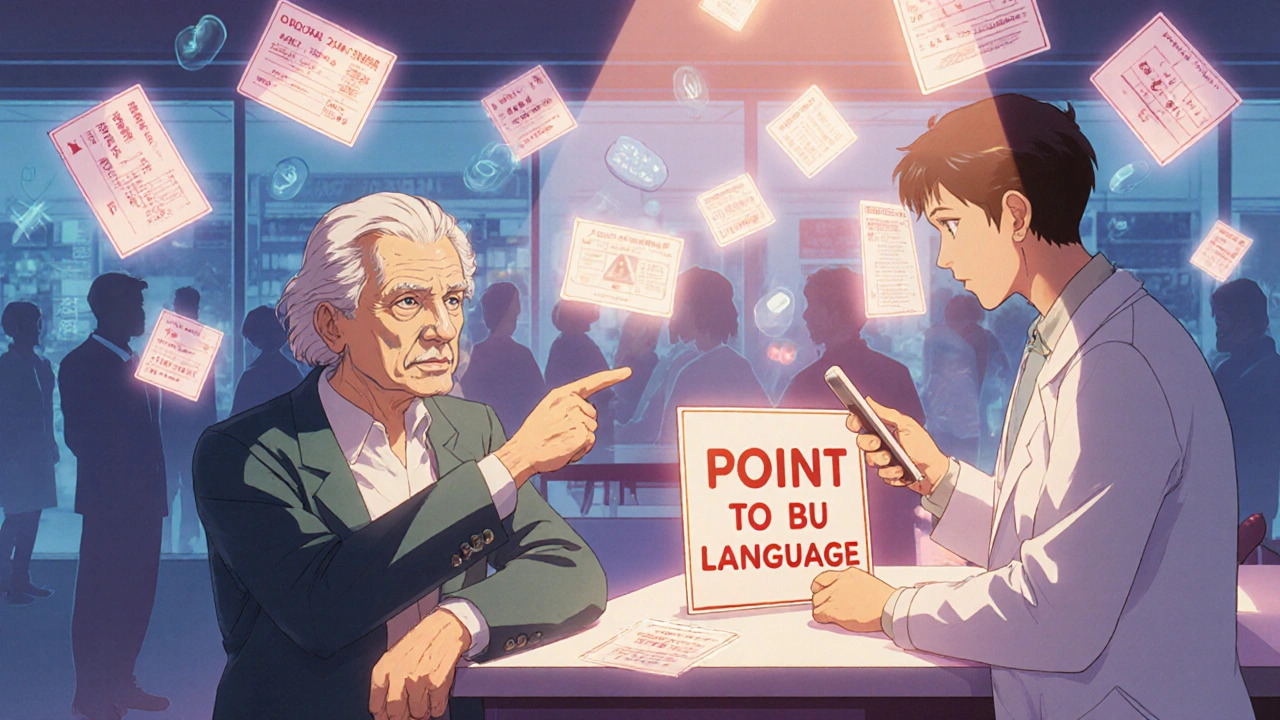
Learn your rights to professional language interpretation when picking up prescriptions. Federal law now requires pharmacies to provide free, accurate medication counseling in your language - no family members allowed. This is about safety, not convenience.
read more
© 2026. All rights reserved.