
Benzodiazepine-Opioid Risk Checker
This tool helps you understand the risk of respiratory depression when taking benzodiazepines and opioids together. Based on the FDA's black box warning, this combination can be deadly.
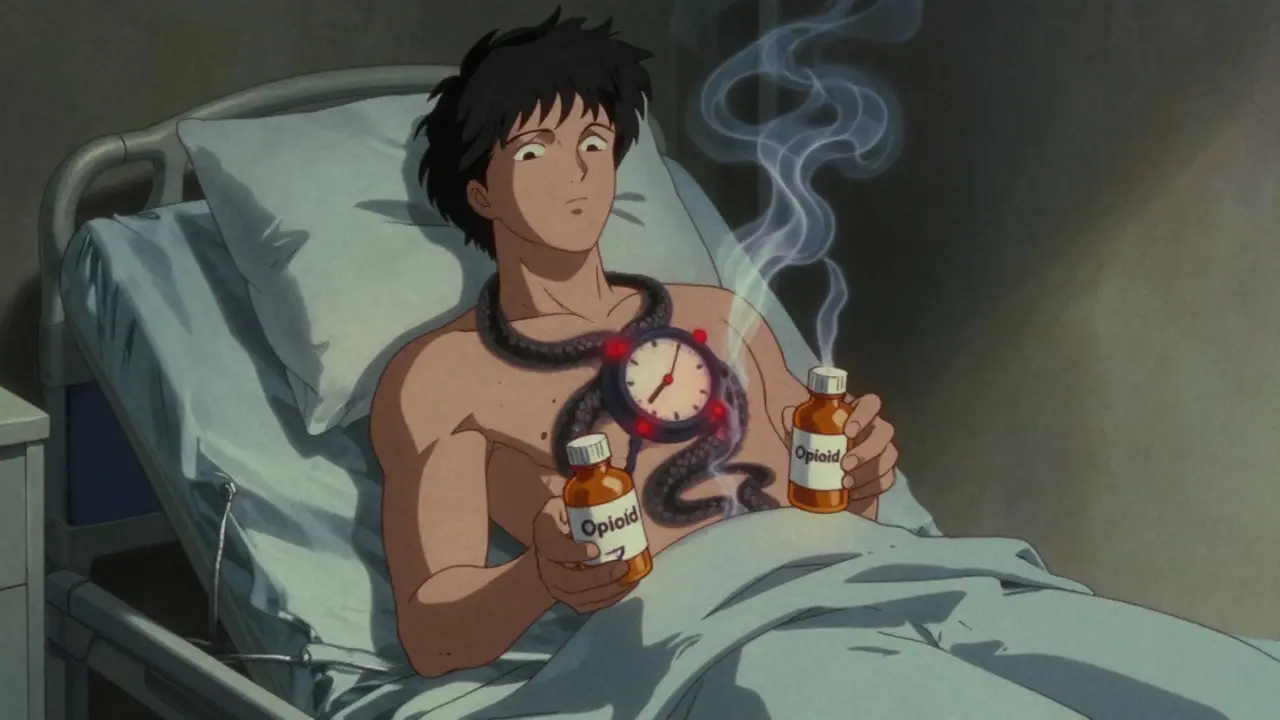
When you take opioids for pain and benzodiazepines for anxiety, you might think you’re just managing two separate conditions. But what you’re really doing is setting off a silent timer in your body-one that can stop your breathing without warning. This isn’t a hypothetical risk. It’s a documented, deadly reality that kills thousands every year.
Why This Combination Is So Dangerous
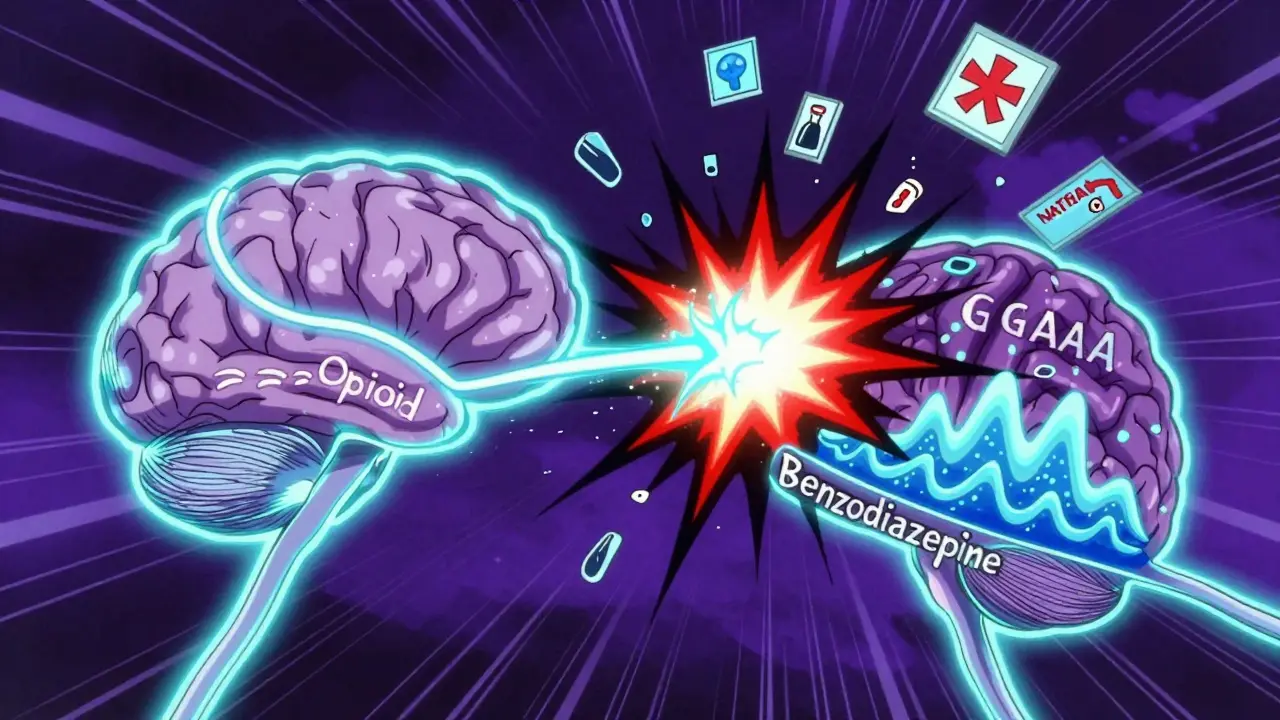
Opioids like oxycodone, hydrocodone, or fentanyl work by binding to mu-opioid receptors in the brainstem, the part of your brain that controls automatic breathing. They slow down the rhythm of your breath, making each exhale longer and each inhale weaker. At high enough doses, this leads to pauses in breathing-apnea-that can last long enough to starve your brain of oxygen. Benzodiazepines like Xanax, Valium, or Ativan don’t work the same way. They boost the effect of GABA, the brain’s main calming chemical. This doesn’t just make you feel relaxed-it suppresses activity across your entire central nervous system, including the breathing centers. Alone, a therapeutic dose of a benzodiazepine might cause mild drowsiness. But when it teams up with an opioid, the effect isn’t just added-it’s multiplied. A 2018 study in the Journal of Pharmacology and Experimental Therapeutics showed that when fentanyl and midazolam were given together, minute ventilation dropped by 78%. Fentanyl alone caused a 45% drop. Midazolam alone? Just 28%. This isn’t linear. It’s exponential. The brainstem’s respiratory network gets hit from two sides at once: opioids mute the drive to breathe in, and benzodiazepines silence the body’s ability to respond.The Numbers Don’t Lie
The CDC reports that in 2019, benzodiazepines were found in 16% of all opioid overdose deaths. For deaths involving illicit opioids like heroin or fentanyl-laced street drugs, that number jumped to 22.5%. By 2020, nearly one in six opioid-related fatalities involved a benzodiazepine. The highest rates were in people aged 45 to 64-often those prescribed long-term pain meds and anxiety treatments. What’s worse? People taking both drugs together are 10 times more likely to die from an opioid overdose than those taking opioids alone. That’s not a small increase. That’s a catastrophic one. Between 2004 and 2011, emergency room visits for nonmedical use of both drug classes increased by 131%. In 1999, combined overdoses killed 0.2 people per 100,000. By 2019, that number had climbed to 3.8-more than an 1,800% rise.How the Brain’s Breathing System Breaks Down
Research from 2021, published in PMC8424565 and eLife, reveals exactly how this happens. Opioids don’t just slow breathing-they disrupt two key areas:- The Kölliker-Fuse/Parabrachial complex (KF/PB): This area controls expiration. Opioids make exhales longer and more forceful, which can lead to airway collapse and apnea.
- The preBötzinger Complex: This is the brain’s core rhythm generator for inspiration. Opioids hyperpolarize neurons here, silencing the signal to inhale.
What Happens in an Overdose?
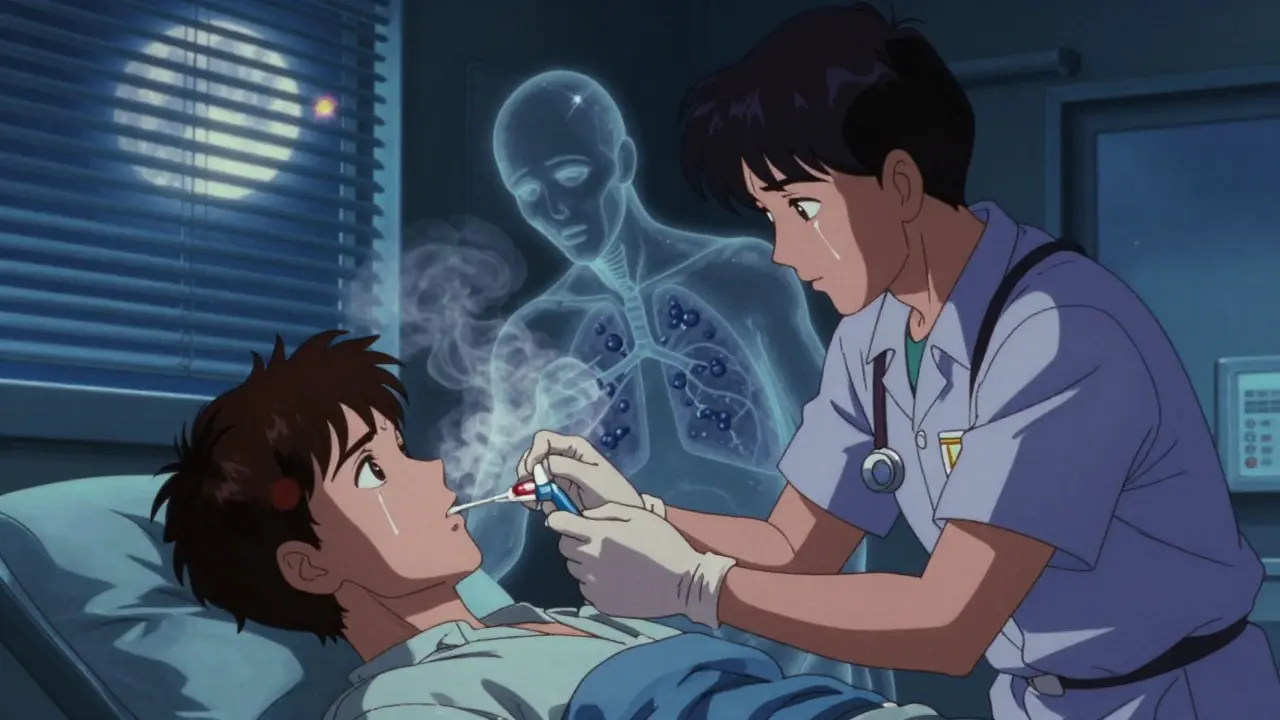
In a typical opioid overdose, naloxone (Narcan) can reverse the effects. It kicks opioids off the receptors and restores breathing. But naloxone does nothing to counteract benzodiazepines. If someone overdoses on both, giving naloxone might bring them back-temporarily. But without stopping the benzodiazepine’s effect, their breathing can shut down again within minutes. That’s why many overdose deaths involving this combination happen in cycles: the person is revived, then lapses back into respiratory failure. Emergency responders now carry higher doses of naloxone and often use ventilation support while waiting for the benzodiazepine to wear off-which can take hours.Why Doctors Still Prescribe Them Together
It’s not because they’re unaware. In fact, the FDA issued a black box warning in 2016-the strongest possible-stating that combining these drugs can lead to profound sedation, coma, and death. The American Society of Anesthesiologists says the combination should be avoided whenever possible. Yet, the practice persists. Many patients with chronic pain also have anxiety, insomnia, or PTSD. Doctors, under pressure to treat symptoms quickly, sometimes prescribe both without fully understanding the risk. Others don’t realize the patient is using illicit benzodiazepines or has been taking them for years. A 2022 study in the American Journal of Public Health found that even after the FDA warning, 8.7% of patients on long-term opioid therapy were still getting concurrent benzodiazepine prescriptions. That’s nearly one in ten.What Can Be Done Instead?
There are safer alternatives for both conditions.- For anxiety: SSRIs like sertraline or escitalopram, or non-benzodiazepine options like buspirone, have little to no respiratory risk. They take weeks to work but are far safer for long-term use.
- For pain: Non-opioid options like physical therapy, nerve blocks, gabapentin, or even cognitive behavioral therapy can reduce reliance on opioids. For acute pain, short-term NSAIDs are often enough.
- For sleep: Melatonin, sleep hygiene, or CBT-I (cognitive behavioral therapy for insomnia) are safer than using benzodiazepines as sleep aids.
Public Health Efforts and What’s Still Missing
The SUPPORT for Patients and Communities Act (2018) forced Medicare Part D to flag patients at risk of this interaction. All 50 states now have prescription drug monitoring programs (PDMPs), and 16 of them alert prescribers when someone is being prescribed both opioids and benzodiazepines. The FDA’s REMS program now requires all opioid education programs to include warnings about this combination. And research is moving forward: a 2022 study showed that the experimental drug CX1739 could reverse combined respiratory depression in animal models, restoring breathing fully. But these are still years away from clinical use. Right now, the tools we have are simple: awareness, communication, and avoidance.What You Need to Do
If you’re taking opioids:- Ask your doctor if you really need a benzodiazepine.
- Never take someone else’s sedatives.
- If you’re using street drugs, assume they contain fentanyl-and possibly benzodiazepines too.
- Keep naloxone on hand, even if you don’t think you’ll need it.
- Be honest with your doctor about all medications, including over-the-counter sleep aids or alcohol.
- Don’t stop benzodiazepines suddenly-it can cause seizures. Work with your provider on a taper plan.
Final Reality Check
This isn’t about being careful. It’s about avoiding the combination entirely. The science is clear: when opioids and benzodiazepines meet, they don’t just add up-they multiply. And that multiplication is deadly. The CDC projects that between 12,000 and 15,000 people will die in 2025 from this exact combination. Most of them weren’t drug abusers. They were people managing chronic pain and anxiety. They trusted their doctors. They didn’t know the risk. You don’t have to be one of them.Can naloxone reverse a benzodiazepine and opioid overdose?
Naloxone can reverse the opioid part of the overdose, but it has no effect on benzodiazepines. If someone overdoses on both, naloxone may temporarily restore breathing, but the benzodiazepine will continue to suppress respiration. Without additional medical support, breathing can stop again. That’s why emergency responders use ventilation support and monitor patients for hours after naloxone is given.
Is it safe to take a low dose of both drugs together?
No. Even low doses can be dangerous when combined. The interaction is synergistic, meaning the effect is greater than the sum of each drug alone. Studies show that at therapeutic doses, the combination can still reduce breathing by over 70%. There is no established safe threshold. The safest approach is to avoid the combination entirely.
Why do doctors still prescribe them together?
Many patients have overlapping conditions-chronic pain and anxiety, for example. Doctors may prescribe both to address symptoms quickly, especially if they’re unaware of the full risk or if the patient doesn’t disclose other medications. Despite FDA warnings and clinical guidelines, prescribing patterns haven’t fully changed. About 8.7% of long-term opioid users still receive concurrent benzodiazepines.
Are there safer alternatives to benzodiazepines for anxiety?
Yes. SSRIs like sertraline or escitalopram, SNRIs like venlafaxine, and non-benzodiazepine anxiolytics like buspirone are effective for anxiety with little to no respiratory risk. Cognitive behavioral therapy (CBT) is also highly effective and has no physical side effects. These options take longer to work but are far safer for long-term use, especially when opioids are involved.
How can I check if I’m at risk?
Review all medications you’re taking-including over-the-counter sleep aids, muscle relaxers, or alcohol. If you’re on an opioid for pain and anything that makes you drowsy, you’re at risk. Talk to your doctor or pharmacist. Many pharmacies now flag high-risk combinations. If you’re unsure, assume it’s dangerous and get professional advice.