
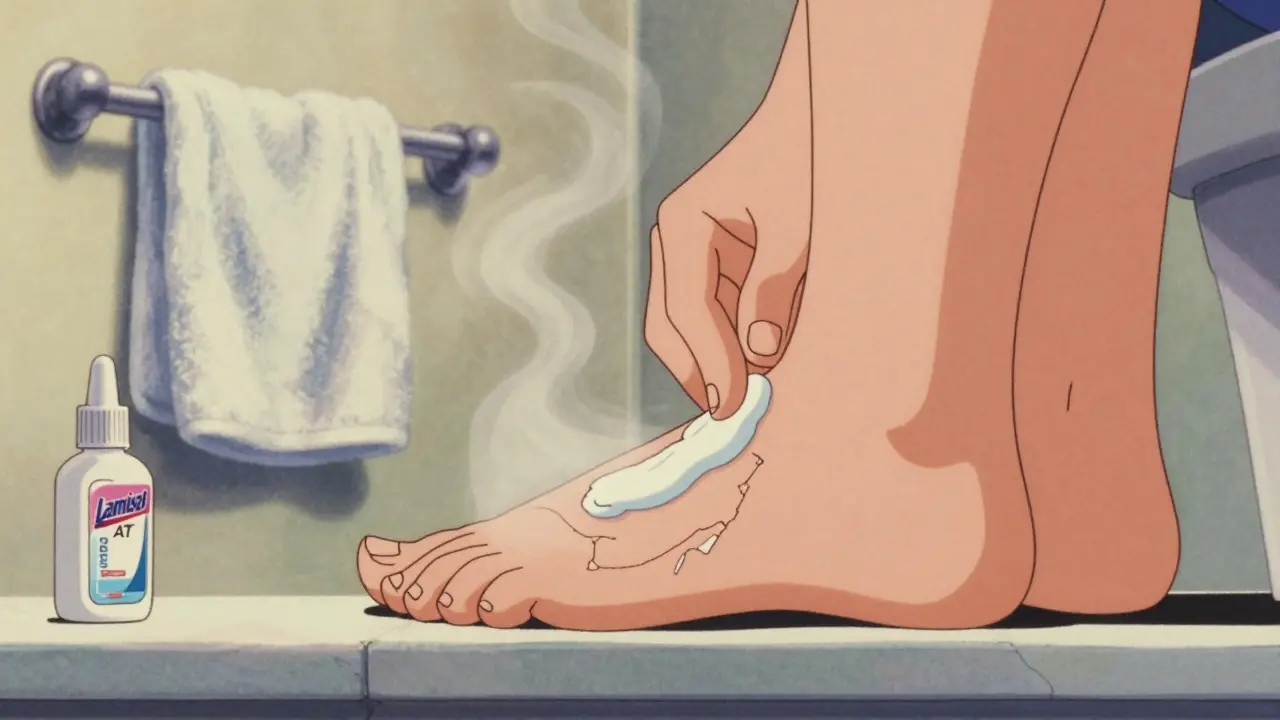
Most people think athlete’s foot is just a nasty itch between the toes. But if you’ve had it, you know it’s more than that. It stings. It flakes. It comes back. And no matter how much you scrub, it won’t go away unless you treat it the right way. The good news? You don’t need a prescription for most cases. Over-the-counter antifungal treatments work - if you use them correctly. The problem? Most people don’t. They stop when the itching stops. They apply too much. They skip days. And then wonder why it’s back again.
What Exactly Is Athlete’s Foot?
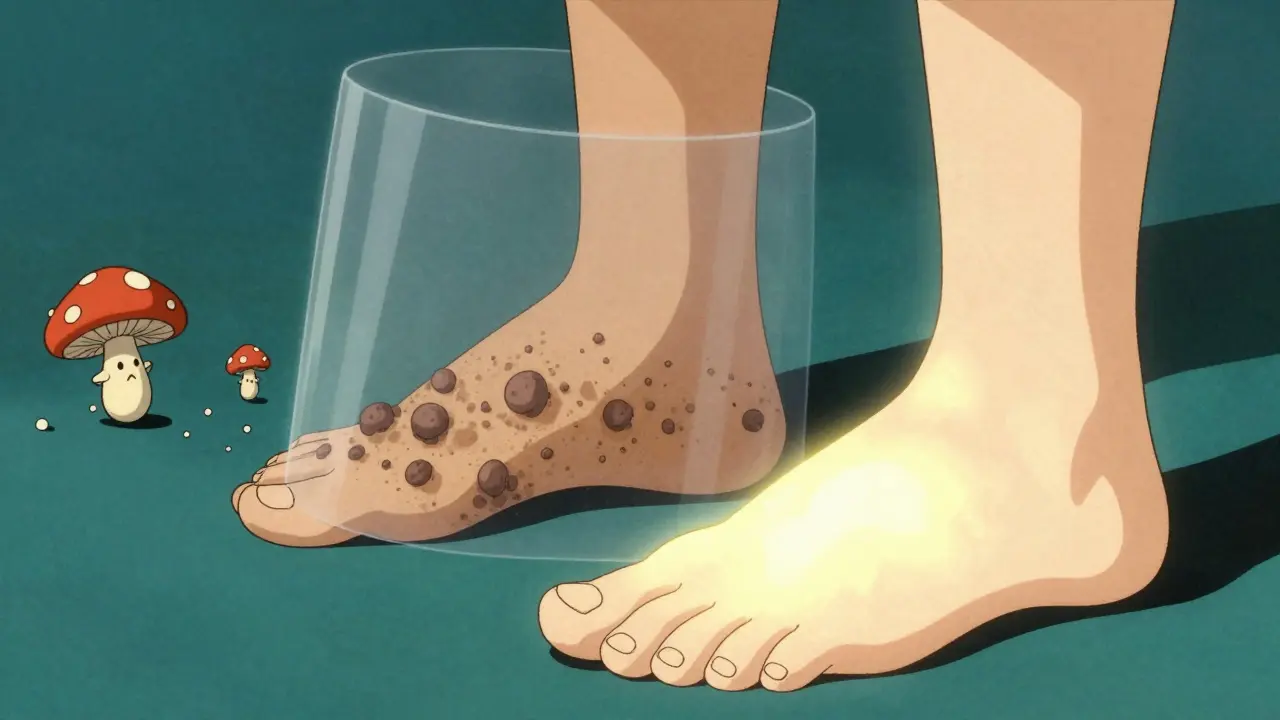
Athlete’s foot, or tinea pedis, is a fungal infection caused by dermatophytes - tiny organisms that feed on dead skin. It thrives in warm, damp places: inside sweaty sneakers, public showers, locker rooms. You don’t have to be an athlete to get it. Just wear closed shoes for hours, walk barefoot in a gym, or share a towel. It’s that easy.
It usually starts between the toes, where skin is soft and moist. Then it spreads to the soles, sides, or even nails. You’ll see redness, peeling, cracking, or blisters. Sometimes it smells. It’s not dangerous for healthy people, but left untreated, it can spread to your hands, groin, or nails - and it’s contagious. Others in your household can catch it from your towels, floors, or shoes.
How OTC Antifungals Actually Work
Not all OTC foot creams are the same. They fall into two main groups: fungicidal (kills fungi) and fungistatic (stops fungi from growing). The difference matters.
Terbinafine (found in Lamisil AT) is fungicidal. It attacks the fungus’s cell membrane and kills it within 24-48 hours. That’s why it works faster. Studies show it cures 83% of cases with just one application a day for 1-2 weeks. It’s the most effective single-agent OTC option.
Clotrimazole and miconazole (in Lotrimin, Micatin) are fungistatic. They stop the fungus from making its protective outer layer. They take longer - 2-4 weeks of twice-daily use - but they’re good for mixed infections that include yeast or mold. They also work well for people with sensitive skin.
Tolnaftate (Tinactin) is older and cheaper. It’s okay for mild cases between the toes, but it’s not strong enough for thick, scaly infections on the sole. Success rates drop to 60-65%. Still, it’s a solid choice for prevention - especially in powder form.
Undecylenic acid is another option, usually in powders. It’s milder, less irritating, and helps dry out moist areas. Good for keeping feet dry, but not for killing stubborn fungus.
Choosing the Right Product
Price doesn’t always mean better. Generic terbinafine cream costs about $8.99. Branded Lamisil AT runs $20-$25. But the active ingredient is the same. Look at the label, not the brand.
Here’s what to pick based on your situation:
- Mild infection between toes: Tolnaftate powder or terbinafine cream. Powders dry things out; creams penetrate better.
- Thick, scaly soles (moccasin type): Terbinafine or clotrimazole cream. Apply daily for 2-4 weeks. Don’t rush it.
- Moist, weeping, or blistering: Clotrimazole cream + antifungal spray. Sprays reach hard spots and dry faster.
- Preventing recurrence: Tolnaftate or miconazole powder in shoes and socks every day. Even after symptoms are gone.
Most people don’t realize: you need to treat both feet. Even if one looks fine, the fungus is probably there. And don’t forget your toenails - they can harbor fungus and reinfect your skin.
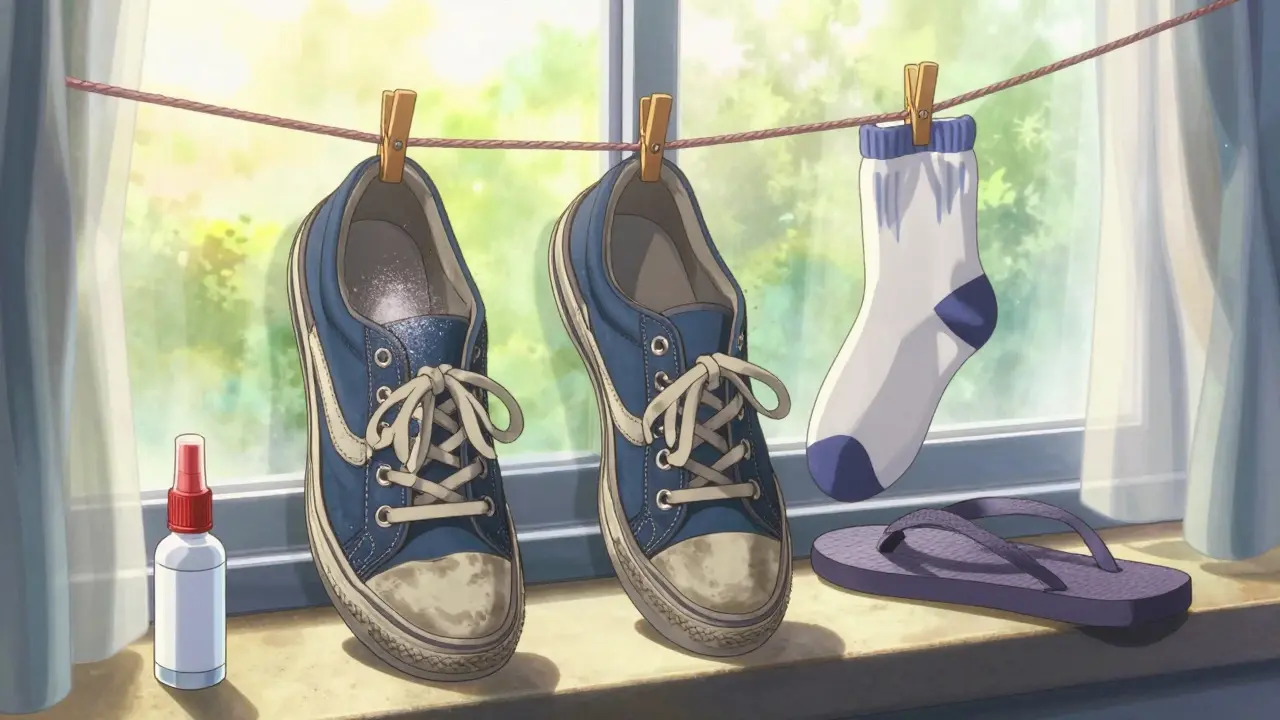
How to Apply It Right
Here’s the biggest mistake people make: applying cream like lotion. Thick globs won’t help. They trap moisture and make it worse.
Do this instead:
- Wash your feet with soap and water. Scrub between the toes.
- Dry them completely. Use a separate towel - don’t share it. Blow-dry on cool for 2 minutes if needed.
- Apply a thin layer of cream, spray, or powder to the infected area and a 1-inch border around it.
- Let it dry before putting on socks.
- Wear clean, cotton socks every day. Change them twice if you’re active.
- Continue treatment for at least 1-2 weeks after symptoms disappear. That’s non-negotiable.
Skipping a day? You’re giving the fungus a chance to bounce back. A Reddit user named ActiveRunner87 said: "I missed one application and it set me back two days." That’s not unusual.
What to Avoid
Even if you’re doing everything right, these habits sabotage your treatment:
- Wearing the same shoes every day: Fungus lives in them. Rotate shoes so each pair has 48 hours to dry out.
- Wearing synthetic socks: Cotton wicks moisture. Polyester and nylon trap it. Swap them daily.
- Walking barefoot at home: If you have athlete’s foot, you’re spreading it to your floors. Wear slippers.
- Using the same towel for feet and body: That’s how it spreads to your groin (jock itch). Use separate towels.
- Stopping treatment early: 63% of failures happen because people quit too soon. Symptoms fade before the fungus is dead.
And don’t use antifungal sprays on open wounds or broken skin. They sting. If your skin is cracked and bleeding, see a doctor. You might have a bacterial infection.
When to See a Doctor
OTC treatments work for 85% of cases. But if you’re not improving after two weeks, it’s time to get help.
Call a doctor if you have:
- Pus, swelling, or increasing redness - signs of bacterial infection
- Infection covering more than 70% of your foot
- Diabetes, poor circulation, or a weakened immune system
- Recurring infections (three or more times a year)
Doctors can prescribe oral antifungals like terbinafine (250mg daily for two weeks) or topical ciclopirox. These are stronger and faster. Oral meds cost $18-$25 with discounts, and they work when topical treatments fail.
Prevention: The Real Secret
The best treatment is the one you never need. Prevention is 80% of the battle.
Here’s what works:
- Wear flip-flops in showers, pools, and gyms - cuts transmission risk by 85%.
- Apply antifungal powder to feet and inside shoes every morning. Even when you’re symptom-free.
- Wash socks in hot water and dry on high heat. Fungus survives in damp laundry.
- Let your feet breathe. Swap closed shoes for sandals when you can.
- Don’t share towels, shoes, or nail clippers.
People who use antifungal powder daily cut their risk of recurrence by 63%. That’s not a suggestion - it’s science.
What’s Coming Next
Science is moving fast. New nanoemulsion formulas are in trials - they deliver antifungal deeper into skin, cutting treatment time from weeks to days. Some new OTC products now combine antifungals with dimethicone, a barrier that keeps moisture out.
But the biggest threat? Resistance. Terbinafine resistance in the most common fungus (Trichophyton rubrum) has jumped from 0.2% in 2010 to 1.7% in 2023. That means some strains are learning to survive. That’s why using the right treatment, for the full time, matters more than ever.
Final Takeaway
OTC athlete’s foot treatments are safe, cheap, and effective - if you treat them like medicine, not a quick fix. Terbinafine is the strongest and fastest. Clotrimazole is reliable for mixed infections. Tolnaftate powder is your best friend for prevention.
Don’t guess. Don’t rush. Don’t stop early. Wash, dry, treat, repeat. And never forget: clean socks, dry shoes, and flip-flops in the shower aren’t optional. They’re your armor.
Most cases clear up in 1-2 weeks. But only if you stick with it. Your feet will thank you.



Ellie Stretshberry - 27 December 2025
i just used that clotrimazole stuff for like 5 days and thought i was good lol
my feet started peeling again in 2 weeks
turns out i was one of those people who stops when it stops itching
oops
Jay Ara - 28 December 2025
terbinafine is the real MVP
used it last year after my gym shoes turned into fungus condos
one cream a day for 14 days no skipping
no more itch no more shame
also swapped all my socks to cotton
life changed
SHAKTI BHARDWAJ - 30 December 2025
why are we all still using creams??
fungus is a spiritual thing
you need to burn your socks and chant over your feet at 3am
also your shoes are haunted
just saying
Dan Alatepe - 30 December 2025
bro i tried everything
terbinafine
clotrimazole
powder
tea tree oil
even my grandma’s old remedy with garlic and vinegar
nothing worked
then i started wearing flip flops everywhere
even to the fridge
and guess what
it vanished
like magic
but now i look like a weirdo walking around in sandals in winter
Zina Constantin - 30 December 2025
if you’re diabetic or immunocompromised, please don’t treat this at home
it’s not just a foot thing - it can become a life thing
i’ve seen friends lose toes because they thought ‘it’s just athlete’s foot’
you don’t need to be brave about this
see a doctor if it doesn’t budge in two weeks
your feet are worth it
Kuldipsinh Rathod - 30 December 2025
the powder thing is real
i put tolnaftate in my shoes every morning
even when i dont have it
its like brushing your teeth but for fungus
no more reoccurrence
and its like 5 bucks
why are people still buying expensive stuff
Angela Spagnolo - 1 January 2026
...i just realized i’ve been using the same towel for my feet and my face for 3 years
oh my god
i think i gave myself jock itch...
and also... my pillowcase...
oh no...
please tell me it’s not too late to change...
...i’m going to buy 10 new towels right now...
...and i’m washing my sheets in boiling water...
...i’m so sorry to everyone who’s ever sat on my couch...
...i’m going to cry now...
...and also... thank you for this post...
...i needed this...
...i think...
...maybe...
carissa projo - 2 January 2026
the real tragedy isn’t the fungus - it’s how we treat our bodies like disposable things
we wear sweaty shoes for 12 hours, ignore the itch, then panic when it’s too late
we don’t care until it hurts
but if we treated our feet like sacred vessels - clean, dry, respected - we wouldn’t need creams at all
maybe the fungus is just our body screaming: ‘you forgot to take care of me’
Shreyash Gupta - 4 January 2026
terbinafine is a scam
it only works if you’re white and rich
in india we use neem oil and turmeric paste
it’s been used for 5000 years
you think science invented fungus fighting?
lol
we had it before you were born
also your ‘studies’ are funded by Big Pharma
just saying 😈
Jody Kennedy - 4 January 2026
you’re not alone
i used to think i was the only one who had this
now i know it’s everywhere
and the worst part? nobody talks about it
so i’m telling you now - you’re not weird
you’re not dirty
you just need to be consistent
and yeah
buy the cheap cream
and wear clean socks
and never walk barefoot in your own house again
you got this 💪