When a patient reacts badly to a medication, the stakes are high. But when that medication is a generic drug, which is a bioequivalent copy of a brand-name prescription that costs significantly less, reporting that reaction becomes surprisingly complicated. You might assume that because generics are chemically identical to their brand-name counterparts, the safety monitoring systems work the same way. They don't.
In reality, there is a massive gap in how we track side effects. Brand-name drugs account for a tiny fraction of prescriptions but generate the majority of serious adverse event (SAE) reports. Generics, which make up roughly 90% of all prescriptions in the United States, are vastly underreported. This isn't just a statistical quirk; it creates blind spots in drug safety that can leave patients at risk. If you are a healthcare provider, a pharmacist, or even an informed patient, understanding how to correctly report these events is critical for closing this safety gap.
What Counts as a Serious Adverse Event?
Before you start filling out forms, you need to know what qualifies. The U.S. Food and Drug Administration (FDA) has strict definitions for what constitutes a "serious" event. It’s not just about whether the side effect was annoying or painful. An adverse event is considered serious if it results in one of the following outcomes:
- Death: The patient died as a result of the event.
- Life-threatening: The patient was at immediate risk of death at the time of the event.
- Hospitalization: The event required initial or prolonged inpatient care.
- Disability: The event resulted in significant, persistent, or permanent disruption of bodily function.
- Congenital Anomaly: The event caused a birth defect or congenital anomaly.
- Medically Significant: The event required intervention to prevent permanent impairment or harm.
If any of these apply, the clock starts ticking. For investigators and sponsors, the requirement is to report promptly. For manufacturers, the deadline is strict: they must notify the FDA within 15 calendar days of receiving the information. In the European Union, the timeline is even tighter-fatal or life-threatening unexpected reactions require notification within 7 days, followed by a full report within 8 additional days.
The Reporting Gap: Why Generics Are Underreported
You would expect that since generics are prescribed far more often than brand-name drugs, they would appear more frequently in safety databases like the FAERS (FDA Adverse Event Reporting System). The data says otherwise. A major study analyzing FAERS data from 2004 to 2015 found that while brand drugs accounted for only about 1% of dispensed prescriptions for certain widely used medications, their manufacturers submitted approximately 68% of all serious adverse event reports.
Why does this happen? The primary culprit is ambiguity. When a patient takes a brand-name drug, the manufacturer is obvious. When they take a generic, the active ingredient is the same, but the inactive ingredients-and the manufacturer-can vary. Pharmacies often switch suppliers without notifying patients. Consequently, when a reaction occurs, the specific manufacturer is often unknown.
This leads to a phenomenon where healthcare providers either fail to report the event entirely or default to reporting it against the brand-name original. Dr. Daniel Korn, Director of the Division of Pharmacovigilance I at the FDA, has noted that this underreporting creates a significant gap in post-marketing surveillance. Without accurate data, subtle differences between formulations-such as variations in absorption rates due to different fillers or binders-may go undetected.
| Factor | Brand-Name Drugs | Generic Drugs |
|---|---|---|
| Manufacturer Identification | Clear and consistent | Often ambiguous; multiple manufacturers exist |
| Reporting Rate | d>High (disproportionate to usage)Low (underreported relative to usage) | |
| Pharmacovigilance Resources | Dedicated departments (98% of brands) | Limited resources (only 42% of generics have dedicated teams) |
| Time to Report | 15-30 minutes | 45+ minutes (due to ID verification) |
Step-by-Step: How to Report a Generic Drug SAE
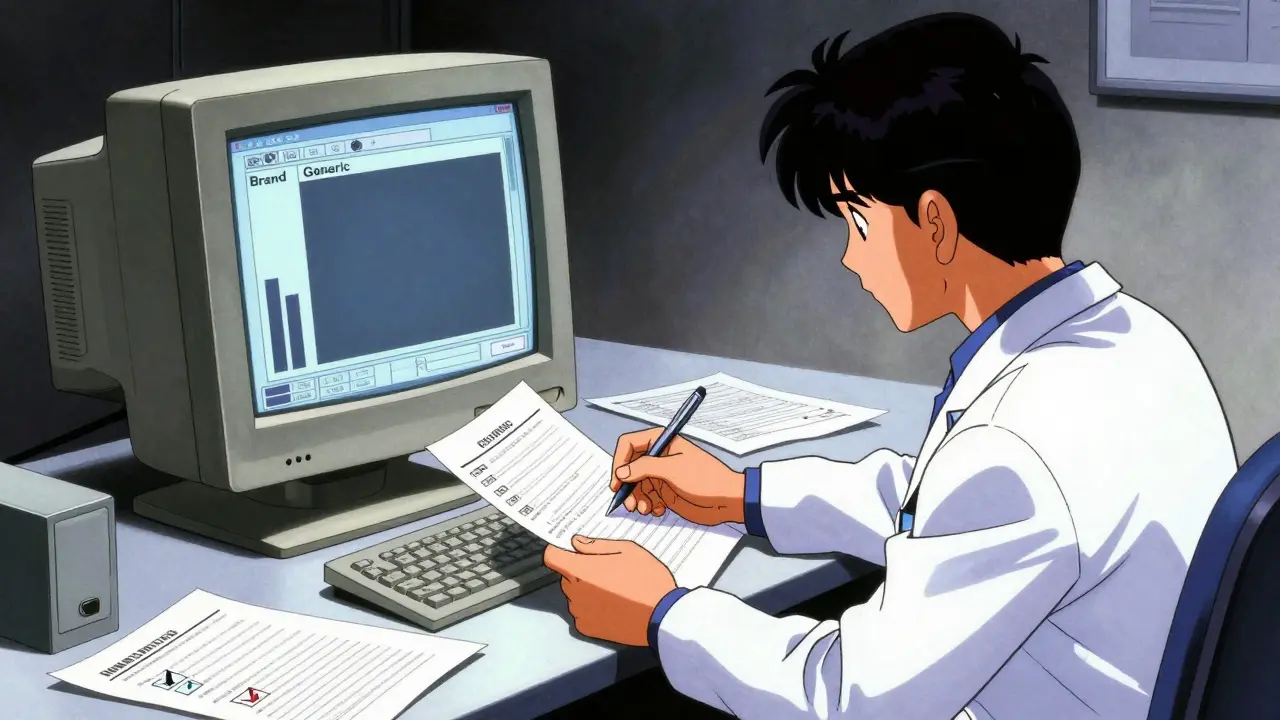
If you are a healthcare professional tasked with reporting a serious adverse event involving a generic drug, precision matters. Here is how to navigate the process effectively using the FDA’s MedWatch (the FDA's safety information and adverse event reporting program) system.
- Identify the Manufacturer Immediately: Do not rely on memory. Check the medication bottle, box, or packaging. The manufacturer’s name and the National Drug Code (NDC) number are usually printed in small type on the label. If the patient no longer has the packaging, contact the dispensing pharmacy. They can look up the NDC in their system to identify exactly which company produced the batch.
- Access the MedWatch Portal: Go to the FDA MedWatch website. You can submit reports online, which is faster and more accurate than paper forms. Select "Form 3500A" for health professionals.
- Select 'Generic Name': In the product identification section, ensure you select "Generic Name" rather than "Brand Name." Enter the active ingredient (e.g., "Losartan") and, crucially, enter the manufacturer’s name in the designated field. If you do not have the manufacturer, note "Unknown Manufacturer" but add a comment explaining why.
- Detail the Reaction: Provide a full description of the reaction, including the body site affected and severity. Include the start date and time of onset. Be specific about whether the event was expected or unexpected based on the drug’s labeling.
- Submit and Follow Up: Submit the report. Keep a copy for your records. Remember, manufacturers are required to keep records of all adverse drug experiences for 10 years after the date the report was received.
A practical tip from the field: The American Society of Health-System Pharmacists (ASHP) recommends implementing barcode scanning of medication containers at the point of administration. Pilot studies showed this increased generic AE reporting accuracy by 63%. If your institution doesn’t have this yet, manually recording the NDC number in the patient’s chart during dispensing can save valuable time later.
Challenges Faced by Healthcare Providers
It is not just a matter of will; it is a matter of workflow friction. A survey by the Institute for Safe Medication Practices (ISMP) found that 68% of healthcare providers reported difficulty identifying the specific generic manufacturer when submitting adverse event reports, compared to only 12% for brand-name drugs.
Dr. Robert Kim, a family physician, shared his experience on the Doximity platform: "I've had multiple cases where patients experienced reactions to generic levothyroxine, but the reporting form requires the manufacturer name which patients rarely know, so I often end up reporting to the brand manufacturer by default." This workaround defeats the purpose of safety monitoring, as it attributes the signal to the wrong entity.
The time commitment is also a barrier. Completing a MedWatch report typically takes 15 to 30 minutes. For generics, due to the extra steps needed to verify the manufacturer, this can balloon to over 45 minutes. With heavy clinical loads, many providers simply abandon the report. The FDA’s own usability study documented that 42% of healthcare providers abandoned adverse event reports for generics due to uncertainty about the specific manufacturer.
Regulatory Landscape and Future Improvements
The regulatory framework governing these reports is established under the Federal Food, Drug, and Cosmetic Act and strengthened by the Food and Drug Administration Amendments Act of 2007 (FDAAA). However, the system is evolving to address the generic reporting gap.
The FDA launched FAERS 2.0 in 2023, which enhances the ability to link adverse events to specific generic manufacturers through improved NDC code tracking. Additionally, draft guidance issued in mid-2023 proposes requiring pharmacies to include manufacturer information more prominently on all prescription labels to facilitate accurate reporting.
In the United States, the GDUFA III (Generic Drug User Fee Amendments, the current five-year authorization cycle) program (2023-2027) has allocated $15 million specifically for enhancing post-market safety monitoring of generic drugs. This funding aims to support better signal detection technologies and encourage smaller generic manufacturers-who currently lack dedicated pharmacovigilance teams-to improve their reporting infrastructure.
Internationally, the European Medicines Agency (EMA) has identified "improving signal detection for generic medicines" as a priority in its 2022-2025 pharmacovigilance work plan. Their goal is to harmonize reporting standards further and reduce the discrepancies seen between originator and generic medicines.
Practical Tools for Better Reporting
To bridge the gap between regulation and reality, several tools can help streamline the process:
- DailyMed Database: Maintained by the National Library of Medicine, this free database allows you to search by NDC number to instantly identify the manufacturer and review the official labeling for known side effects.
- Barcode Scanning Apps: Some hospital systems now use apps that scan the pill bottle barcode to auto-populate manufacturer details into electronic health records (EHR), reducing manual entry errors.
- Pharmacy Collaboration: Establish a direct line with your pharmacy team. Ask them to flag any recent supplier changes for high-risk medications like thyroid hormones or anticoagulants.
By leveraging these tools, you can cut down the reporting time and ensure that the data reaches the right regulatory bodies. Accurate reporting isn't just bureaucratic compliance; it’s the backbone of patient safety.
Who is responsible for reporting serious adverse events for generic drugs?
Both healthcare providers (doctors, nurses, pharmacists) and drug manufacturers (sponsors) are responsible. Healthcare providers report directly to the FDA via MedWatch. Manufacturers must report serious and unexpected adverse reactions to the FDA within 15 calendar days of receipt. Patients and consumers can also report directly to the FDA.
What is the difference between a brand-name drug and a generic drug in terms of safety reporting?
Legally, there is no difference; both must meet the same safety standards. However, in practice, brand-name drugs are reported much more frequently because the manufacturer is clearly identifiable. Generic drugs are often underreported because the specific manufacturer is harder to identify, leading to incomplete safety data.
How long do manufacturers have to report a serious adverse event?
In the US, generic manufacturers must report serious and unexpected adverse drug reactions to the FDA within 15 calendar days of first learning about the event. In the EU, fatal or life-threatening unexpected reactions must be reported within 7 days, with a full report following within 8 additional days.
Why is it important to identify the specific generic manufacturer?
While generic drugs contain the same active ingredient, they may have different inactive ingredients (fillers, binders) and manufacturing processes. These differences can sometimes lead to variations in how the drug is absorbed or tolerated. Identifying the specific manufacturer helps regulators detect signals related to specific production batches or formulations.
Can patients report adverse events themselves?
Yes. Patients and consumers can report adverse events directly to the FDA using the MedWatch Form 3500. While healthcare provider reports are generally more detailed, patient reports are vital for capturing real-world experiences that might not reach a doctor immediately.
What is FAERS and why does it matter?
FAERS (FDA Adverse Event Reporting System) is the central database where all adverse event reports are stored. It is used by the FDA to detect new safety concerns about medical products. The accuracy of FAERS data depends heavily on complete reporting, which is currently lacking for generic drugs.