
Why Your Weight Goes Up Every Weekend
You stick to your plan all week-clean meals, daily walks, no sugary snacks. Then Friday night hits. Suddenly, you’re ordering pizza, sipping wine, grazing on chips while watching TV. Sunday night, you step on the scale and it’s up. Again. This isn’t bad willpower. It’s biology, habit, and culture working together. Weekend weight gain isn’t rare-it’s normal. And if you’re trying to lose weight, it’s the quiet killer of progress.
Research from Washington University and a 2023 JAMA Network Open study of 368 Australians shows most adults gain about 0.3% of their body weight every weekend. That might sound small, but over a year, that adds up to nearly 0.26% total body weight gain. For someone weighing 80 kg, that’s almost 200 grams every week. Over 12 months? That’s over 2.5 kg of pure fat gain. And it happens without you even realizing it.
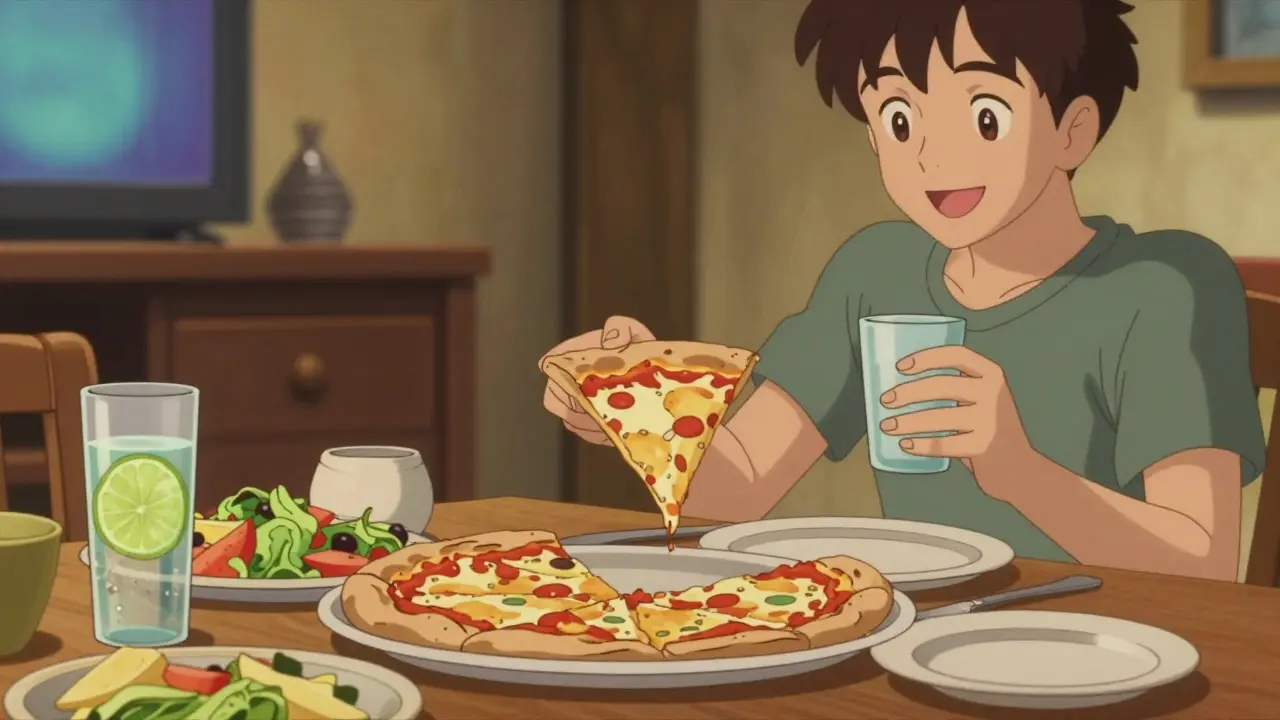
The problem isn’t just what you eat on Saturday. It’s the pattern. People consume up to 36% more calories from fat on weekends. Alcohol intake spikes. Portion sizes grow. You skip breakfast because you’re “saving calories” for later-and end up overeating by dinner. The weekend becomes a free pass. And that pass costs you.
Exercise Won’t Save You
Many think, “I’ll just work out more on the weekend to make up for it.” But here’s the truth: exercise alone doesn’t stop weekend weight gain. In fact, it can make it worse.
A 2008 study tracked 48 people trying to lose weight. One group increased their exercise by 20%. Guess what? They gained weight on weekends. Why? Because they felt entitled to eat more. “I ran 10 km today, so I deserve this burger.” That’s compensation. Your brain rewards effort with food-and it’s not rational. You burn 500 calories running, then eat a 900-calorie pizza. Net loss? 400 calories. And you’re still heavier than you were Friday morning.
David S. Ludwig from Harvard put it plainly: “The recommended 150 minutes of weekly exercise is not enough to prevent weight gain without cutting calories.” If you’re relying on movement to offset weekend eating, you’re fighting a losing battle. The body doesn’t work like a calculator. It’s wired to protect energy stores. When you move more, it craves more fuel.
The Real Culprit: Calorie Creep
Calorie creep isn’t one big binge. It’s 100 extra calories here, 150 there. A glass of wine (120 cal). A handful of nuts (160 cal). A slice of cake (300 cal). A double espresso with cream (100 cal). Add them up, and you’ve eaten 700-900 extra calories over the weekend. That’s nearly a full day’s worth of food.
Unlike holiday overeating-where you might gain 0.7 kg in five days-weekend creep is slow. It’s silent. You don’t feel full. You don’t feel guilty. You just wake up heavier. And because you lose some of it during the week, you think you’re still on track. You’re not. You’re stuck in a cycle: lose 0.2 kg Mon-Thu, gain 0.3 kg Fri-Sun. Net gain: 0.1 kg per week. That’s 5 kg a year. Without ever missing a workout.
Studies show people who track their food-even just on weekends-eat 41% fewer calories on Saturday. Self-weighing every morning cuts weekend weight gain by 68%. The act of recording creates awareness. Awareness breaks autopilot.
What Actually Works: 5 Simple Fixes
You don’t need to quit wine, skip parties, or become a monk. You need smarter habits. Here’s what the science says works:
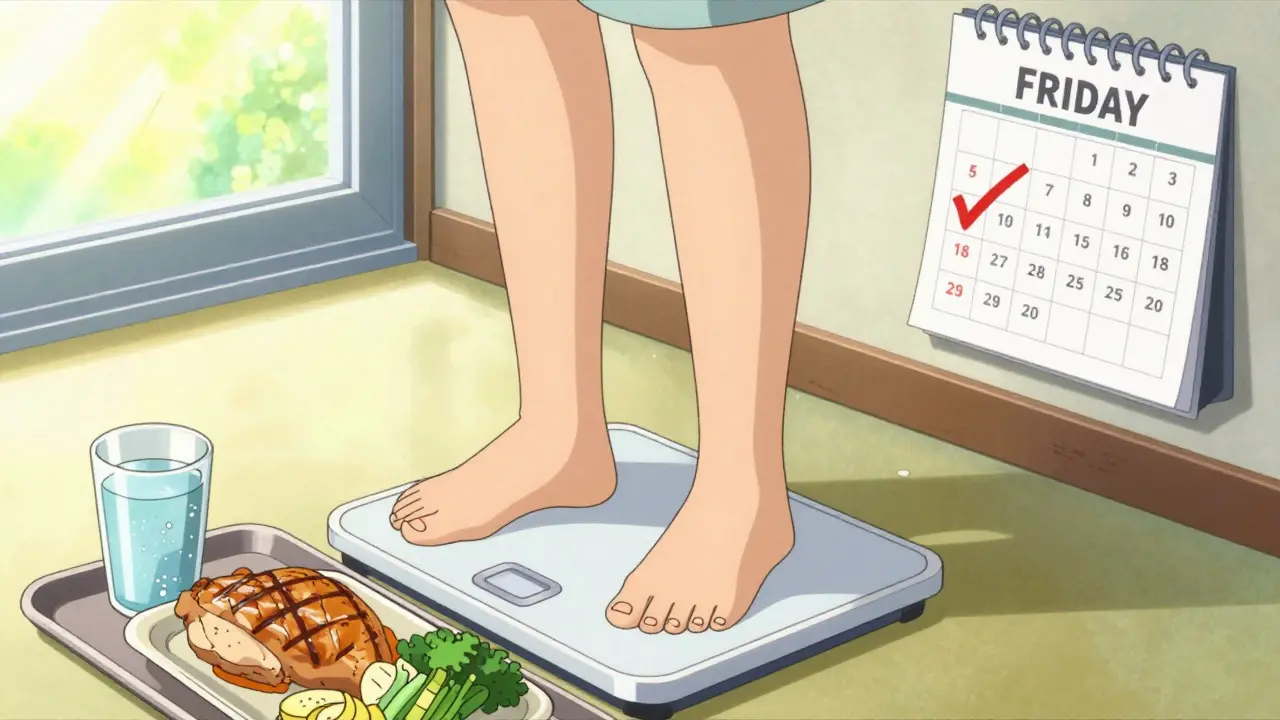
- Weigh yourself every Friday morning. Not Saturday night. Not Sunday. Friday. That’s your baseline. If you’re up from last Friday, you know it’s not just water. You’ve gained fat. That’s your cue to adjust.
- Plan your weekend meals like you plan your workweek. Write down what you’ll eat Friday night, Saturday lunch, Sunday dinner. No guessing. No “I’ll eat healthy tomorrow.” If you’re going out, check the menu ahead of time. Pick one indulgence-just one-and stick to it.
- Drink water before every meal. Thirst masquerades as hunger. A glass of water before dinner cuts calorie intake by 22%. Do it on Friday, Saturday, Sunday. It’s free, fast, and effective.
- Swap one high-calorie item for a low-calorie one. Instead of beer, have sparkling water with lime. Instead of fries, grab a side salad. Instead of dessert, have fruit. You don’t have to give up fun-you just need to make room for it.
- Get 2,000 extra steps on Saturday. That’s about 20 minutes of walking. Not to burn off pizza. Just to stay active. A 2018 study found people who added 2,000 steps daily on weekends were 30% less likely to gain weight over time. Movement keeps your metabolism humming.
Social Pressure Is Real-Here’s How to Handle It
You’re invited to brunch. Your friend orders a second round. Your family says, “Just this once.” You feel guilty saying no. That’s normal. But your health isn’t negotiable.
Try this: “I’m cutting back on sugar this month, so I’m sticking to sparkling water.” No explanation needed. Or: “I’m really enjoying this time with you-let’s walk after dinner instead of dessert.” Redirect the focus. People respect boundaries when they’re clear and calm.
Studies show people who have a “weight management buddy” are more likely to stick to healthy choices. Text a friend before your weekend plans: “I’m going out tonight. Help me stay on track?” Just knowing someone’s watching makes a difference.

Why Flexibility Beats Rigidity
Some experts say: “Never break your diet.” Others say: “Allow yourself weekends.” The truth? It depends on your brain.
If you’re the type who thinks, “I blew it, so I might as well go all out,” then strict rules backfire. You’ll binge. Then quit.
If you’re the type who says, “I can have one slice of cake and still feel good,” then flexibility works. You’ll enjoy it, move on, and get back on track.
Research from the Karger study found that people who treated weekend weight gain as “normal variation” lost more weight long-term than those who beat themselves up over it. The key isn’t perfection. It’s recovery. One bad weekend doesn’t ruin your progress. Two in a row? That’s a pattern. That’s a signal.
What to Do After a Weekend Slip-Up
You had a great weekend. Too great. You woke up heavier. Now what?
- Don’t fast. Skipping meals slows your metabolism and makes you hungrier later.
- Don’t punish yourself. Guilt leads to more overeating. It’s a loop.
- Do this instead: Eat a high-protein breakfast. Go for a walk. Drink water. Plan your next 24 hours. You’re not starting over. You’re resetting.
One weekend doesn’t define your journey. But how you respond to it? That does.
The Bigger Picture: It’s Not About the Weekend
Weekend weight gain isn’t just about food. It’s about rhythm. Life on weekdays is structured: alarms, meetings, deadlines. Weekends? Free time. And free time means less control. That’s human.
Instead of fighting the weekend, work with it. Build a weekend version of your routine. One that includes fun, connection, and food-but not chaos.
Think of it like this: you wouldn’t drive your car without checking the oil every 500 km. Why treat your body any differently? Your body tells you what it needs. You just have to listen.
Why do I gain weight only on weekends?
Weekend weight gain happens because most people eat more calories, drink more alcohol, and move less on weekends compared to weekdays. Studies show this pattern is consistent across cultures and demographics. It’s not about willpower-it’s about environment, social cues, and the brain’s tendency to reward downtime with food.
Can I still enjoy weekends and lose weight?
Absolutely. You don’t need to give up social events or favorite foods. The key is planning. Choose one or two indulgences per weekend, track your intake, stay active, and return to your routine on Monday. People who allow flexibility but stay aware lose more weight long-term than those who follow strict rules.
Is weekend weight gain different from holiday weight gain?
Yes. Holiday weight gain is more intense-often 0.7 kg over 5-7 days-and usually tied to specific events like Christmas or New Year’s. Weekend gain is smaller (around 0.3% of body weight) but happens every week. The big difference? Holiday weight often stays on. Weekend weight is usually lost during the week, creating a false sense of progress. But over time, the weekly gain adds up.
Does drinking alcohol cause weekend weight gain?
Yes, but not just because of the calories. Alcohol lowers your inhibitions, making you more likely to eat high-calorie foods. A single glass of wine adds 120-150 calories, and it often leads to eating 200-300 extra calories from snacks. Plus, alcohol slows fat burning for up to 24 hours after consumption.
Should I weigh myself every day?
Daily weighing isn’t required, but weighing yourself every Friday morning gives you the clearest picture of weekend trends. Weight fluctuates daily due to water, salt, and digestion. Friday gives you a clean baseline before the weekend starts. If you’re up from last Friday, it’s likely fat-not water.
How long does it take to fix weekend weight gain?
You can start seeing results in 3-4 weeks with small changes: tracking food, drinking water before meals, adding 2,000 steps on weekends. The goal isn’t perfection-it’s consistency. People who stick to simple, realistic habits for 6 months reduce weekend weight gain by over 70%.



Frank Declemij - 30 January 2026
This is spot on. I used to think weekend workouts would cancel out pizza, but nope. The brain just rewards effort with food. Now I track my weekend calories like a hawk. 41% drop in intake just from logging. Game changer.
Alex Flores Gomez - 1 February 2026
LMAO so you’re telling me i’m not a weakling for eating nachos on saturday? i thought i was the only one who gained 2lbs by sunday then lost it by tuesday. turns out it’s just biology?? thanks for validating my lazy ass. 🤡
Pawan Kumar - 3 February 2026
This article is dangerously simplistic. The real issue is the systemic manipulation of food environments by agribusiness and pharmaceutical conglomerates. Weekend weight gain is not a personal failure-it’s a product of engineered dopamine triggers disguised as ‘comfort food.’ You’re being sold a lie that you can fix this with water and steps. Wake up.
DHARMAN CHELLANI - 3 February 2026
Weighing urself on friday? lmao u think u r so smart. i just eat what i want. life is short. u r stressing over 200g like its a death sentence. chill. u r not gonna live forever anyway.
Jasneet Minhas - 3 February 2026
I tried the 2,000 steps thing and now my dog thinks I'm her personal walking machine 🐶😂 But honestly? It works. No magic, just movement. And yes, sparkling water with lime > beer. My liver thanks me.
Megan Brooks - 5 February 2026
I appreciate how this reframes weekend eating as a rhythm issue rather than a moral one. We structure our weekdays for productivity, then treat weekends like a vacuum for self-indulgence. What if we designed weekends as intentional rest-not punishment? That shift changed everything for me.
Ryan Pagan - 6 February 2026
Let’s be real-this isn’t about willpower, it’s about neurochemistry. Your brain’s reward system is basically a toddler with a candy bar. You give it a run, it screams for cake. The fixes here? Genius. Water before meals? Free. Steps? Free. Planning? Free. The only cost is attention. And that’s the real luxury.
Paul Adler - 7 February 2026
I’ve been doing the Friday weigh-in for 6 months. It’s not about the number. It’s about the awareness. I catch myself slipping before it becomes a habit. And honestly? Knowing I’m not alone in this makes the whole thing feel less lonely.
Robin Keith - 7 February 2026
I’ve been thinking deeply about this… and I realize that weekend weight gain is not merely a physiological phenomenon-it’s a metaphysical rebellion against the tyranny of productivity culture. We binge because we are starved of meaning, not calories. The scale doesn’t measure fat-it measures the soul’s hunger for freedom. And yet… we are told to drink water and take steps. How quaint. How tragic. How… insufficient.
Sheryl Dhlamini - 9 February 2026
I cried reading this. Not because I’m sad-because I finally get it. I thought I was failing. Turns out I was just fighting the wrong enemy. The enemy isn’t pizza. It’s autopilot. And now I’m fighting back-with sparkling water and a 20-minute walk. And I’m proud of myself.
Doug Gray - 11 February 2026
I mean… it’s just… *checks notes*… a systemic biopsychosocial feedback loop mediated by circadian disruption and hedonic eating patterns, right? Like, sure, the steps help, but have you considered the epigenetic implications of chronic weekend cortisol elevation? Probably not. Neither have I. But I read a paper once.
Kristie Horst - 11 February 2026
You know what’s funny? People think ‘flexibility’ means giving up. But real flexibility is choosing your indulgence and owning it-without guilt, without denial. I had cake last Sunday. I took a walk Monday morning. I didn’t fast. I didn’t punish. I just… kept going. And that’s the real win.
LOUIS YOUANES - 12 February 2026
I don’t weigh myself. I don’t track. I don’t care. I eat what I want. I live. You’re all overanalyzing a biological process that’s been around since humans first discovered fire and bread. Stop turning food into a religion.