
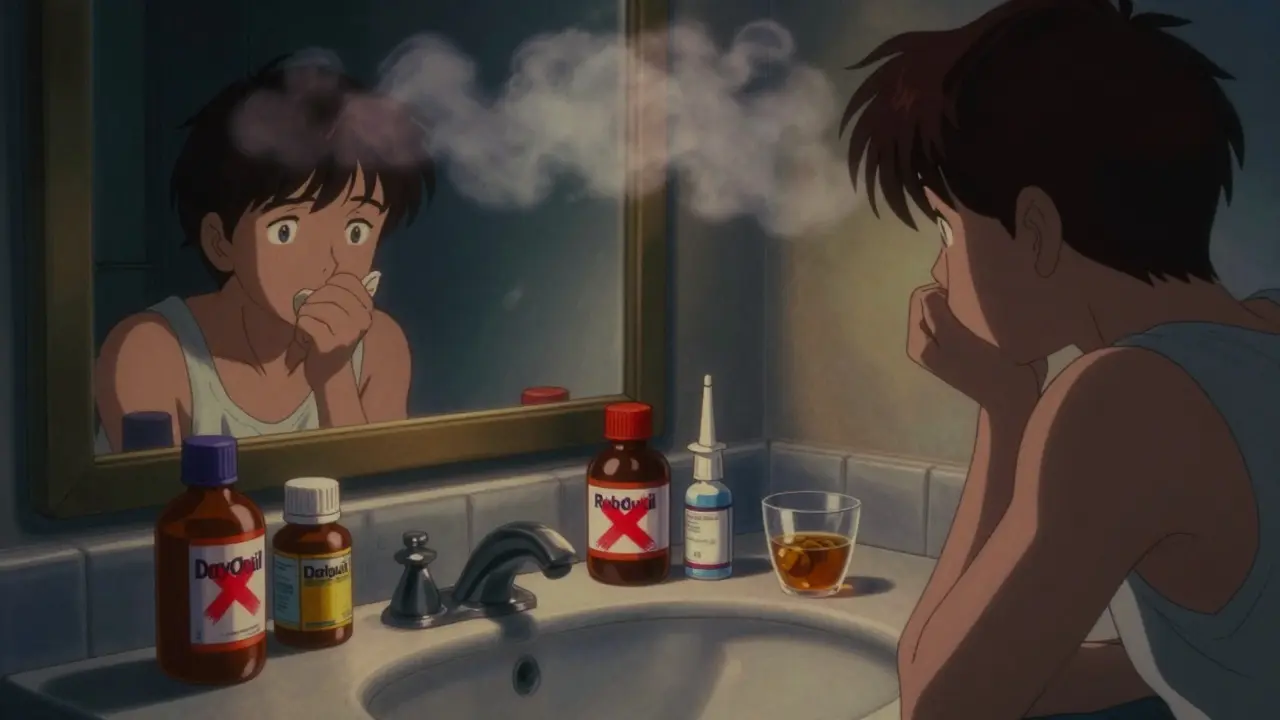
Every winter, millions of people reach for OTC cough and cold medicines without thinking twice. You feel congested, your throat is scratchy, and you just want to sleep. But here’s the truth: many of the most common over-the-counter remedies you’re using simply don’t work-and some might even be risky.
In 2023, the U.S. Food and Drug Administration (FDA) dropped a bombshell: oral phenylephrine, the decongestant in popular brands like Sudafed PE, DayQuil, and Robitussin, has been proven ineffective at relieving nasal congestion at the doses sold in stores. That’s right-the ingredient you’ve been paying for in nearly every cold medicine on the shelf? It doesn’t do what it claims. And it’s not just phenylephrine. Evidence for dextromethorphan (the cough suppressant) and guaifenesin (the expectorant) is just as weak.
What’s Really in Your Medicine Bottle?
Most OTC cough and cold products contain a mix of four active ingredients:
- Phenylephrine (10mg per dose): Marketed as a nasal decongestant. But a 2007 meta-analysis found it performs no better than a placebo at this dose. Even at 25mg (not available over the counter), the reduction in congestion was small and didn’t match how people felt.
- Dextromethorphan (15-30mg): Used to suppress coughs. Studies show mixed results. In children, it’s no better than honey. In adults, the benefit is marginal at best.
- Guaifenesin (200-400mg): Promoted to thin mucus. No high-quality trial has proven it helps people cough less or feel better faster.
- Pseudoephedrine (30-60mg): The real deal. This decongestant works. But because it’s used to make methamphetamine, it’s kept behind the counter, requires ID, and has purchase limits.
Here’s the kicker: many products combine these ingredients. So if you take a cold tablet, a cough syrup, and a nighttime formula-all at once-you might be doubling up on dextromethorphan or phenylephrine without realizing it. That’s how accidental overdoses happen. Between 2000 and 2007, 20 child deaths in the U.S. were linked to OTC cold medicine ingestion. Thirteen of them were under age two.
Why Kids Are at Higher Risk
Children aren’t just small adults. Their bodies process drugs differently. The American Academy of Pediatrics has warned since 2008: don’t give OTC cough and cold medicine to children under 2. In 2023, that warning was extended to kids under 6.
Why? Because:
- There’s zero proof these medicines make kids feel better or recover faster.
- They can cause serious side effects: rapid heart rate, seizures, hallucinations, even death.
- Parents often mix multiple products, thinking “more is better.” One study found 73% of parents stopped giving these medicines to kids under 6 after learning the risks.
Instead of syrup, try these safe, proven alternatives:
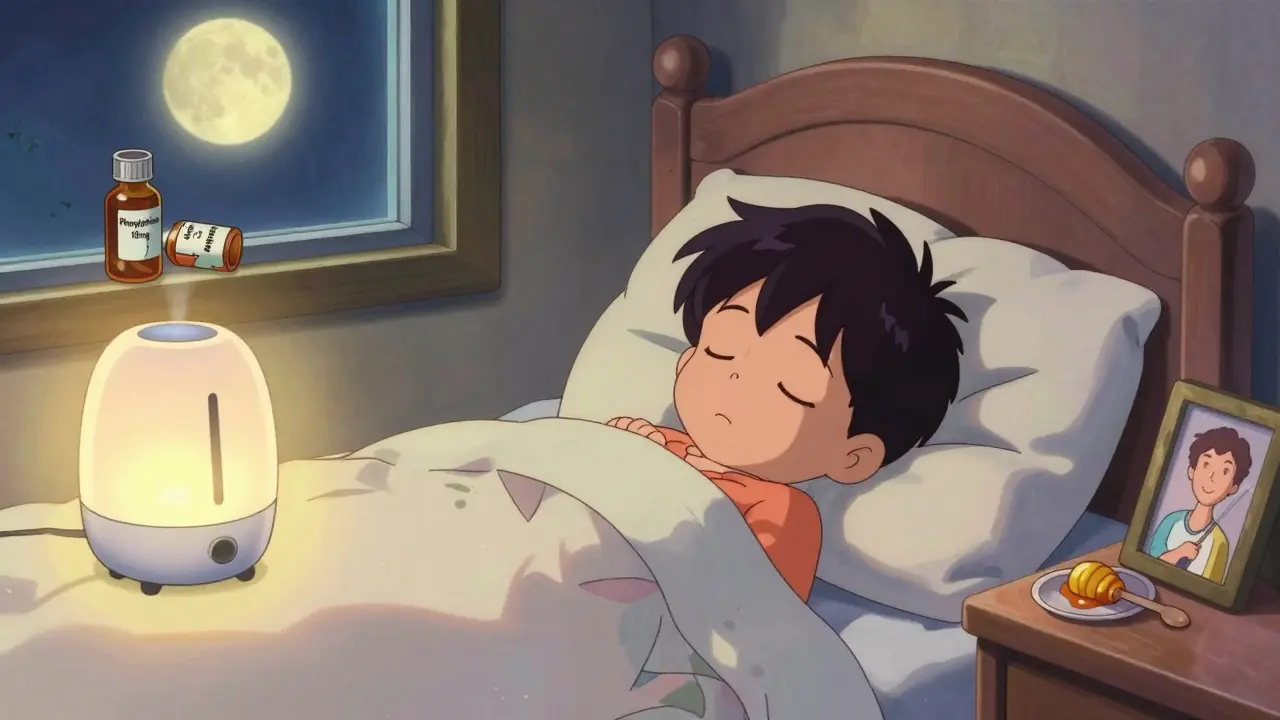
- Honey (for kids over 12 months): A half-teaspoon (2.5mL) before bed reduces nighttime coughing as well as some OTC meds. It’s cheaper, safer, and you probably have it in your pantry.
- Saline nose drops and a bulb syringe: Clears nasal passages without chemicals.
- Humidified air: A cool-mist humidifier in the room helps loosen mucus.
- Extra fluids: Water, broth, or warm tea keeps mucus thin and easier to clear.
The Rise of Safer, Simpler Solutions
It’s not just about avoiding bad ingredients-it’s about finding better ones. Nasal decongestant sprays containing oxymetazoline (like Afrin) work locally, with minimal absorption into the bloodstream. They’re effective for short-term use (3 days max), unlike oral phenylephrine, which does nothing.
And honey? It’s not a myth. A 2023 study from the American Medical Association found honey was as effective as dextromethorphan in reducing cough frequency and severity in children. No side effects. No drug interactions. Just a spoonful.
Even adults can benefit. Instead of a multi-symptom pill, try targeting symptoms one at a time:
- For congestion: Use a saline nasal spray or a decongestant with pseudoephedrine (ask the pharmacist).
- For cough: Try honey or a single-ingredient dextromethorphan-only if you’re sure you need it.
- For runny nose: Antihistamines like chlorpheniramine might help, but they cause drowsiness. Don’t combine them with sleep aids.
What’s Changing in 2025 and Beyond
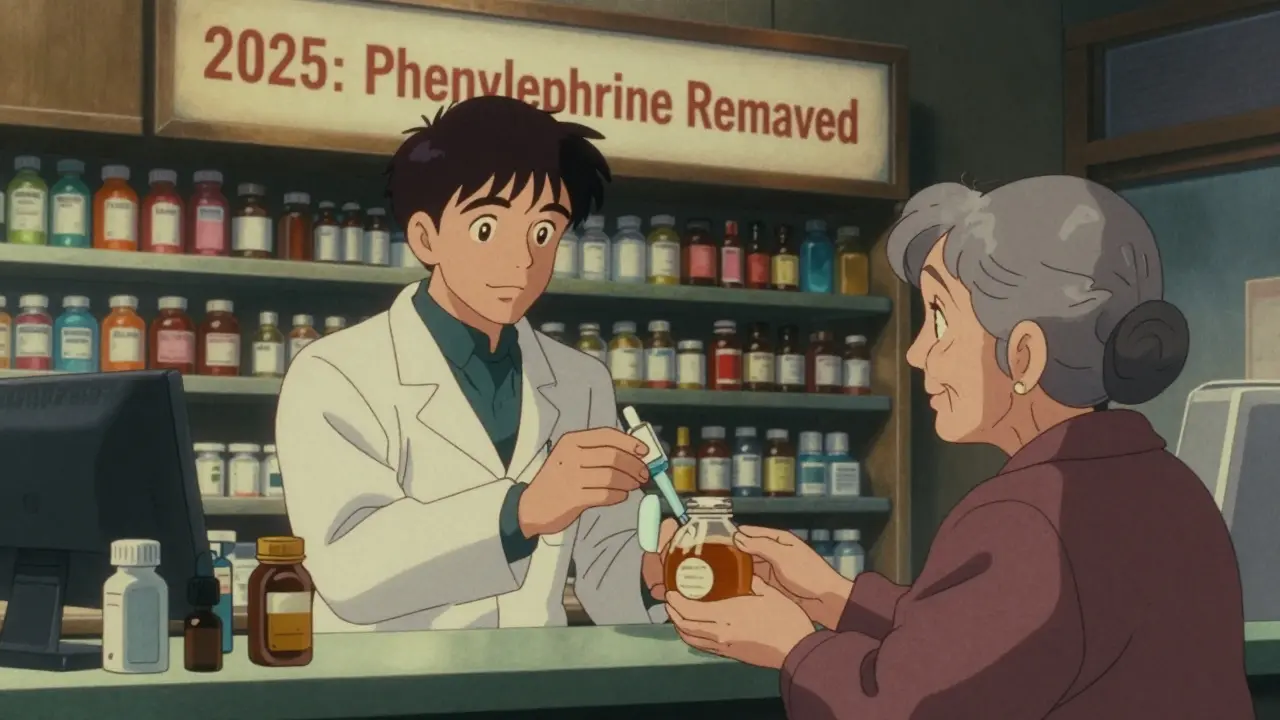
The FDA is moving to remove oral phenylephrine from the list of approved OTC ingredients. If finalized (expected by late 2025), manufacturers will have to reformulate products. That means:
- DayQuil, NyQuil, and similar brands will either remove phenylephrine or replace it with something else.
- Pseudoephedrine may become more widely available in some states, as lawmakers reconsider restrictions.
- Non-pharmaceutical options like saline sprays, humidifiers, and honey-based syrups are projected to grow 12.7% annually through 2026.
Market research shows consumer trust is already slipping. Amazon ratings for DayQuil dropped from 4.1 stars in 2020 to 3.2 stars in 2023. Reddit threads are full of people saying, “I’ve been using this for years and never noticed a difference.”
Pharmacies are noticing too. Pharmacists are starting to recommend alternatives before even reaching for the medicine cabinet. In Melbourne, where I live, more people are asking for saline nasal rinses and honey lozenges than cold tablets.
How to Use OTC Medicine Safely
If you choose to use OTC cough and cold medicine, follow these rules:
- Read the Drug Facts label. Look for active ingredients. Don’t assume “cold” or “flu” means it’s safe.
- Never combine products. Two different cold medicines can contain the same drug. You could overdose on dextromethorphan or phenylephrine without knowing it.
- Check for interactions. Decongestants can raise blood pressure. Avoid them if you have high blood pressure, heart disease, or take antidepressants.
- Use the lowest effective dose. More isn’t better. Stick to the recommended amount.
- Don’t use in kids under 6. Stick to honey, saline, and fluids.
What to Do When You’re Sick
The truth? Most colds last 7-10 days. No medicine changes that. But you can make it more bearable:
- Rest. Your body heals while you sleep.
- Stay hydrated. Water, broth, tea-anything that keeps you drinking.
- Use a humidifier. Moist air soothes irritated throats and nasal passages.
- Try saltwater gargles. Reduces throat pain and loosens mucus.
- Use a saline nasal rinse. Neti pots or squeeze bottles can clear congestion without drugs.
These methods aren’t flashy. They don’t come in colorful bottles with big logos. But they’re backed by science, safe for every age, and cost pennies.
Is phenylephrine dangerous?
Oral phenylephrine isn’t dangerous at recommended doses-it just doesn’t work. The FDA says it’s ineffective as a decongestant. There’s no evidence it causes harm at 10mg, but it’s a waste of money and could lead to false confidence that you’re getting relief. Higher doses (not sold over the counter) can raise blood pressure and cause heart issues.
Can I give my child OTC cough medicine?
No, not for children under 6. The FDA and American Academy of Pediatrics agree: there’s no proof these medicines help kids, and they carry real risks of serious side effects. For kids over 12 months, honey is a proven, safe alternative. For younger babies, use saline drops, a bulb syringe, and keep the air moist.
What’s the best OTC cold medicine right now?
There isn’t one. Most multi-symptom products contain ineffective ingredients. If you need a decongestant, ask for pseudoephedrine (behind the counter). For cough, try honey or a single-ingredient dextromethorphan. For runny nose, a saline spray works better than antihistamines. The safest option? Skip the pills and use saline, humidifiers, and fluids.
Why do pharmacies still sell these medicines if they don’t work?
Because they’ve been on the market for decades, and changing regulations takes time. The FDA’s proposed removal of phenylephrine is a major step, but manufacturers have until late 2025 to reformulate. Until then, companies keep selling them because consumers still buy them-often out of habit or marketing.
Are natural remedies like zinc or vitamin C effective?
There’s little solid evidence that zinc or vitamin C shorten colds in adults, and they can cause side effects like nausea or upset stomach. Honey, saline, and humidifiers have stronger, safer data behind them. Stick to what works: fluids, rest, and simple environmental support.



Gabriella Adams - 12 February 2026
Wow, this post is a game-changer. I’ve been giving my 4-year-old DayQuil for years because it ‘helped her sleep.’ Turns out, she was just drugged into unconsciousness. Honey? Saline drops? Why didn’t anyone tell me this before? I’m switching everything tomorrow. No more $15 bottles of nonsense.
Also-seriously, why does Big Pharma keep selling this stuff? It’s not ignorance. It’s profit. We’re being sold snake oil with FDA logos on it.
Alyssa Williams - 13 February 2026
I just threw out my entire medicine cabinet. No regrets. Honey before bed? Yes. Saline spray? Yes. That $8 cold pack? Gone. My kid hasn’t coughed all week. And I didn’t spend a dime.
Ernie Simsek - 13 February 2026
LMAO 🤡 the FDA finally caught up. I’ve been saying this for years. Phenylephrine? More like ‘phenyl-why-bother.’ I used to buy Sudafed PE thinking I was getting a decongestant. Turns out I was just paying for placebo pills with extra sugar. My nose didn’t care. My wallet did.
Also-why is pseudoephedrine still behind the counter? It’s like they’re afraid we’ll become chemists. Chill. Just let us buy it like normal people.
Reggie McIntyre - 14 February 2026
Y’all, this is the kind of post that makes you feel like you’ve been living in a simulation. We’ve been sold a fantasy: ‘Take this colorful pill and you’ll feel better tomorrow!’ But the truth? The best medicine is a warm bath, a humidifier, and a spoonful of honey that tastes like childhood.
And honestly? I’m weirdly proud of how simple and beautiful the real solutions are. No pills. No logos. Just air. Just water. Just rest. Our bodies were built for this. We just forgot how to listen.
Also-honey works better than dextromethorphan? That’s not science. That’s magic. And I’m here for it.
Ojus Save - 15 February 2026
i read this and i think i just saved my kid from a bad decision. i was about to give her cough syrup. now im using saline and humidifier. thanks for the info. i dont know much about meds but this makes sense.
Jack Havard - 17 February 2026
This is all just fearmongering. The FDA is being pressured by Big Organic. Honey? That’s a placebo too. And what about the fact that people have been using these meds for decades without issue? This is just another attempt to control what we put in our bodies. Wake up. This isn’t science-it’s ideology.
Rachidi Toupé GAGNON - 18 February 2026
Honey > pills. Period. 🍯✨ My 3-year-old’s cough vanished in two nights. No drama. No side effects. Just a spoonful before bed. I’m telling everyone. Also-saline spray is the MVP. Why didn’t my pediatrician mention this? 🤷♂️
Vamsi Krishna - 20 February 2026
Okay, but let’s be real-this whole post is just a Trojan horse for anti-pharma propaganda. You think people don’t know Big Pharma is corrupt? Of course they do. But you’re ignoring one thing: people need *something* to feel like they’re doing something. A pill gives them control. Honey? Doesn’t feel like medicine. It feels like giving up.
And let’s not pretend parents aren’t terrified. When your kid is coughing at 3 a.m., you don’t want to hear about ‘humidifiers.’ You want a solution. Even if it’s placebo. The placebo effect is real. And sometimes, that’s enough.
christian jon - 21 February 2026
I can’t believe this post isn’t being taken down. You’re literally telling people to stop using FDA-approved medications? What’s next? Are we going to ban aspirin because ‘rest and water’ works? This is dangerous. You’re putting lives at risk by promoting ‘natural remedies’ that aren’t regulated. Who’s going to sue when a kid dies because Mom listened to Reddit instead of a doctor? This isn’t helpful. It’s reckless. 🚨
Suzette Smith - 23 February 2026
I’ve been using pseudoephedrine behind the counter for years. It works. But I also use saline spray and honey. Why? Because I’m not an idiot. I don’t need 5 drugs in one pill. I just need what works. And honestly? I think the real problem is that we’ve been trained to think medicine = pill. It’s not. It’s care.