Supplement Safety & Interaction Checker
Enter your current prescription medication and the supplement you are considering to check for known risks.
Interaction Lookup
5-Step Label Safety Checklist
0/5 Complete-
1
-
2
-
3
-
4
-
5
Analysis Result
Select a medication and supplement above to begin.
Imagine popping a vitamin with your morning coffee, only to realize weeks later that it’s been quietly messing with your blood pressure meds. It happens more often than you’d think. In the U.S., 77% of adults take dietary supplements, yet most have no idea how to check if those pills play nice with their prescriptions. The problem? Unlike drugs, supplement labels don’t always tell you what you need to know.
This guide cuts through the confusion. We’ll break down exactly what to look for on both prescription and supplement labels, explain why the rules are so different, and give you practical tools to spot dangerous interactions before they become an emergency room visit. No medical jargon, just clear steps you can use today.
The Big Difference: Drugs vs. Supplements
To understand why label reading is tricky, you first need to know who’s watching. Prescription and over-the-counter (OTC) drugs are regulated by the FDA, which requires manufacturers to prove safety and efficacy before a product hits the shelf. This means every prescription drug label includes detailed interaction warnings because the FDA has reviewed them. In fact, 97.3% of prescription medications carry specific interaction data.
Dietary supplements, however, operate under a different rulebook called DSHEA (the Dietary Supplement Health and Education Act of 1994). Under this law, companies don’t need FDA approval before selling their products. They’re responsible for safety, but the FDA mostly checks in after something goes wrong. As a result, only about 12.7% of popular supplement products include any drug interaction warnings on the label. That massive gap is where most mistakes happen.
Anatomy of a Label: What to Look For
Not all labels are created equal. Here’s how to decode the two main types you’ll encounter.
Prescription and OTC Drug Labels
These follow a standardized format known as 'Drug Facts.' If you see this box, you’re in luck-it’s designed to be consistent. Look for these key sections:
- Active Ingredients: Tells you what’s actually working (e.g., "Acetaminophen 500 mg").
- Warnings: This is the gold mine. It lists contraindications and specific drug interactions. About 87% of critical interaction info lives here.
- Directions: Dosing instructions. Never guess; follow this exactly.
- Black Box Warning: Found on about 500 serious medications, this is the FDA’s highest alert level. If you see this, read it twice.
Supplement Labels
Supplements use a panel called 'Supplement Facts.' It looks similar to food nutrition labels but serves a different purpose. Here’s what matters:
- Serving Size: Don’t assume one pill is one serving. Some bottles require two or three capsules per dose. Misreading this is the #1 error, affecting 43% of users.
- Amount Per Serving: Check the milligrams or micrograms. Be wary of 'proprietary blends'-these group ingredients together without listing individual amounts, making it hard to verify safety doses.
- Allergen Declarations: Since 2004, labels must list eight major allergens (milk, eggs, fish, shellfish, tree nuts, peanuts, wheat, soy). If you have allergies, scan this line carefully.
| Feature | Prescription/OTC Drugs | Dietary Supplements |
|---|---|---|
| Pre-market Approval | Required by FDA | Not required (Post-market regulation) |
| Interaction Warnings | Mandatory (97.3% coverage) | Voluntary (12.7% coverage) |
| Standardized Format | 'Drug Facts' Panel | 'Supplement Facts' Panel |
| Ingredient Transparency | Exact amounts listed | Proprietary blends may hide amounts |
| Regulatory Body | FDA (Strict oversight) | FDA (Limited oversight via DSHEA) |
Common Traps: Why 'Natural' Doesn't Mean Safe
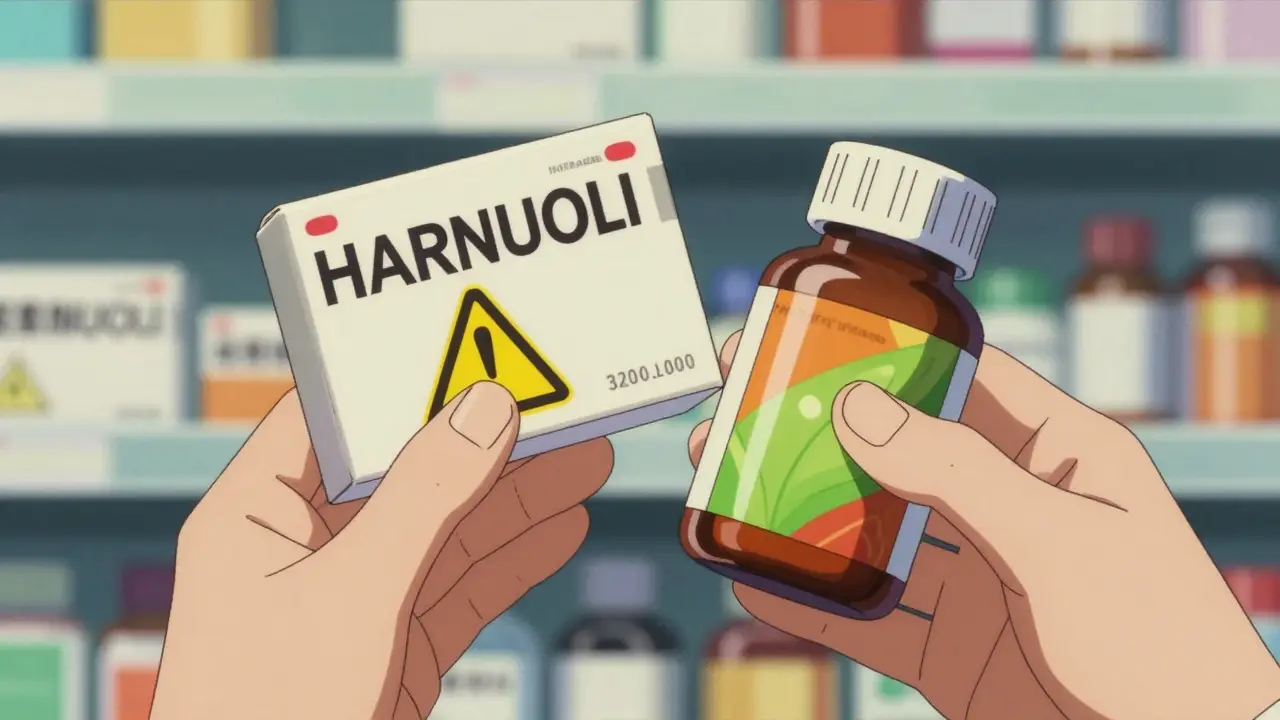
A lot of people assume that if a supplement is plant-based, it can’t interact with medicine. That’s a dangerous myth. Take red yeast rice, for example. Its active ingredient, monacolin K, is chemically identical to lovastatin, a prescription cholesterol drug. If you take red yeast rice alongside another statin, you’re essentially doubling your dose without knowing it.
Other sneaky interactions include:
- Vitamin K & Warfarin: Green tea extract and other high-Vitamin K supplements can reduce warfarin’s effectiveness by 30-50%, increasing clotting risk.
- St. John's Wort & Digoxin: This popular mood-lifting herb lowers digoxin blood levels by 26%, potentially causing heart treatment failure.
- Vitamin C & Antiretrovirals: High doses (over 1,000 mg/day) can change stomach pH, reducing the absorption of certain HIV medications by 22%.
These aren’t rare edge cases. The FDA’s Adverse Event Reporting System logged nearly 2,000 supplement-related adverse events in 2022 alone, with 28% involving potential drug conflicts.
Your 5-Step Safety Checklist
You don’t need to be a pharmacist to stay safe. Just follow this routine every time you pick up a new bottle.
- Check the Serving Size First. Before looking at ingredients, confirm how many units make up one serving. If the label says "Take 2 capsules" but the facts panel shows values for "1 capsule," do the math.
- Scan for Proprietary Blends. If you see a group of ingredients listed as a single total weight (e.g., "Herbal Blend 500mg"), be cautious. You don’t know how much of each component you’re getting. Consider choosing a product with transparent dosing.
- Cross-Reference with a Database. Use free tools like the Medscape Drug Interaction Checker. It analyzes over 24,000 drug pairs. Type in your prescription and the supplement ingredient to see if there’s a known conflict.
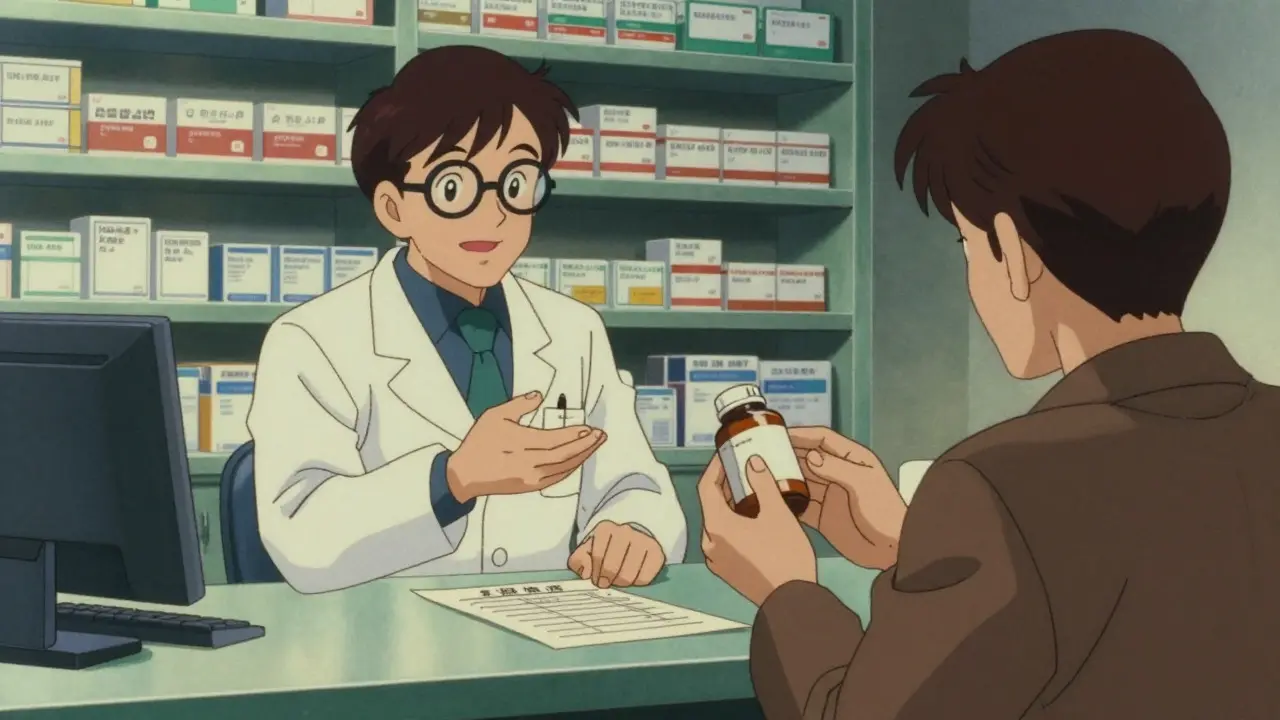
- Ask Your Pharmacist. Pharmacists are paid to catch these issues. Bring the bottle (or a photo of the label) to your pharmacy counter. A quick 2-minute conversation can save you from a hospital trip.
- Watch for 'Natural' Marketing. Ignore buzzwords like "all-natural" or "non-GMO." Focus on the actual chemical compounds listed in the ingredient section.
What to Do If You Find a Conflict
So, you’ve found a warning. Now what? Don’t panic, but don’t ignore it either.
If the interaction is labeled "Major" or "Contraindicated," stop taking the supplement until you speak to your doctor. They might adjust your medication dose or suggest a safer alternative. For "Moderate" interactions, monitoring might be enough, but professional advice is still key.
Keep a running list of everything you take-prescriptions, OTC meds, vitamins, and herbs. Show this list to every healthcare provider you see. Many doctors spend only seconds reviewing patient history; having a printed or digital list ensures nothing slips through the cracks. According to Johns Hopkins modeling, this simple habit could prevent 28,000 emergency department visits annually.
Frequently Asked Questions
Does the FDA approve supplements?
No. Under DSHEA, supplements do not require pre-market approval. Manufacturers are responsible for ensuring safety, but the FDA typically intervenes only after adverse events are reported. This is why label information varies so widely between brands.
What is a proprietary blend on a supplement label?
A proprietary blend is a mix of multiple ingredients listed under one total weight, without showing the amount of each individual component. This makes it difficult to verify safe dosages or check for specific interactions. It’s best to avoid products with large proprietary blends if you are on medication.
Can I take vitamins with my blood thinners?
Be very careful. Vitamins containing Vitamin K (like green tea extract or kale powder) can significantly reduce the effectiveness of warfarin. Always consult your cardiologist or hematologist before adding any new supplement to a blood-thinning regimen.
How long should I spend reading a label?
The FDA recommends spending 30 to 60 seconds examining each label. Focus primarily on the 'Warnings' section for drugs and the 'Supplement Facts' plus ingredient list for supplements. This brief pause can identify most common risks.
Is 'natural' the same as 'safe'?
No. Natural substances can have potent pharmacological effects. Red yeast rice contains monacolin K, which works like a prescription statin. St. John's Wort affects liver enzymes that process many drugs. Always treat natural supplements as biologically active agents, not just harmless food additives.