H2 Blocker Interaction Checker
Select Medications
Select your medications and click
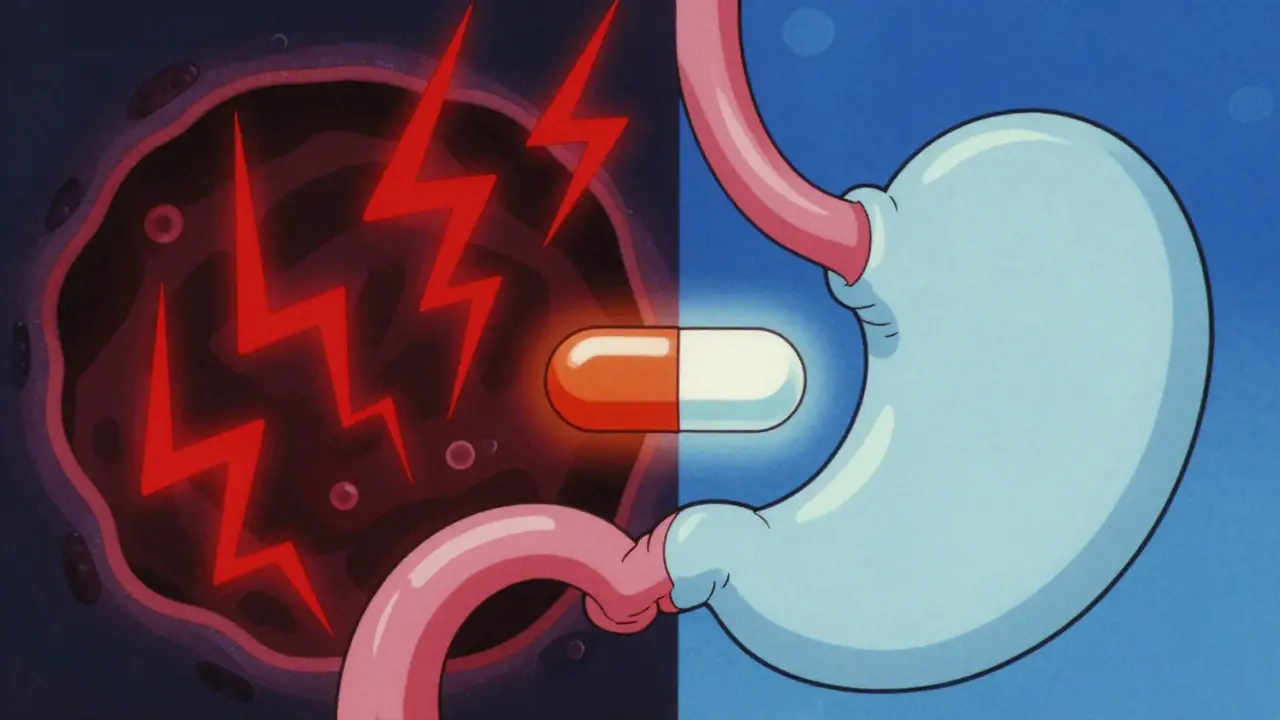
Imagine you have a stomach ulcer that burns when you eat, so your doctor prescribes an acid reducer. At the same time, you are taking medication for a fungal infection or HIV. You take both pills at breakfast, thinking you are doing everything right. But inside your body, a chemical clash is happening. The acid reducer changes your stomach environment, preventing the life-saving antiviral or antifungal from being absorbed. You swallow the pill, but it passes through you useless. This isn't a rare side effect; it is a common pharmacological trap known as a pH-dependent drug interaction.
Histamine H2-receptor antagonists, commonly called H2 blockers, are widely used to treat gastroesophageal reflux disease (GERD), peptic ulcers, and heartburn. While they are generally safe, their ability to raise stomach pH creates significant risks when combined with specific antivirals and antifungals. Understanding these interactions is not just academic-it can mean the difference between curing an infection and suffering treatment failure or toxicity.
How H2 Blockers Change Your Stomach Chemistry
To understand why these drugs fight each other, you need to look at how they work individually. H2 blockers are medications that reduce gastric acid secretion by blocking histamine receptors on stomach cells. They include drugs like famotidine (Pepcid), cimetidine (Tagamet), and nizatidine (Axid). Ranitidine (Zantac) was withdrawn from most markets in 2020 due to contamination issues, leaving these three as the primary options in many regions.
Normally, your stomach is highly acidic, with a pH between 1 and 3. This acid helps break down food and activates certain enzymes. However, some medications require this acidic environment to dissolve properly before they can be absorbed into your bloodstream. When you take an H2 blocker, it raises the gastric pH to around 4 to 6. This might sound like a small change, but for drugs like itraconazole or atazanavir, it is the difference between dissolving and passing through your system intact.
Not all H2 blockers act the same way. Cimetidine contains an imidazole ring structure that allows it to inhibit cytochrome P450 (CYP450) enzymes in the liver. These enzymes are responsible for breaking down many drugs. Famotidine and nizatidine lack this structure and do not significantly interfere with liver enzymes. This distinction is critical because it means cimetidine causes two types of problems: it changes stomach acidity AND it slows down drug metabolism, potentially leading to toxic buildup of other medications.
The Antifungal Conflict: Absorption vs. Metabolism
Antifungal medications, particularly azoles, are notorious for interacting with acid reducers. The severity of the interaction depends on whether the issue is absorption (getting the drug into the blood) or metabolism (breaking the drug down).
Itraconazole is the poster child for pH-dependent absorption issues. It requires a low pH to dissolve. Studies published in the Journal of Antimicrobial Chemotherapy show that co-administering H2 blockers can reduce itraconazole bioavailability by 40% to 60%. If you take itraconazole capsules with famotidine, you may receive less than half the intended dose. The solution? Use the itraconazole oral solution, which contains citric acid to create its own acidic environment, allowing it to absorb even if your stomach pH is higher.
| Antifungal Agent | Absorption Risk (pH Dependent) | Metabolism Risk (CYP Enzyme Interaction) | Clinical Recommendation |
|---|---|---|---|
| Itraconazole | High | Moderate | Avoid concurrent use; use oral solution if necessary |
| Fluconazole | Low | Low | Generally safe with famotidine/nizatidine |
| Voriconazole | Low | High (with Cimetidine) | Avoid cimetidine; monitor levels with other H2RAs |
| Posaconazole | High | Moderate | Separate administration by at least 2 hours |
| Isavuconazole | Low | Low | Favorable alternative with fewer interactions |
Voriconazole presents a different challenge. Its absorption is not heavily dependent on pH, but its metabolism is. Voriconazole is metabolized by CYP2C19 and CYP3A4. If you take cimetidine, which inhibits these enzymes, voriconazole levels in your blood can spike by 40%, leading to potential neurotoxicity or visual disturbances. In contrast, fluconazole is highly water-soluble and has minimal interaction with both pH changes and CYP enzymes, making it one of the safer choices if you must stay on an H2 blocker.

Antiviral Agents: The Hidden Danger
Antivirals, especially those used for HIV and hepatitis C, are equally sensitive to stomach acidity. Protease inhibitors like atazanavir and darunavir have low aqueous solubility. They need acid to dissolve. A clinical study found that taking atazanavir with famotidine reduced drug exposure by up to 77%. For patients relying on viral suppression, this drop can lead to resistance, where the virus mutates and becomes untreatable by that specific drug.
The FDA reviewed 42 antiviral labels in 2022 and found that 68% contained specific warnings about co-administration with acid-reducing agents. The risk isn't uniform. Some nucleoside reverse transcriptase inhibitors (NRTIs) are unaffected by pH changes. However, non-nucleoside reverse transcriptase inhibitors (NNRTIs) and protease inhibitors often require careful timing.
Dasatinib, a tyrosine kinase inhibitor sometimes used in contexts overlapping with antiviral therapy, also suffers from reduced absorption in higher pH environments. The key takeaway here is that "antiviral" is too broad a term. You must check the specific pharmacokinetic profile of your prescribed agent. Generally, if the drug label mentions "take with food" or "avoid antacids," it likely has pH-dependent absorption issues.
Cimetidine vs. Famotidine: Choosing the Safer Option
If you need an H2 blocker while on antivirals or antifungals, the choice of agent matters immensely. Cimetidine is the oldest H2 blocker, but it is also the most problematic. Because it inhibits multiple CYP450 enzymes (CYP1A2, CYP2C9, CYP2C19, CYP2D6), it increases plasma concentrations of many co-administered drugs. Data from the University of Liverpool's Drug Interactions Group shows cimetidine accounts for 63% of documented significant interactions between H2 blockers and antifungals/antivirals.
Famotidine is now the preferred H2 blocker in these scenarios. It does not inhibit CYP enzymes, eliminating the risk of metabolic toxicity. It still raises stomach pH, so absorption issues remain a concern, but you avoid the double-whammy of altered absorption plus slowed metabolism. Nizatidine is another option with a similar safety profile to famotidine regarding enzyme inhibition.
Proton pump inhibitors (PPIs) like omeprazole are even more potent acid suppressors than H2 blockers, keeping pH high for 24+ hours compared to the 6-12 hours of H2 blockers. Consequently, PPIs pose a greater risk for pH-dependent drugs. Guidelines from the American Society of Health-System Pharmacists (ASHP) recommend using H2 blockers over PPIs when acid suppression is needed alongside antifungals, precisely because the shorter duration allows for strategic timing.
Practical Strategies to Manage Interactions
You don't always have to choose between treating your stomach and treating your infection. With proper management, you can often use both medications safely. Here are the standard protocols recommended by infectious disease specialists:
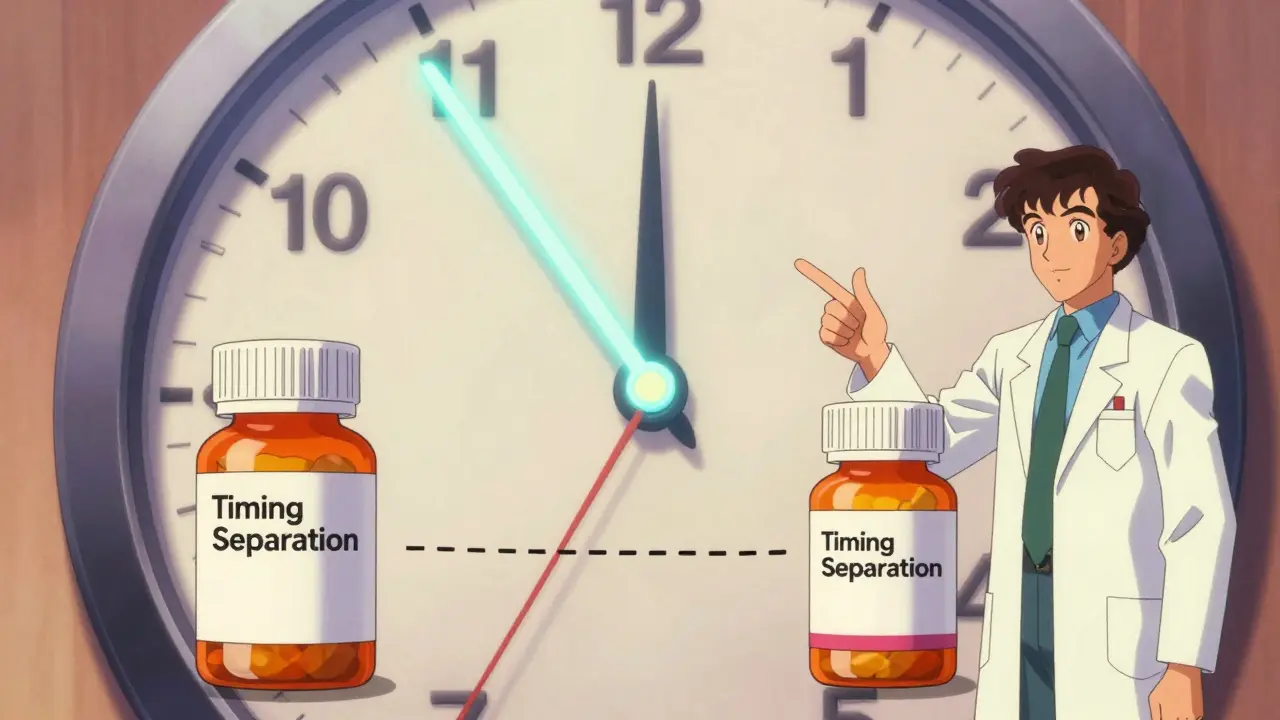
- Timing Separation: For pH-dependent drugs like posaconazole or atazanavir, separate the administration times. Take the antiviral or antifungal at least 2 hours before the H2 blocker. This allows the drug to dissolve in the naturally acidic stomach before the H2 blocker raises the pH.
- Formulation Switch: If you are on itraconazole, ask your doctor about switching from capsules to the oral solution. The solution contains citric acid, bypassing the need for stomach acid to dissolve the drug.
- Therapeutic Drug Monitoring (TDM): For drugs with narrow therapeutic windows like voriconazole, regular blood tests are essential. Target trough levels for voriconazole are typically 2-5 mcg/mL. If you start an H2 blocker, recheck levels after two weeks to ensure they haven't spiked or dropped.
- Alternative Agents: If interactions are unmanageable, consider switching the antifungal to isavuconazole or fluconazole, which have fewer pH and CYP dependencies. For acid suppression, short courses of antacids (which neutralize existing acid rather than stopping production) may be tolerated better than continuous H2 blocker use, though data varies.
A 2022 survey of hospital pharmacists revealed that only 43% consistently provided specific timing instructions to patients. This gap in communication leads to preventable treatment failures. Always ask your pharmacist: "Does my stomach medicine affect how well my other drugs work?"
Future Directions and New Formulations
Pharmaceutical companies are aware of these challenges. Research is ongoing into lipid-based delivery systems for itraconazole and other azoles. These formulations encapsulate the drug in fats, allowing absorption regardless of stomach pH. Early clinical trials (such as NCT04821542) suggest promise, potentially eliminating the need for strict timing rules in the future.
Regulatory bodies are also stepping up. The FDA has proposed rulemaking requiring specific administration timing instructions on labels for all drugs significantly affected by gastric pH. This aims to reduce interaction-related adverse events by an estimated 35%. Until then, the burden of knowledge falls on patients and providers to navigate these complex chemical relationships.
Can I take Pepcid (famotidine) with fluconazole?
Yes, generally. Fluconazole is highly water-soluble and its absorption is not significantly affected by changes in stomach pH. Famotidine does not inhibit the liver enzymes that metabolize fluconazole. However, always confirm with your healthcare provider as individual health factors may vary.
Why is cimetidine worse than famotidine for drug interactions?
Cimetidine inhibits cytochrome P450 (CYP450) enzymes in the liver, which are responsible for breaking down many drugs. This can cause other medications to build up to toxic levels in your blood. Famotidine does not inhibit these enzymes, making it a safer choice for patients on multiple medications.
How long should I wait between taking an H2 blocker and an antifungal?
For pH-dependent antifungals like posaconazole or itraconazole capsules, it is recommended to separate doses by at least 2 hours. Typically, you should take the antifungal first to allow it to dissolve in the acidic environment before the H2 blocker raises the stomach pH.
Do proton pump inhibitors (PPIs) interact more than H2 blockers?
Yes, PPIs generally pose a higher risk for pH-dependent drugs. They suppress acid production more completely and for a longer duration (24+ hours) compared to H2 blockers (6-12 hours). This prolonged high pH makes it harder for drugs like atazanavir or itraconazole to absorb effectively.
What should I do if I am on HIV medication and have acid reflux?
Consult your doctor immediately. Many HIV protease inhibitors are pH-dependent. Your provider may switch you to famotidine instead of cimetidine, adjust the timing of your doses, or switch to an HIV regimen that is less sensitive to stomach acidity. Never stop or change your HIV medication without medical advice.