
| Feature | Blister Packs (Pharmacy Prepared) | Pill Organizers (Manual) | Standard Vials |
|---|---|---|---|
| Setup Effort | Low (Pharmacy does it) | Medium (Weekly filling) | Low |
| Error Risk | Very Low | Moderate (Filling errors) | High (Missed/Double doses) |
| Visual Confirmation | Instant (Empty bubble) | High (Empty slot) | None |
| Flexibility | Low (Requires repackaging) | High | High |
Understanding Blister Packs: The Professional Grade Choice
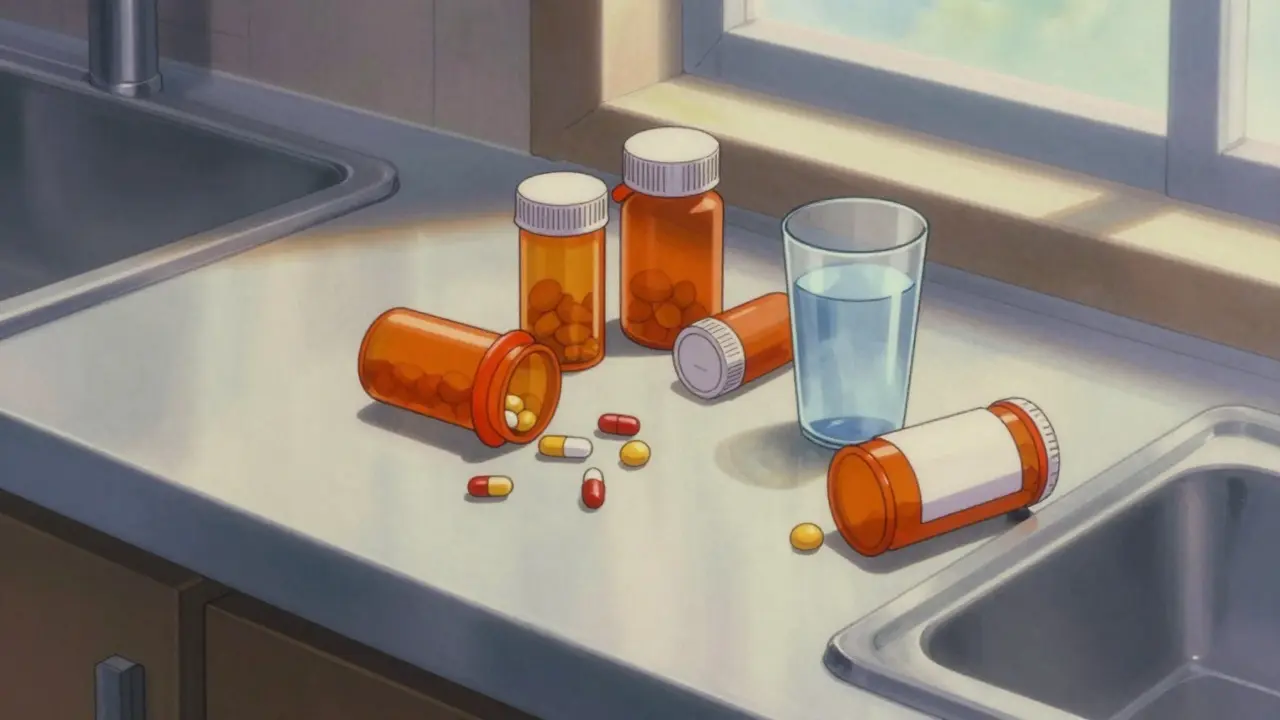
If you've ever seen those foil-backed plastic bubbles that hold a single pill, you've seen a blister pack. In a medical context, these are often provided as multi-dose packaging. Instead of five different orange bottles, your pharmacy organizes everything you need for a specific time-say, Tuesday morning-into one single bubble. This effectively removes the "did I take it?" anxiety because if the bubble is still there, you haven't taken the dose.
These systems are incredibly effective for people with complex regimens. According to data from Home Instead Senior Care, blister packs offer about 98% accuracy in administration, compared to only 82% when using standard bottles. Because they are professionally packed, you don't have to worry about accidentally putting the wrong pill in the wrong slot, which is a common pitfall with manual organizers. For those taking four or more medications daily, the American Society of Health-System Pharmacists recommends this as a safety best practice.
The real magic is the visual audit. If you wake up and can't remember if you took your meds at midnight, you just look at the pack. An empty slot is your proof. This is a game-changer for people with mild cognitive impairment or those who simply have a hectic schedule. It turns a mental task into a visual one.
Using Pill Organizers for Flexibility
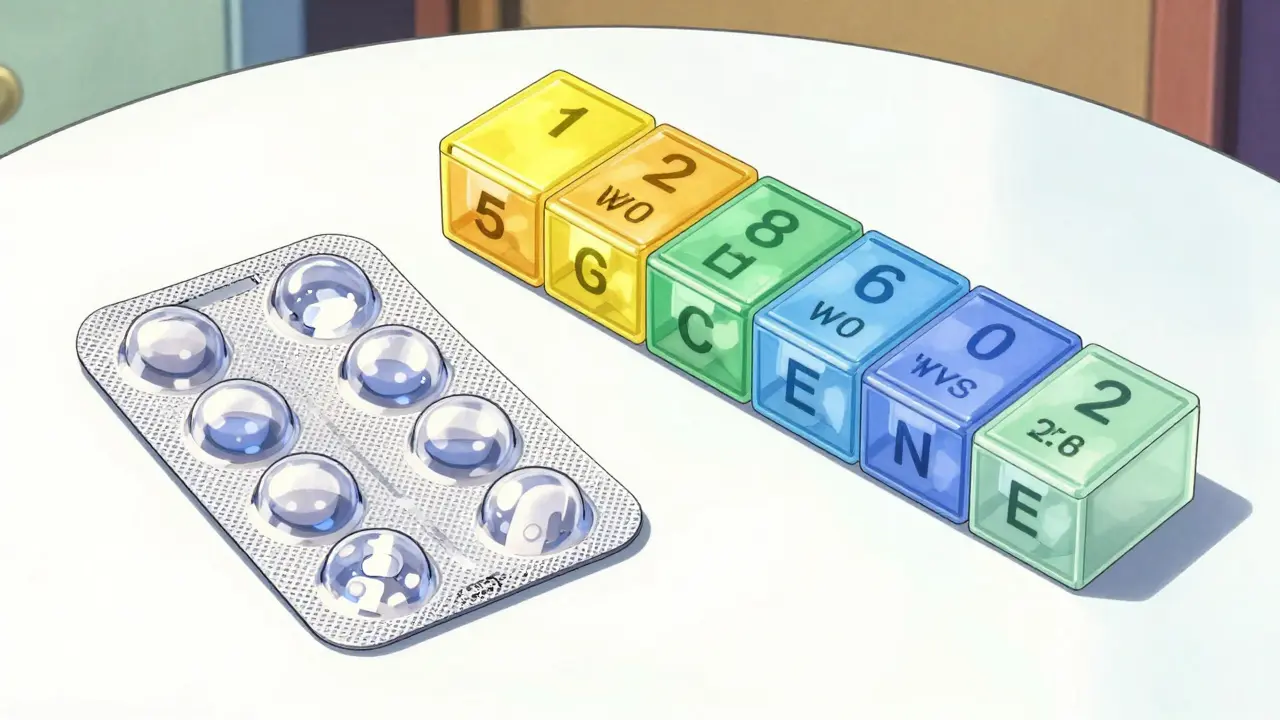
Pill Organizers are plastic containers with separate compartments, usually divided by the day of the week and time of day. Unlike blister packs, you are the one in charge of the filling process. This makes them a great choice if your prescriptions change frequently or if you prefer to handle your own sorting.
To make an organizer actually work for you, don't just get a simple "Monday-Sunday" box. Look for versions with 2-4 compartments per day (Morning, Noon, Evening, Bedtime). Using color-coded organizers can further reduce mistakes-for example, yellow for morning and blue for night. A study on arthritis patients showed that using these multi-compartment organizers improved adherence by 18% over single-slot boxes.
The biggest risk here is the "Sunday Setup." This is the window where most mistakes happen. If you're tired or distracted while filling your weekly box, you might put a heart pill in the Tuesday afternoon slot instead of Tuesday morning. To prevent this, always keep the original pharmacy bottles on the table and check the label twice before dropping the pill into the organizer. Never fill your organizer from memory.
Preventing Overdose and Missed Doses
The primary goal of these tools is to prevent the two most common medication errors: the missed dose and the double dose. A double dose often happens when a person forgets they already took their medication and takes it again, which can lead to toxicity or overdose. Missed doses, on the other hand, can cause blood pressure spikes or allow a condition to worsen.
Blister packs attack this problem by creating a physical record of the action. When you pop a pill, you're creating a permanent mark. Pill organizers do the same thing, but they require a bit more discipline to ensure the slots are filled correctly. In home care settings, the visual confirmation provided by these systems can reduce medication errors by as much as 42%. For someone struggling with dementia, this shift can be life-saving; one caregiver reported that switching to blister packs stopped their father's emergency room visits entirely because he stopped taking extra doses out of confusion.
Overcoming Common Physical Barriers
It's all well and good to have a system, but it doesn't help if you can't get the pill out. Many people, especially those with arthritis, find standard blister packs frustrating or even impossible to open. This can lead to "frustration errors" where people give up on the system or accidentally crush the medication while trying to force it out.
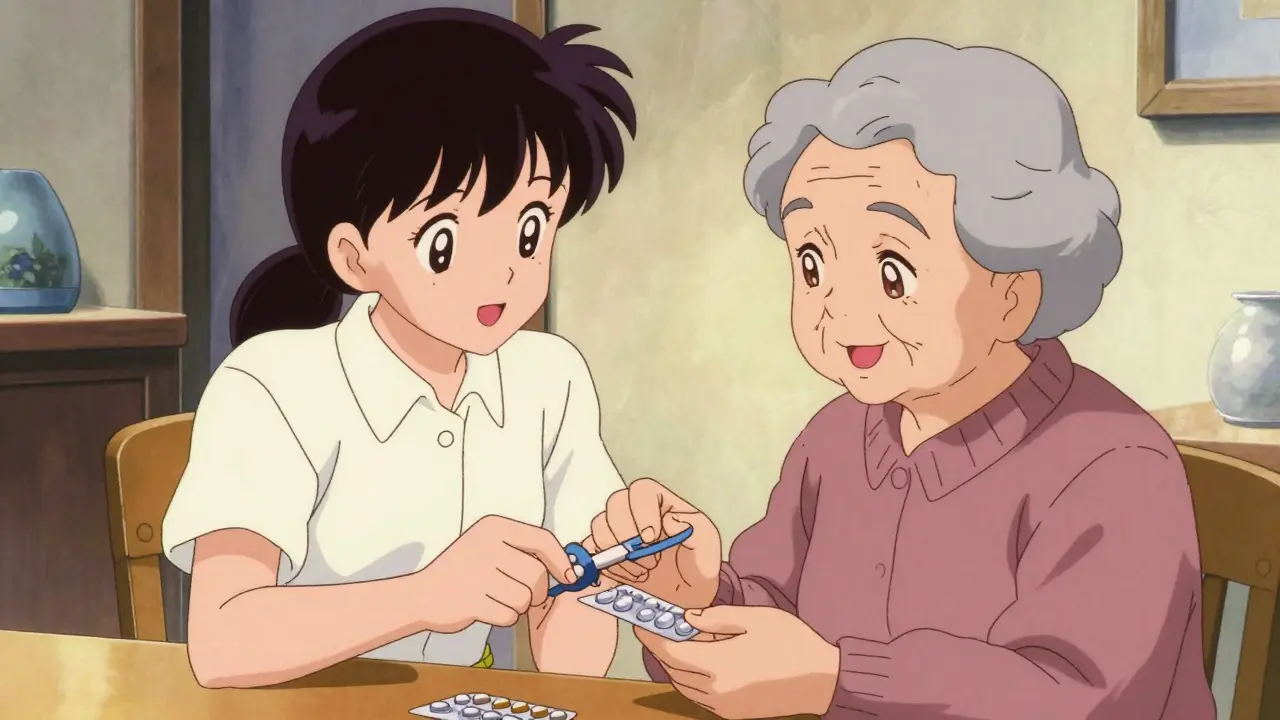
If you struggle with dexterity, ask your pharmacist for "easy-open" versions. These often have perforated edges or different foil densities that make them easier to peel. There are also specialized opening tools-essentially small plastic pliers-that can pop pills out of bubbles without requiring a strong grip. Don't let the packaging be a barrier to your health; there is always a tool or a modification that can make the process smoother.
Setting Up Your System for Success
If you're moving from bottles to a more organized system, don't just wing it. There is a specific process that ensures the transition is safe. If you go the blister pack route, you'll need to coordinate with a pharmacy that offers multi-dose packaging. This usually takes a few days to set up as they need to review your regimen and customize the packs.
- Regimen Review: Sit down with your doctor or pharmacist to list every single medication, including over-the-counter supplements.
- Pharmacy Coordination: Choose a pharmacy that specializes in adherence packaging. Ensure they have a system for updating your packs if your dosage changes.
- The "Double-Check" Habit: Whether using a pack or a box, make it a habit to check the date and time printed on the package before every single dose.
- Safe Storage: Keep your organizers in a consistent, visible spot-like the kitchen counter or next to the coffee maker-so the system becomes part of your natural daily flow.
For those using manual organizers, set a recurring alarm on your phone for "Fill Day" (usually Sunday). Dedicate a clean, well-lit space for this task to avoid dropping pills or mixing up similar-looking medications. If you have a caregiver, have them witness the filling process to provide a second set of eyes.
Looking Ahead: Smart Packaging
We are moving toward a world where the packaging does the remembering for us. Smart blister packs are now hitting the market, featuring sensors that track exactly when a bubble is popped. If a dose is missed, the system can send an alert to a caregiver's phone or a mobile app. Some new versions even include QR codes that you can scan with your smartphone to see a video explaining exactly why you are taking that specific medication and what side effects to watch for.
While these high-tech options are exciting, the basic principle remains the same: removing the need for human memory. Whether it's a $5 plastic box or a sensor-enabled smart pack, the goal is to create a fail-safe environment where the right pill is taken at the right time, every single time.
Are blister packs more expensive than regular bottles?
Generally, yes. While standard bottles are the default, pharmacy-prepared blister packs often come with a service fee, typically ranging from $1.50 to $3.50 per day of medication. However, many Medicare Advantage plans cover these services, and the cost is often offset by the prevention of expensive emergency room visits caused by medication errors.
What happens if my doctor changes my dose while I'm using blister packs?
This is the main downside of blister packs. Because the meds are sealed, you can't just "add one more pill" to a slot. You'll need to contact your pharmacy to have the remaining packs updated or repackaged. This is why pill organizers are often preferred by people whose medication levels fluctuate frequently.
Can I put all my medications in one pill organizer?
Most can, but be careful with medications that require refrigeration (like some insulin or specific liquids) or those that are light-sensitive. Those must stay in their original pharmacy packaging. Always check with your pharmacist to see if any of your meds have special storage requirements before moving them into a plastic organizer.
How do I know if a pill organizer is high quality?
Look for BPA-free, food-grade plastics. The lids should snap shut firmly so pills don't spill if the box is dropped. Transparency is also key; you want to be able to see the contents clearly without opening every single lid. Color-coding for different times of day is a major plus for reducing errors.
Which is better for a senior with dementia: a box or a blister pack?
Blister packs are almost always superior for dementia patients. Because the pharmacy does the sorting, there's no risk of the patient filling the box incorrectly. More importantly, the "empty bubble" provides an immediate visual cue that a dose has been taken, which prevents the dangerous cycle of taking multiple doses because they forgot they already did so.
Next Steps and Troubleshooting
If you're a caregiver: Start by auditing the current system. If you see a lot of "leftover" pills at the end of the month, it's time to switch to blister packs. Set up a 15-minute training session with the patient to show them how to read the date/time labels on the new packs.
If you're a patient with limited hand strength: Don't struggle in silence. Purchase a pill popper tool or ask your pharmacist for perforated packs. If you find the foil too hard to push through, a small pair of embroidery scissors can be used to carefully snip the edge of the bubble.
If you have a complex, changing regimen: Use a hybrid approach. Use a pill organizer for the meds that change often and keep your stable, long-term medications in a pharmacy-prepared blister pack. This gives you the best of both worlds: professional safety and personal flexibility.




Rick Brewster - 22 April 2026
one must ponder if the sheer act of outsourcing our cognitive memory to a plastic bubble is not merely a symptom of the wider decay of human agency in the late capitalist era where we trade the mental rigor of remembrance for the sterile convenience of a pharmacy prepack effectively eroding the neural pathways that once defined our attention to detail and our very existence in a physical world that is increasingly mediated by synthetic barriers and pharmaceutical crutches that promise safety but deliver a hollow kind of security
RAJESH MARAVI - 22 April 2026
This is totaly useless!! Blister packs are just a way for pharamcies to rip you off with those "service fees" 🙄 absolute scam if u ask me and probly the pils get ruined by light anyway since they aren't in dark bottles
Chidi Prosper - 24 April 2026
The point about the Sunday Setup is spot on. I've seen way too many people mess up their week because they were rushing through the sorting process on a Sunday evening. It's a critical failure point that needs a strict protocol to fix.
Sue Stoller - 26 April 2026
I love the idea of the pill popper tools! 🌟 Such a simple fix for something that can be so frustrating. We've got this! 💪😊
Mike Arrant - 26 April 2026
Most people are just too lazy to remember their meds. If you can't handle five bottles, maybe you should just have a nurse live in your house since you're clearly not cutting it on your own.
Saptatshi Biswas - 27 April 2026
The statistics provided regarding adherence are fundamentally flawed because they fail to account for the socioeconomic disparities in healthcare access. Furthermore, the obsession with Western pharmacy models is tiresome when traditional systems of care often provide more comprehensive support without the need for expensive plastic waste.
Dave Edwards - 27 April 2026
Wait, so we're just ignoring the environmental disaster of these blister packs? 🙄 Absolute madness! We're poisoning the planet just so we don't have to look at a calendar. Truly the pinnacle of human selfishness. 🙄
Mel Glick - 28 April 2026
Cut the waste talk. If a blister pack stops a senior from overdosing and ending up in the ER, the plastic is a non-issue. Period. Get your priorities straight.
Odicha ude Somtochukwu - 29 April 2026
It is truly heartwarming to see such practical solutions for our elders... the emphasis on the "Double-Check" habit is particularly prudent... may we all find peace in these small acts of care!!!
Amy Fredericks - 1 May 2026
I've found that setting a phone alarm combined with a simple pill box works wonders for my family. It's all about finding the rhythm that fits your specific life and not feeling bad if you need a bit of extra help to stay healthy!