
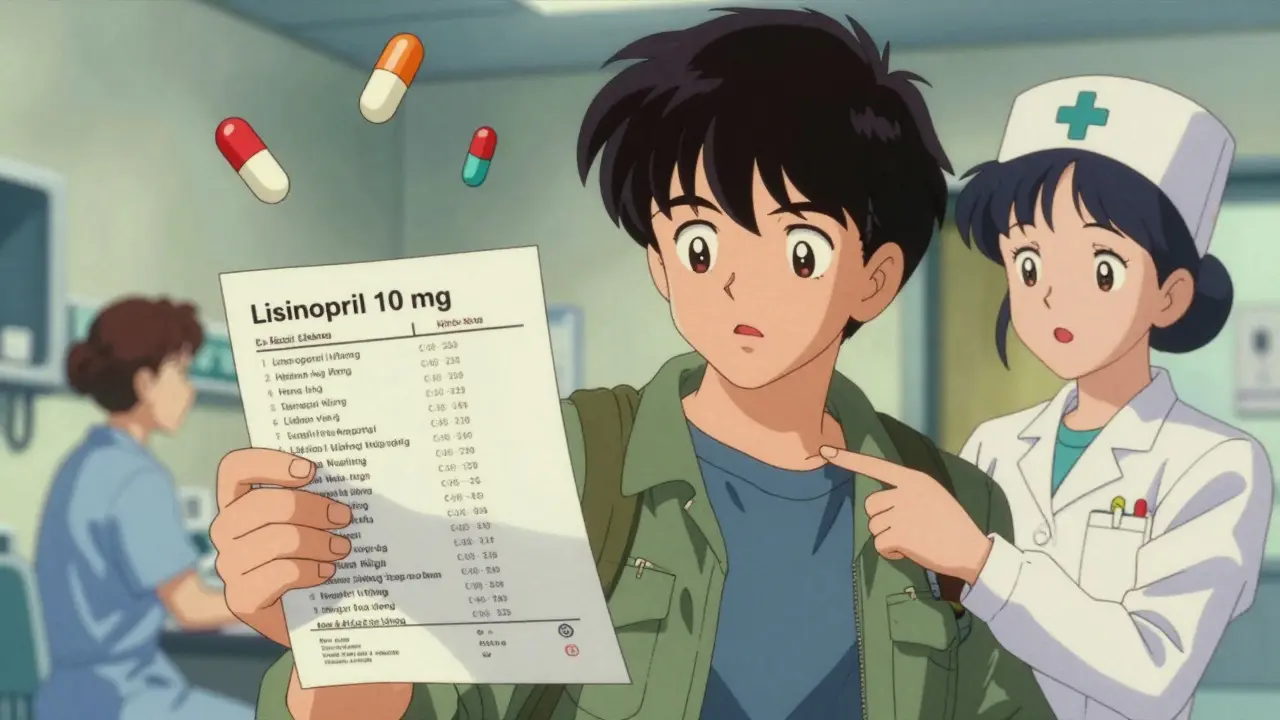
When you’re traveling abroad and something goes wrong - a sudden allergic reaction, a heart palpitation, or a fall - the last thing you want is to stand in an emergency room unable to explain what medications you’re taking. Language barriers don’t just slow things down. They can cost lives. A 2021 study in the Journal of the American Pharmacists Association found that patients who couldn’t communicate their meds had a 50% higher chance of a dangerous medication error. The solution isn’t complicated: keep a multilingual medication list - and carry it with you.
Why a multilingual medication list matters
Most people know they should carry a list of their medications. But if you speak a language other than English - or if you’re traveling to a country where English isn’t widely spoken - a simple English list won’t help. Emergency staff might not understand your pills. Your pharmacy might not have translated instructions. Even if they do, they might not know what you mean by "the red pill I take in the morning." Research from the U.S. National Library of Medicine shows that 62% of medication errors in emergency rooms happen because staff couldn’t confirm what the patient was taking. In Australia, where NPS MedicineWise tracks usage, patients who used a multilingual list had 28% fewer discrepancies during hospital admissions. That’s not a small win. That’s the difference between getting the right treatment in 15 minutes - or waiting an extra 22 minutes while staff scramble to find an interpreter.What should be on your list
A good multilingual medication list isn’t just a copy-paste of your prescription bottle. It needs to be clear, complete, and consistent across languages. Here’s what to include:- Medication name - Use the generic name (like "Lisinopril") not the brand (like "Zestril"). Generic names are the same worldwide.
- Dosage - Write "10 mg" not "one pill." Not all pills look the same.
- Frequency - "Once daily," "Twice a day," "As needed for pain."
- Purpose - "For high blood pressure," "For diabetes," "For anxiety."
- Prescribing doctor - Name and clinic (or phone number if you’re comfortable).
- Start date - When you began taking it. This helps spot drug interactions.
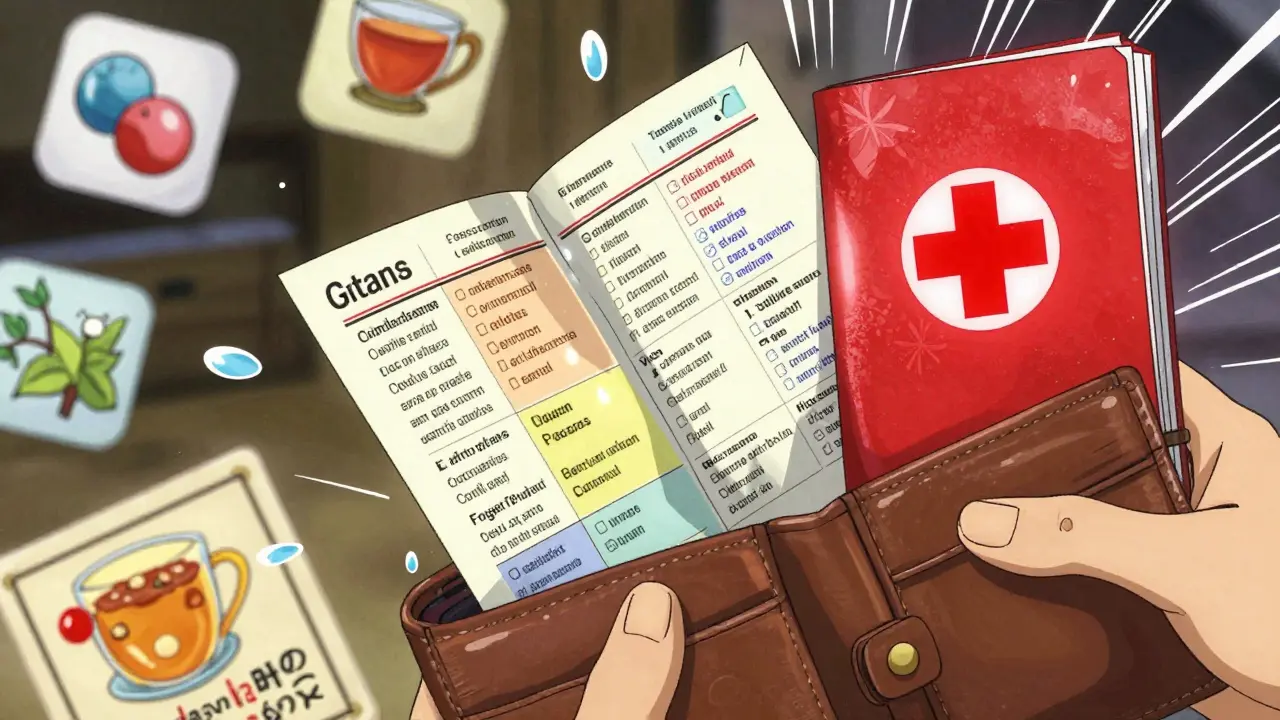
Don’t forget supplements, herbal remedies, or over-the-counter drugs. Many people take turmeric, ginkgo, or traditional teas. These can interact dangerously with prescription meds. Include them. A 2022 survey found that 52% of non-English speakers didn’t mention herbal medicines during ER visits - and nearly half of those cases involved unexpected side effects.
Where to get ready-made multilingual lists
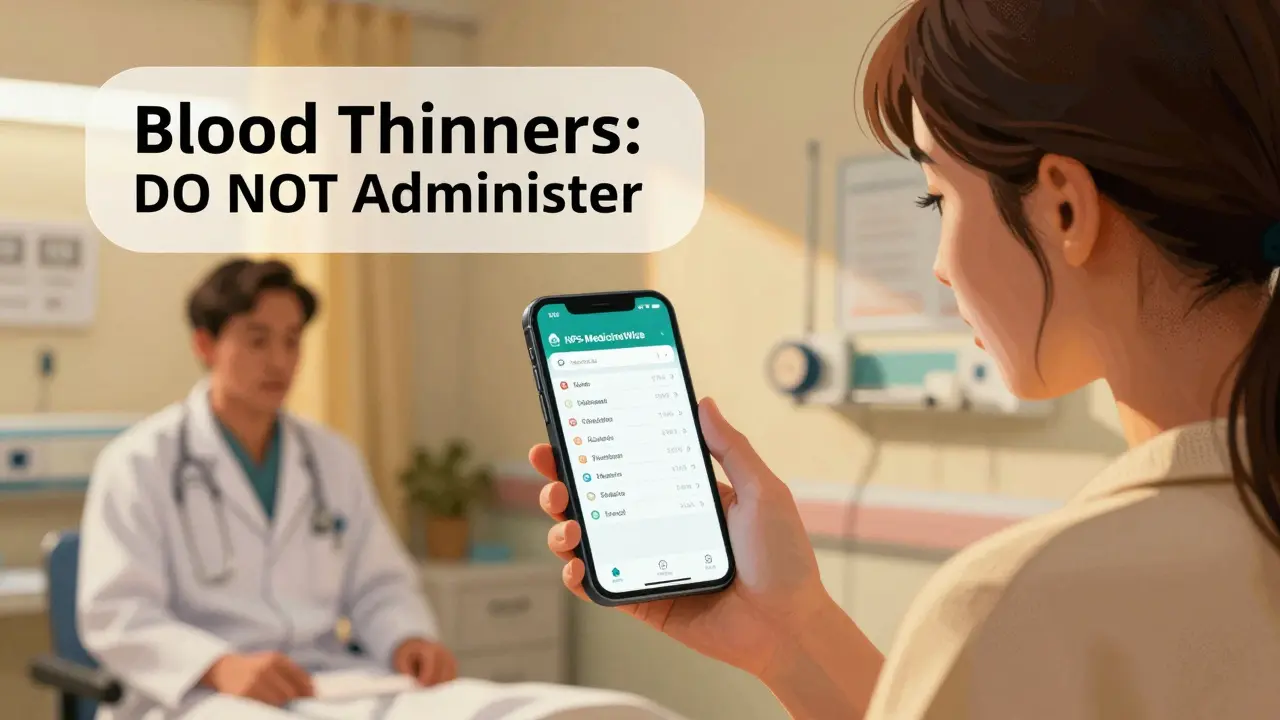
You don’t have to build this from scratch. Several trusted organizations offer free, printable, and downloadable lists in multiple languages.NPS MedicineWise (Australia) - This is one of the most practical tools available. Their free app (available on iOS and Android) lets you add your meds, set reminders, and switch between 11 languages: English, Arabic, Chinese (Simplified and Traditional), Hindi, Korean, Persian, Punjabi, Spanish, Tamil, and Vietnamese. The app syncs across devices, so if you lose your phone, you can log in from another. Over 350,000 people use it monthly.
Tennessee Pharmacists Association (UML) - Though based in the U.S., this list is used globally. Available as a PDF in 10 languages - including Russian, Somali, Nepali, and Korean - it’s clean, standardized, and matches hospital intake forms. You can print it, laminate it, and keep it in your wallet. It doesn’t have reminders, but it’s foolproof for emergencies.
MedlinePlus (U.S. National Library of Medicine) - Offers drug information in over 40 languages. While it doesn’t let you build a personalized list, you can download their medication fact sheets in your language and glue them to your list. It’s great for verifying names and dosages.
British Red Cross Emergency Phrasebook - Not a medication list, but a lifesaver. It includes phrases like: "I take..." "I am allergic to..." "I need help with my medicine." It’s available in 36 languages, from Albanian to Urdu. Print a copy and keep it with your list. First responders use this to ask the right questions.
How to make sure it works in real emergencies
Having a list isn’t enough. It has to be usable.- Carry it physically - Put a printed copy in your wallet, passport holder, or travel pouch. Don’t rely on your phone dying. A paper copy is faster in a crisis.
- Use digital backup - Save a PDF on your phone and email it to a trusted family member. Use cloud storage (Google Drive, iCloud) so you can access it from any device.
- Update it every time you see a doctor - A 2022 study found that 78% of medication errors happen during transitions of care - like leaving the hospital or switching doctors. Update your list after every appointment.
- Teach someone how to use it - If you’re traveling with someone, show them how to hand it to a nurse. Practice saying: "This is my medication list. I need help."
- Check the language version - Not all translations are equal. Mandarin Chinese has Simplified and Traditional versions. Vietnamese has different regional terms. Make sure your list matches the dialect you speak. A 2022 survey found 68% of LEP patients struggled because the translation didn’t match their dialect.
What to avoid
Many people make simple mistakes that make their list useless.- Don’t use abbreviations - "B.P." for blood pressure? Not universal. Write it out.
- Don’t mix languages - One section in English, another in Spanish? It confuses everyone. Use one language per version.
- Don’t forget allergies - Add a separate line: "Allergic to: Penicillin, Sulfa, Shellfish." Include reactions: "Rash," "Swelling," "Breathing trouble."
- Don’t assume the hospital has your list - Even if you’re in a big city, they may not have your language. Always bring your own.
What’s new in 2026
The field is improving. In January 2024, the CDC added medication safety guides in Amharic, Hmong, Karen, and Tibetan - languages spoken by refugee communities in the U.S. Google now shows translated medication info directly in search results for over 100 drugs across 30 languages. The American Pharmacists Association is rolling out national guidelines in mid-2025 that will require pharmacies to offer multilingual lists based on local demographics. But until then, you’re still the best line of defense.One traveler in Melbourne shared her story: "I had a stroke in Bali. I had the NPS app open on my phone. The nurse pulled up the Vietnamese version - my mother’s language - and saw I was on blood thinners. They stopped the wrong treatment immediately. That list saved me."
Frequently Asked Questions
Do I need a separate list for each language I speak?
Yes. If you speak two languages fluently - say, Spanish and English - create two versions. Emergency staff may not know which one you prefer. If you’re in a country where only one language is spoken, prioritize that. But if you’re traveling widely, carry all versions you use daily.
Can I use Google Translate to make my own list?
It’s risky. Google Translate doesn’t always use correct medical terms. For example, it might translate "aspirin" as "painkiller" - which could be wrong if you’re allergic to NSAIDs. Use official sources like NPS MedicineWise or MedlinePlus. If you must use a translator, have a pharmacist review it.
What if my medication isn’t in the list?
Write it in by hand. Use the generic name, dosage, and purpose. Then, add a note: "This is not on the printed list - I take this daily." You can also take a photo of your pill bottle and save it with the list. A picture is often clearer than words.
Is there a multilingual list for herbal medicines?
Most official lists don’t include herbal remedies. But you should still list them. Write the common name (like "Turmeric") and the scientific name (Curcuma longa) if you know it. Add the reason you take it: "For joint pain." Include the brand if it’s a supplement. This helps avoid dangerous interactions with blood thinners or diabetes drugs.
How often should I update my list?
Update it every time you start, stop, or change a medication. Even if it’s just a one-time painkiller. Keep a note on your phone: "Check meds after every doctor visit." That way, you won’t forget. Studies show people who update regularly have 47% fewer medication errors.
Can I store this on my smartwatch?
Not reliably. Smartwatches don’t always sync with emergency systems. If your phone is locked or dead, your watch won’t help. Use it as a reminder to carry your printed list or phone backup - not as the primary tool.

Esha Pathak - 15 February 2026
Life’s too short to die because someone didn’t know what "neem oil capsules" meant in Portuguese 🌿💔
Imagine lying in a hospital bed, heart racing, and the nurse just stares at your "herbal tea for digestion" like it’s a cursed artifact. I’ve been there. My grandma’s turmeric + warfarin combo nearly turned her into a human pincushion. We now carry laminated cards in Hindi, English, and Spanish. No more guessing games. Just show. They get it. No drama. Just life.
Mike Hammer - 17 February 2026
bro i just put all my meds in a google doc labeled "emergency info - dont delete pls" and shared it with my mom and my dog walker. also printed a copy and taped it to my fridge. if i pass out, at least someone can say "oh yeah he takes that weird green pill for his weird knee thing"
also i use "ibuprofen" not "advil" cause i dont trust brands. generic is king. also i added "allergic to peanuts, latex, and sarcasm" just in case.
Michael Page - 18 February 2026
The notion that a printed list is somehow more reliable than a digital one is dangerously naive. Emergency rooms have QR code scanners. They have secure EHR systems. A paper slip in your wallet is a relic of a time before smartphones. And let’s not forget: paper degrades. Ink smudges. Dialects vary. What if your Vietnamese translation uses Northern terms but you’re from Ho Chi Minh City? You’re not prepared-you’re just carrying a time capsule of outdated assumptions. The real solution is a dynamic, cloud-synced, AI-audited medical profile with biometric authentication and real-time language adaptation. Paper is not a strategy. It’s a gamble.
Mandeep Singh - 19 February 2026
You people are so naive. You think a list solves anything? Have you ever been in an Indian ER? They don’t even know what "generic name" means. I had to hold a doctor’s hand and spell out "Metformin" like he was a kindergartener. And don’t get me started on herbal meds-everyone here takes ashwagandha like it’s candy, and no one tells the doctors. It’s not about translation-it’s about culture. You need a translator who knows your grandmother’s village, your caste, your family’s history of diabetes, and whether you secretly took that Ayurvedic tonic last Tuesday. A PDF doesn’t know that. A human does. Stop outsourcing your safety to a Google Translate bot.
Josiah Demara - 20 February 2026
Let’s be real: this whole "multilingual list" thing is performative activism. You think a laminated card in 11 languages is going to help when you’re unconscious in a rural clinic in Laos? The nurse doesn’t speak English, Mandarin, OR Vietnamese. She speaks Lao. And she’s not even trained to read medication labels. The real issue? Global healthcare infrastructure is broken. You’re putting Band-Aids on a hemorrhage. Meanwhile, the WHO ignores this because it’s easier to hand out pamphlets than fund training for 500 million frontline workers. This post is feel-good noise. The solution isn’t a list-it’s systemic reform. Or better yet, don’t travel. Stay home. It’s safer.
Kaye Alcaraz - 20 February 2026
I am so proud of the progress we’re making in patient safety. The fact that NPS MedicineWise offers 11 languages is a monumental step forward. I have personally encouraged three elderly neighbors to use the app, and one of them, Mrs. Chen, told me she felt like herself again-no longer afraid to go to the doctor. I believe in small, consistent actions. Print one copy. Add one language. Share it with one person. That’s how change happens. Not with grand gestures, but with quiet, daily courage. You are not alone. We are building a safer world, one medication list at a time.
Charlotte Dacre - 20 February 2026
Oh wow, a whole 11 languages? How cute. I’m sure the guy in rural Bolivia who speaks Quechua and only knows his meds as "the green thing my cousin gave me" is just thrilled. Also, "laminated"? Honey, that’s not a life-saving tool, that’s a coaster. If your emergency plan involves carrying a piece of plastic that says "I take Lisinopril" like it’s a loyalty card, you’re not prepared-you’re just really into stationery. Next you’ll be bringing a candle for mood lighting in the ER. 🙃
Joe Grushkin - 22 February 2026
Of course you need a multilingual list. But let’s not pretend this isn’t just another middle-class virtue signal. You’re not saving lives-you’re avoiding awkward conversations with your pharmacist. Meanwhile, people in Ukraine, Syria, or rural Alaska are dying because they can’t get *any* meds, let alone a translated list. This is like telling someone to wear a seatbelt while their car has no engine. Priorities. Fix the system first. Then we’ll talk about whether your Spanish translation uses "pastilla" or "comprimido."
Virginia Kimball - 24 February 2026
I just made my first multilingual list last week-English and Spanish-because my abuela’s in town and she’s been taking that new blood pressure med. We sat together and wrote it out by hand. She cried. I cried. It wasn’t perfect. But it was ours. Now I’m adding Mandarin because my roommate’s from Shanghai and she takes ginseng. We’re turning this into a little ritual. It’s not just about safety. It’s about connection. I didn’t know I needed this until I started talking to people about their pills. Turns out, everyone’s scared. And everyone deserves to be understood.
Kapil Verma - 25 February 2026
Why are you wasting time on translations? India has 22 official languages and 1,600 dialects. Your "Vietnamese" list won’t help a Punjabi migrant worker in Melbourne. Your "Chinese" list won’t help a Tibetan monk in Toronto. This is Western arrogance dressed as compassion. Real help? Train ER staff in basic medical phrases in the top 5 languages of their region. Fund interpreters. Pay them. Don’t put the burden on the sick. You think a laminated card makes you a hero? It makes you a tourist with a Google Doc. Real change doesn’t come from your wallet. It comes from policy. From funding. From dignity. Not from your Pinterest board of emergency lists.