

Finding someone unresponsive is terrifying. Your brain might freeze, or you might feel a sudden surge of panic. But in those first few minutes, your actions are the difference between a tragedy and a recovery. When a person overdoses, their brain is essentially starving for oxygen. Because brain damage can start in as little as 4 to 6 minutes due to hypoxia, you don't have time to wonder if they're "just sleeping." You have to act immediately.
The goal here isn't to be a doctor; it's to keep the person's vital functions-airway, breathing, and circulation-working until professional paramedics take over. By following a standardized protocol, you can potentially cut the risk of death by up to 50%.
| Priority | Action | Key Goal |
|---|---|---|
| 1 | Call Emergency Services | Get professional medical help on the way immediately. |
| 2 | Check Responsiveness | Determine if the person is conscious or breathing. |
| 3 | Administer Naloxone | Reverse opioid-induced respiratory depression. |
| 4 | Rescue Breathing / CPR | Oxygenate the brain and heart. |
| 5 | Recovery Position | Prevent choking and keep the airway clear. |
Call for Help First
It sounds obvious, but many people forget this step because they are focused on the person in front of them. Call 911 (or your local emergency number) the moment you suspect an overdose. Why? Because even if you have reversal agents, the person may still require advanced life support, oxygen, or treatment for complications that only a hospital can provide. EMS arrival alone can reduce mortality by 35% compared to those who wait for the person to "wake up" on their own.
Assess the Situation Quickly
You need to determine if the person is actually overdosing. Avoid the "shake and shout" method-don't spend precious seconds shaking them vigorously. Instead, use the AVPU scale: are they Alert? Do they respond to your Voice? Do they respond to Pain (like a firm knuckle rub on the sternum)? Or are they completely Unresponsive?
Look for these red flags:
- Blue or greyish lips and fingernails.
- Gasping, snoring, or gurgling sounds (this is not normal breathing; it's a sign of a blocked airway).
- Pinpoint pupils (though be careful-about 40% of fentanyl overdoses actually show normal-sized pupils).
- Slow, shallow, or completely absent breathing.
Using Naloxone Correctly
If you suspect opioids are involved, use Naloxone is a medication that rapidly attaches to opioid receptors in the brain, blocking the effects of opioids and reversing respiratory depression. It is safe to use even if the person hasn't taken opioids; it won't harm them, but it won't help them if it's a stimulant or alcohol overdose either.
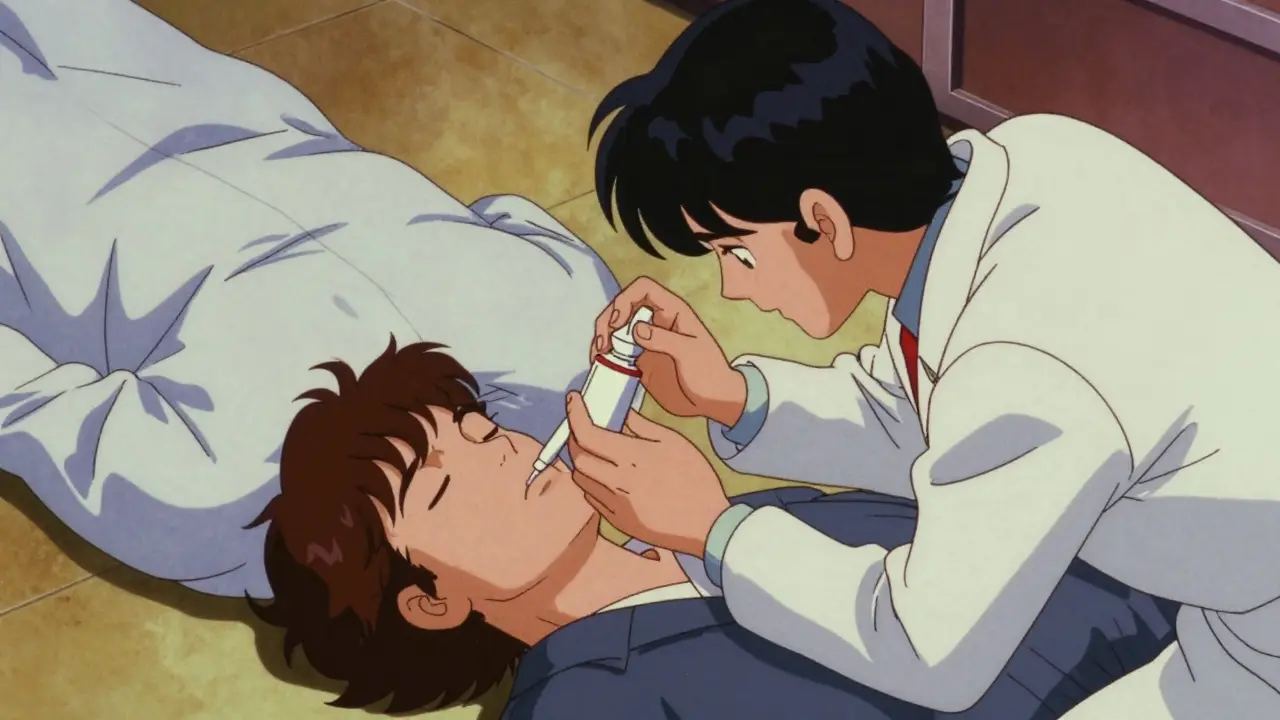
For intranasal sprays, the process is simple: ensure the person is lying on their back, insert the tip into a nostril, and deliver a firm spray for 2-3 seconds. Most guidelines suggest administering the dose within 2-3 minutes of recognizing symptoms. If they don't wake up after a few minutes, a second dose may be necessary. Remember, naloxone lasts between 30 and 90 minutes, but some potent opioids last longer. This means the person could slip back into an overdose once the naloxone wears off, which is why professional medical monitoring is non-negotiable.
The Critical Role of Rescue Breathing
Many people stop helping once they've given naloxone, thinking the job is done. This is a dangerous mistake. The primary cause of death in an overdose is lack of oxygen. If the person isn't breathing, you must provide Rescue Breathing is a first-aid technique involving mouth-to-mouth ventilation to provide oxygen to an unresponsive person.
Tilt the head back and lift the chin to open the airway. Pinch the nose and give one breath every 5-6 seconds (about 10-12 breaths per minute). Each breath should last one second and you should see the chest rise. Continue this for at least 90 to 120 seconds before re-evaluating. If the heart has stopped completely, transition to full CPR. Interestingly, for opioid overdoses, rescue breathing alone is often more critical than chest compressions initially, as respiratory failure usually happens long before the heart stops.
The Recovery Position: Preventing Choking
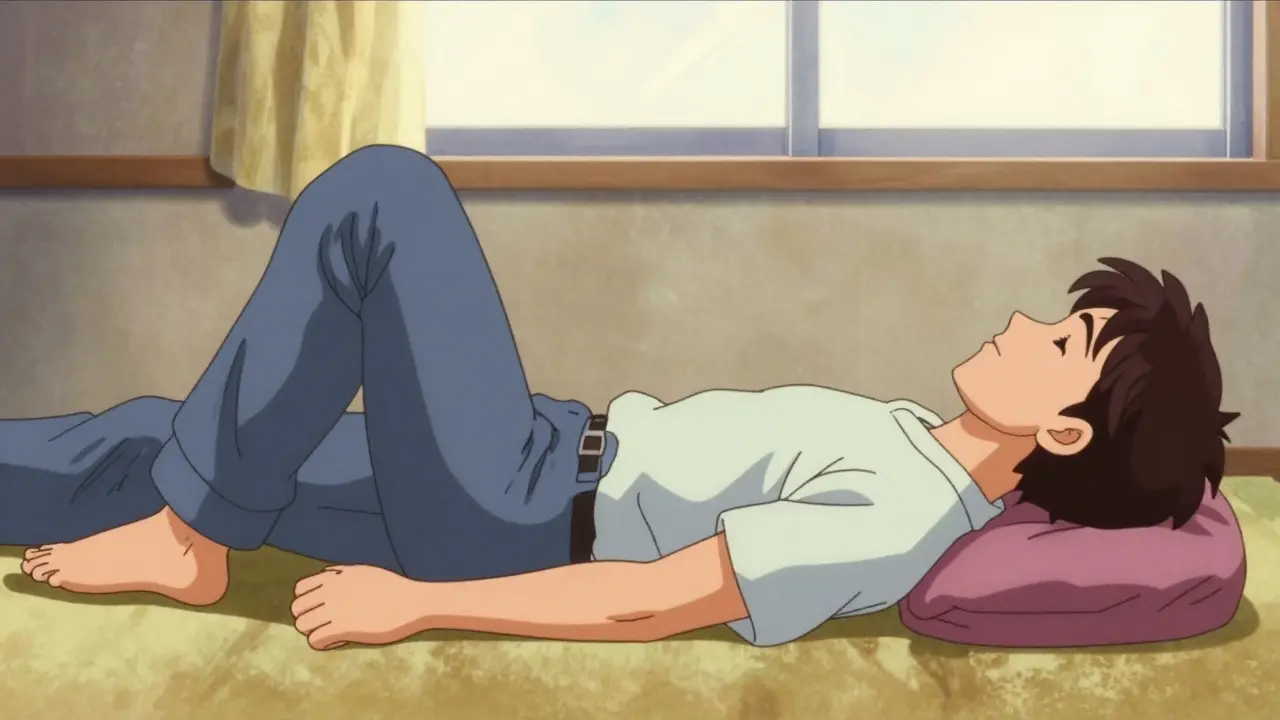
If the person starts breathing on their own or is unconscious but breathing, you must place them in the Recovery Position is a side-lying posture that uses gravity to keep the airway open and prevent aspiration of vomit.
To do this correctly: roll the person onto their left side. Bend the top leg at a 90-degree angle at the hip and knee to stabilize them. Tilt the head back slightly to keep the airway open. This is vital because people often vomit during an overdose or as they wake up from naloxone. If they are on their back, they can aspirate (inhale) the vomit, which increases the risk of death or severe pneumonia by 400% in alcohol-related cases.
Handling Different Types of Overdoses
Not every overdose looks the same, and your response should change based on the substance. While opioids cause the body to "shut down," stimulants do the opposite.
| Substance Type | Primary Symptom | Critical Intervention | What to Avoid |
|---|---|---|---|
| Opioids (Heroin, Fentanyl) | Respiratory failure, pinpoint pupils | Naloxone + Rescue Breathing | Waiting for them to "sleep it off" |
| Stimulants (Cocaine, Meth) | Hyperthermia, seizures, tachycardia | External cooling (wet cloths, fans) | Ice baths or cold showers (risk of arrhythmia) |
| Alcohol / Benzodiazepines | Deep coma, loss of gag reflex | Airway management (Recovery Position) | Naloxone (it has zero effect here) |
For a stimulant overdose, the danger is often overheating. You want to get their body temperature below 104°F (40°C) within 30 minutes to prevent permanent organ damage. However, do not throw them into a freezing ice bath. The sudden shock to the system can trigger cardiac arrhythmias, making a bad situation much worse.
Common Pitfalls to Avoid
In the heat of the moment, it's easy to make mistakes. Many bystanders mistake "agonal gasping" (labored, snorting sounds) for normal breathing. If they aren't breathing regularly and deeply, assume they aren't breathing. Another common error is the "naloxone trap"-believing that because you administered the drug, you no longer need to provide rescue breathing. Naloxone takes time to work; the brain needs oxygen now.
Finally, don't try to "wake them up" using outdated myths. Slapping the person's face, putting them in a cold shower, or injecting them with salt water or milk is not only useless but can be harmful. Stick to the proven protocol: Call, Assess, Reverse, Breathe, and Position.
Can I give too much naloxone?
Naloxone has a very high safety profile. There is no known "overdose" of naloxone itself. While giving too much can cause a person to wake up abruptly and potentially be agitated or enter sudden withdrawal, it is far safer to give an extra dose than to under-dose someone who is stop breathing.
What if I don't know what drug they took?
If you aren't sure, treat it as an opioid overdose first. Administer naloxone if available, as it won't hurt them even if the cause is different. Simultaneously, focus on the recovery position and rescue breathing, which are universally helpful for any unresponsive person regardless of the substance.
How long should I perform rescue breathing?
You should continue rescue breathing or CPR until the person starts breathing on their own, the naloxone takes effect and they wake up, or professional emergency medical services arrive and take over. Do not stop just because a few minutes have passed.
Will the person be angry if I wake them up with naloxone?
Some people experience "precipitated withdrawal," which can make them confused, irritable, or aggressive upon waking. Stay calm, keep them in the recovery position, and explain that they overdosed and help is on the way. Your priority is their survival, not their immediate mood.
Is it legal to help if the person was using illegal drugs?
Many regions have "Good Samaritan" laws that protect people who call for help or administer naloxone during an overdose from certain legal charges. While laws vary by location, the priority is always saving a life; medical professionals are focused on treatment, not policing.


Betty Kawira - 29 April 2026
Glad this is being shared because people always forget the rescue breathing part. I've seen way too many folks just spray the Narcan and then stand there like they're waiting for a microwave to beep. You gotta get that oxygen moving if you actually want them to wake up without permanent brain damage.
Dale Kensok - 29 April 2026
The reductionist approach to emergency triage presented here is quaint, albeit structurally insufficient. We are essentially discussing a systemic failure of homeostasis where the pharmacological intervention of naloxone merely acts as a competitive antagonist at the mu-opioid receptor. To ignore the nuanced interplay of poly-drug toxicity in a modern urban landscape is to indulge in a dangerous level of cognitive simplification. The systemic volatility of fentanyl analogs necessitates a far more rigorous hemodynamic analysis than this rudimentary checklist provides. It is an intellectual exercise in mediocrity to suggest that a few breaths can mitigate the profound hypoxic-ischemic encephalopathy occurring in real-time. We aren't just talking about 'breathing' here; we are talking about the precarious titration of cellular oxygenation against an overwhelming tide of synthetic alkaloid depressants. The sheer audacity of simplifying such a complex metabolic crisis into a 'Quick Action Guide' is almost impressive in its naivety. One must wonder if the authors believe the human brain is as simple as a light switch. The biological reality is far more chaotic and requires a level of clinical precision that these layperson instructions utterly lack. I find the lack of mention regarding the Bohr effect or the lactic acidosis accompanying prolonged respiratory depression to be a glaring omission that renders the entire guide a mere palliative suggestion rather than a clinical directive. Truly, the Dunning-Kruger effect is in full bloom here.
Ryan Wilson - 29 April 2026
Look at this sterile little manual trying to save the absolute train-wreck of a human race. Most of these people are just chasing a chemical ghost and the 'good Samaritan' laws are basically a get-out-of-jail-free card for the chaos. It's a total circus of a healthcare system when we're teaching random bystanders how to be makeshift paramedics because the actual system is completely gutted and bleeding out. Pure insanity.
Sharon Mathew - 29 April 2026
Oh please! As if anyone actually remembers the 'Recovery Position' when they are screaming in a panic!! This guide is a total fantasy! It's like saying 'just stay calm' while your house is on fire! Absolute nonsense!
Kali Murray - 30 April 2026
stay safe everyone 💙
Nigel Gosling - 2 May 2026
The sheer tragedy of the human condition is laid bare here. We have reached a point where we must digitize survival instructions for the masses because the basic instinct to preserve life has been replaced by a bureaucratic checklist. It is a moral vacuum, really. We treat death as a technical glitch to be patched with a nasal spray. How utterly bleak!
Trish Perry - 3 May 2026
It's interesting how we've shifted the burden of emergency care onto the individual. While the steps are practical, it highlights a deeper societal failure where the community has to become the first line of medical defense because professional help is too far away or too slow.
Abhishek Charan - 5 May 2026
Actually, the 'shake and shout' method is still taught in some basic courses, so this isn't as 'outdated' as the author implies!!! 🙄🙄 Just because it's not the gold standard doesn't mean it's completely useless in a pinch!!!
Stephen Johnson - 5 May 2026
We should all just try to be kind to those waking up from this. The confusion and fear they feel is immense, and a soft voice can do as much for their spirit as the medicine does for their body.
Kevin Taggart - 6 May 2026
wait so naloxone wont work for benzos? i thought it worked for everything... guess i gotta get more kits then :-)
Kat G - 6 May 2026
The information regarding the Recovery Position is very important. It prevents a lot of further complications.
Jonathan Hall - 7 May 2026
I really believe that while we must be aggressive in our pursuit of saving lives and we should absolutely follow these protocols without hesitation, we also need to maintain a global perspective on how different cultures handle addiction and trauma so we don't just apply a one-size-fits-all Western medical lens to a problem that is deeply rooted in human suffering across every single continent on this planet.