
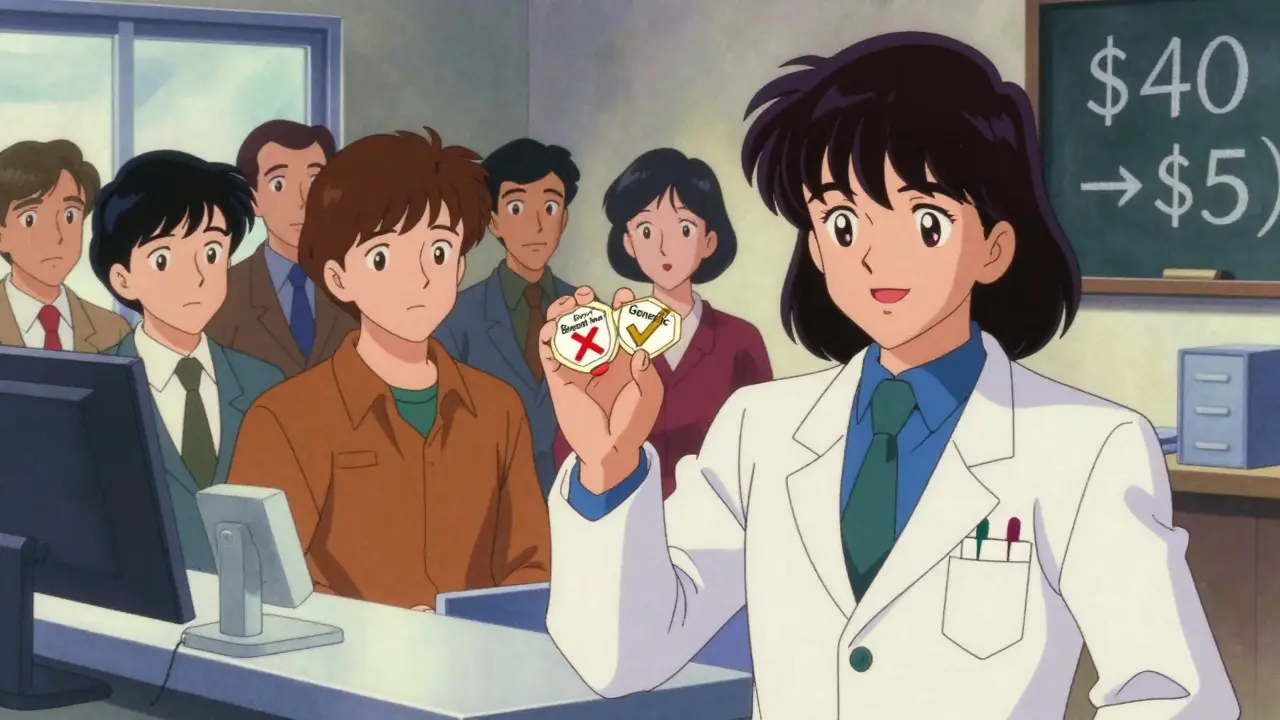
When employees skip their blood pressure meds because they’re too expensive, or stop taking their diabetes pills because they don’t trust the generic version, it’s not just a personal health risk-it’s a business problem. Lost productivity, more sick days, and higher insurance claims add up fast. That’s where pharmacists come in-not just as people who fill prescriptions, but as frontline health coaches in workplace wellness programs. And one of their most powerful tools? Promoting generic medications.
Why Generics Matter More Than You Think
Generic drugs aren’t cheap knockoffs. They’re the exact same medicine as the brand-name version, with the same active ingredient, dosage, and effectiveness. The FDA requires them to meet the same strict standards for quality, strength, purity, and stability. The only difference? Price. Generics cost 80-85% less on average. In the U.S., 90% of prescriptions filled are generics-but they make up only 22% of total drug spending. That’s because most people still get the brand name first, even when a cheaper, identical option exists. Why? Fear. Misinformation. Confusion. A lot of employees think generics are weaker, less safe, or made in sketchy factories. That’s not true. But it’s a belief that costs employers billions. Pharmacists are the only healthcare professionals trained to clear up that confusion-and they’re doing it right in the workplace.The Pharmacist’s Toolkit: More Than Just a Prescription
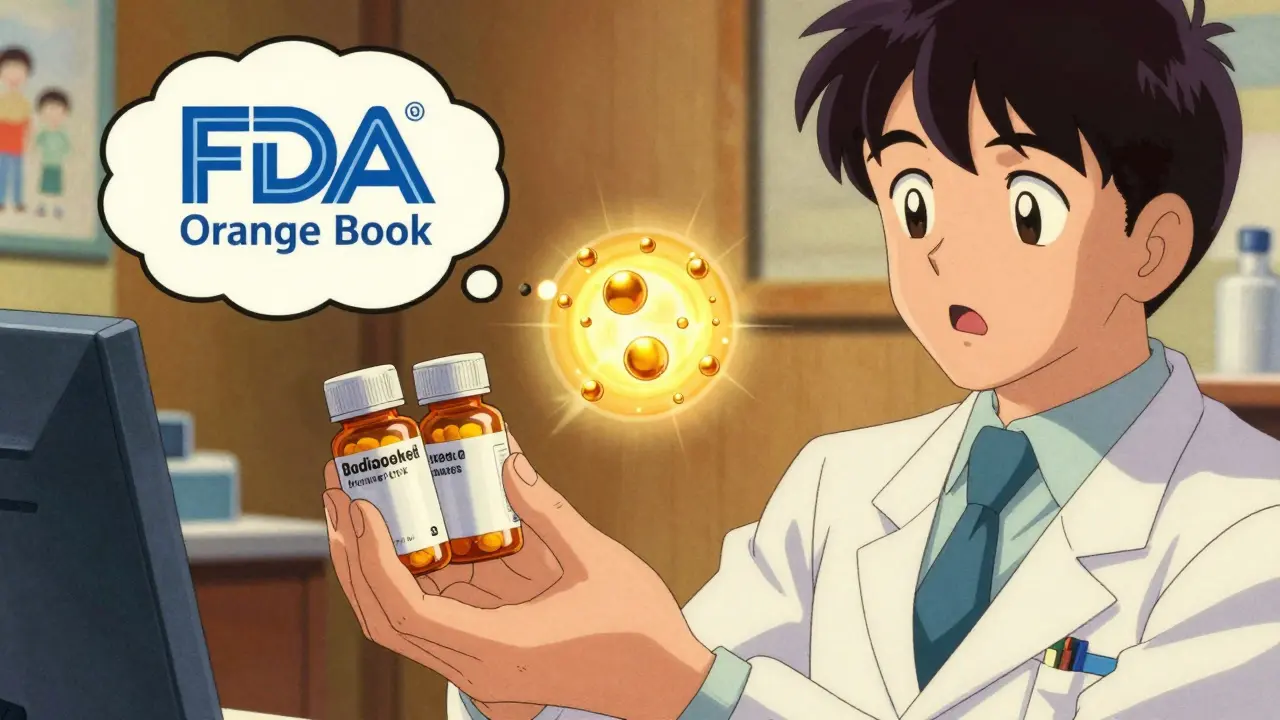
Pharmacists in workplace wellness programs don’t just hand out pills. They run Medication Therapy Management (MTM) sessions-personalized 15- to 30-minute consultations where they review every medication an employee takes. They look for duplicates, interactions, unnecessary drugs, and, most importantly, opportunities to switch to generics. Here’s how they do it:- Therapeutic equivalence checks: They use the FDA’s Orange Book to confirm which generics are bioequivalent to brand drugs. For example, ibuprofen is the generic for Advil. Same molecule. Same effect. One costs $5. The other $40.
- Cost comparison tools: They access MAC (Maximum Allowable Cost) lists and PBM formularies to show exactly how much an employee saves by switching.
- Real-life examples: One pharmacist in Melbourne told a diabetic employee, “I take the same generic metformin you’re on. My insurance pays $3 for it. The brand? $98. I’ve been on it for five years. No issues.” That personal story changed the employee’s mind.
- Addressing myths: “Doesn’t the brand work better?” No. Generics must absorb within 80-125% of the brand’s rate. That’s not a range-it’s proof they behave the same in your body.
These aren’t theoretical exercises. A 2023 study of 12,000 employees across six U.S. companies showed that after pharmacist-led MTM sessions, generic switch rates jumped 42%. Medication adherence rose 18%. And prescription costs dropped an average of $217 per employee per year.
How Employers Are Using Pharmacists to Save Money
Employers aren’t just paying pharmacists to talk to employees-they’re building programs around them. Here’s what’s working:- Three-tier formularies: 84% of large employers now use these. Tier 1 = generics. Tier 2 = preferred brands. Tier 3 = non-preferred (costs more). Employees pay less out-of-pocket if they pick Tier 1.
- Mandatory generics: 45% of employers require generics for certain conditions like hypertension, asthma, or depression-unless the doctor specifically overrides it.
- On-site pharmacists: Companies like Walmart Health now have pharmacists working inside employer clinics. They review prescriptions before they’re filled, flagging brand-name drugs that could be swapped.
- Telehealth MTM: Employees get a 10-minute video call with a pharmacist. No travel. No wait. Just a quick check-in. One employer saw a 31% reduction in non-adherence after rolling this out.
Pharmacy Benefit Managers (PBMs) like CVS Caremark and OptumRX now include clinical pharmacists in their service packages. 68% of large employers (5,000+ employees) offer this. Why? Because it works. PBMs report 15-20% higher adherence rates when pharmacists are involved. And for every $1 spent on pharmacist services, companies save $7.20 in medical costs and lost productivity, according to the American Pharmacists Association.
What’s Holding Pharmacists Back?
It’s not lack of skill. It’s bureaucracy. Many pharmacists face legal and structural roadblocks:- State laws: In 49 states, pharmacists can substitute generics-but only if the prescriber allows it. Some states require written approval every time. That defeats the whole purpose.
- Prescriber resistance: Some doctors still believe brands are superior. A pharmacist in Adelaide told me, “I had a patient switch from brand-name lisinopril to generic. Her doctor called me, furious. ‘She’s not doing well.’ I pulled her lab results. Her BP was better. She’d been taking it consistently. The brand was just more expensive.”
- Fragmented systems: Smaller companies often don’t have integrated pharmacy records. Pharmacists can’t see what drugs an employee is taking unless they manually ask. That slows things down.
And then there’s the trust gap. Employees don’t always believe pharmacists are acting in their best interest. Some think pharmacists are just pushing generics to make more money for the employer. That’s why transparency matters. The best pharmacists say: “I’m not trying to save the company money. I’m trying to make sure you’re healthy and can afford your meds.”
Real Stories, Real Impact
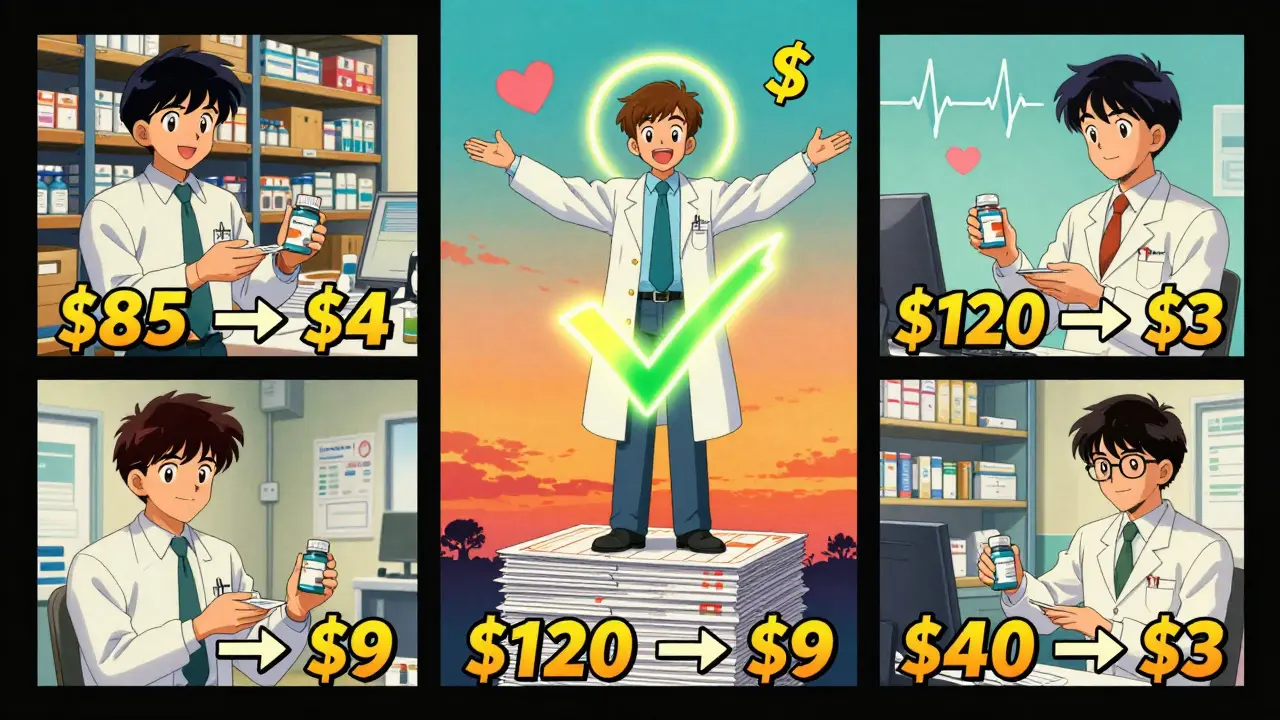
A 52-year-old warehouse worker in Sydney had been on brand-name statins for years. His copay was $85/month. He skipped doses. His cholesterol climbed. His pharmacist sat down with him, explained the generic version was made by the same company, showed him the FDA data, and offered to switch him. His new copay: $4. He took it every day. Six months later, his LDL dropped 38 points. A nurse in Brisbane had been on a brand-name antidepressant for 10 years. She felt guilty for “wasting money.” Her pharmacist didn’t push. She just said, “I’ve been on the generic for seven years. I feel the same. My bank account feels better.” The nurse switched. She didn’t change her dose. She didn’t feel different. But her monthly drug cost dropped from $120 to $9. These aren’t rare cases. 78% of employees surveyed said they felt more confident about generics after talking to a pharmacist. That confidence leads to adherence. Adherence leads to fewer hospital visits. Fewer hospital visits mean lower insurance premiums.The Future Is Already Here
By 2027, 85% of large employer wellness programs will include pharmacist-led medication optimization, according to the American Pharmacists Association. Why? Because the math is undeniable. - 50% of patients don’t take their meds as prescribed.- Non-adherence causes 125,000 preventable deaths a year in the U.S. alone.
- It costs the system up to $300 billion annually.
- Pharmacists can fix this-with generics. New laws like the 2024 PBM Transparency Act are forcing pharmacy benefit managers to be clearer about pricing. That’s opening the door for pharmacists to speak up. Companies like Walmart are already embedding pharmacists into primary care teams. Hospitals are starting to follow. This isn’t about cutting corners. It’s about cutting waste. It’s about making sure people get the medicine they need without going broke. And pharmacists? They’re the only ones who can do it-without a doctor’s order, without a nurse’s note, without a six-month waiting list. They’re just there. With a clipboard, a smile, and the truth: generic doesn’t mean lesser. It means smarter.
Are generic drugs really as effective as brand-name drugs?
Yes. The FDA requires generics to have the same active ingredient, strength, dosage form, and route of administration as the brand-name drug. They must also meet the same strict standards for quality, purity, stability, and bioavailability. Studies show generics perform identically in the body-absorption rates fall within 80-125% of the brand, which is considered therapeutically equivalent.
Why do some employees still refuse to take generics?
Common reasons include myths that generics are weaker, made overseas, or less safe. Some believe the brand name is more reliable because of advertising or past experience. Others fear switching will cause side effects. Pharmacists address these by showing FDA data, sharing personal stories (e.g., “I take this generic too”), and explaining that many generics are made by the same companies that make the brand-name versions.
Can pharmacists switch a prescription to a generic without the doctor’s approval?
In most U.S. states and Australian jurisdictions, pharmacists can substitute a generic for a brand-name drug if it’s listed as therapeutically equivalent and the prescriber hasn’t marked “dispense as written.” However, some states require prior authorization or patient consent. Pharmacists must follow local laws, which is why workplace programs often include training on regional substitution rules.
How much money can a company save by using pharmacists to promote generics?
On average, companies save $200-$300 per employee per year through pharmacist-led generic substitution and adherence programs. A 2024 study from the American Pharmacists Association found a $7.20 return for every $1 invested in pharmacist services-through reduced hospitalizations, fewer sick days, and lower prescription costs.
What training do pharmacists need to work in workplace wellness programs?
Pharmacists need training in pharmacoeconomics, drug policy, insurance formularies, and communication techniques for patient education. Most complete 2-3 months of specialized coursework on how to interpret PBM data, use the Orange Book, and counsel patients on bioequivalence. Many also earn certifications in Medication Therapy Management (MTM) or become Board Certified in Geriatric Pharmacy (BCGP) to deepen their expertise.
Do all employers offer pharmacist-led generic promotion?
No. But adoption is growing fast. In 2020, only about 30% of large employers included pharmacists in wellness programs. By 2023, that number jumped to 68%. Smaller companies are slower to adopt due to cost and complexity, but telehealth options and PBM partnerships are making it easier and cheaper to implement.

Justin Rodriguez - 2 March 2026
I've seen this firsthand in my company's wellness program. Pharmacists don't just push generics-they sit down, listen, and explain why the science doesn't care about brand names. One guy was convinced his blood pressure med was 'weaker' as a generic. The pharmacist pulled up the FDA bioequivalence data, showed him the exact same molecular structure, and said, 'It's the same pill. Your body can't tell the difference.' He switched. His LDL dropped 40 points in six months. No drama. Just facts.
It’s not about saving the company money. It’s about making sure people don’t die because they can’t afford to take their medicine. That’s the real win.
Raman Kapri - 3 March 2026
This entire argument is based on flawed Western pharmaceutical dogma. In India, generics are not only standard-they are superior because they are produced under strict Ayurvedic-GMP hybrid protocols, which ensure holistic bioavailability. The FDA standards are archaic and ignore synergistic herbal interactions that enhance efficacy. Your data is biased toward corporate interests, not true pharmacological science.
Siri Elena - 5 March 2026
Oh honey, let me get this straight-you’re telling me a pharmacist, in a white coat, holding a clipboard, is the new superhero of corporate healthcare? Next you’ll say they’re the reason we don’t have flying cars.
Let’s be real: this isn’t about health. It’s about insurance companies realizing they can outsource guilt-tripping to people with pharmacy degrees. ‘Hi, I’m Karen from CVS. Your brand-name Zoloft? It’s now $3. Also, your cat’s probably judging you.’
Divya Mallick - 7 March 2026
Who the hell gave pharmacists the right to decide what medicine I take? This is colonial capitalism at its finest-Western corporations using Indian and Filipino pharmacists to push cheap generics on American workers while the real drug profiteers sit in boardrooms in New Jersey.
My grandfather in Kerala took the same brand-name pills his whole life. He lived to 94. Your ‘generic’ is a corporate lie wrapped in an FDA sticker. This isn’t healthcare. It’s exploitation dressed up as empathy.
Callum Duffy - 8 March 2026
While the data presented is compelling, it is essential to acknowledge the cultural and psychological barriers that persist in medication adherence. The notion that cost alone determines behavior is reductive. Trust in healthcare providers, personal narratives, and perceived autonomy are equally-if not more-significant factors.
Pharmacists, when operating within a framework of patient-centered care, can serve as neutral, knowledgeable intermediaries. Their value lies not in coercion, but in clarity. The most effective interventions I’ve observed are those where the pharmacist says, ‘I’m here to help you understand,’ rather than ‘You should take this.’
Chris Beckman - 9 March 2026
generic drugs arent always the same i had a friend who switched and his anxiety got worse like way worse like he started having panic attacks and the doc said it was because the generic had different fillers or something idk
also why do pharmacists get to be the ones deciding what i take like i thought doctors were supposed to do that
and dont even get me started on the chinese factories making these pills
Levi Viloria - 9 March 2026
As someone who’s worked in healthcare across three continents, I’ve seen how differently generics are perceived. In the U.S., there’s fear. In Japan, there’s trust. In Kenya, there’s necessity.
What’s fascinating is that when pharmacists frame generics not as ‘cheaper’ but as ‘equivalent,’ the resistance drops. It’s not about money-it’s about dignity. People don’t want to feel like they’re settling. They want to feel like they’re choosing wisely.
That’s why the personal stories in this post matter. Not because they’re emotional, but because they restore agency.
Helen Brown - 11 March 2026
Did you know that 78% of generics are made in China and India? And that the FDA inspects less than 2% of foreign manufacturing plants? This isn’t healthcare-it’s a global supply chain gamble. I’ve seen people have strokes after switching to generics. They don’t report it because they’re afraid of losing their insurance. This whole thing is a cover-up.
John Cyrus - 11 March 2026
My cousin works at a pharmacy and says they get paid bonuses for switching people to generics and they dont even tell patients that the brand name is sometimes better because of the inactive ingredients
its all about the bottom line and the FDA is corrupt anyway
you think your doctor cares about you or do they just get kickbacks from the big pharma companies
generic is a scam
marjorie arsenault - 13 March 2026
I work in a small clinic and we started doing 10-minute telehealth check-ins with our pharmacist last year. The difference? People actually started taking their meds. Not because they were forced. But because someone took the time to say, ‘I know this feels weird. I’ve been on this same generic for eight years. I’m fine. You’ll be fine too.’
It’s not magic. It’s just being human.
That’s all they needed.
Deborah Dennis - 14 March 2026
Wow. Just... wow. A whole article about how pharmacists are saving money by convincing people to take cheaper pills. And no one mentions that the brand-name drugs are often developed by the same companies that make the generics? The same factories? The same labs?
It’s not a ‘switch’-it’s a rebrand. And we’re supposed to be impressed that someone figured out how to make people feel guilty for spending $40 instead of $4?
This isn’t innovation. It’s manipulation.
Shivam Pawa - 16 March 2026
Generics work. I’ve been taking them for hypertension since 2018. No side effects. No issues. My doctor in Delhi switched me after I asked why I was paying 10x more. The science is clear. The savings are real. Why are we still debating this?
It’s not about fear. It’s about misinformation. And pharmacists are the only ones who can fix it.
Diane Croft - 17 March 2026
This is the kind of change we need. Not flashy tech. Not expensive apps. Just someone with a clipboard, a calm voice, and the truth. I’ve seen employees cry because they couldn’t afford their meds. Then they switched to generic. And they cried again-but this time because they could finally breathe.
Pharmacists aren’t just saving money. They’re saving lives.
Let them do their job.
Ethan Zeeb - 17 March 2026
Let’s cut through the fluff. Pharmacists aren’t ‘health coaches.’ They’re cost-control agents hired by PBMs to maximize margins. The fact that adherence improved? That’s because they made generics $1 instead of $5. People take pills when they’re cheap. Not because they trust them.
Don’t romanticize this. It’s supply-side economics disguised as compassion.
Darren Torpey - 18 March 2026
Generics are the unsung heroes of modern medicine. They’re the quiet warriors in the back room, the silent MVPs who keep millions from going broke. No fanfare. No headlines. Just a $3 pill that does the exact same thing as a $40 one.
Pharmacists? They’re the ones who hand you that pill with a smile and say, ‘You got this.’
That’s not a job. That’s a revolution.
Justin Rodriguez - 18 March 2026
Just saw your comment, Chris. You’re right to be cautious. Not all generics are equal. But the ones that are FDA-approved? They’re rigorously tested. The fillers? They’re listed. The bioequivalence? It’s public data.
What’s dangerous isn’t the generic. It’s the silence. If you’re worried, ask your pharmacist for the manufacturer. Ask for the batch number. Ask to see the Orange Book entry. Knowledge beats fear every time.