

Cholesterol Medication Effectiveness Calculator
Calculate Your Expected LDL Reduction
Estimate how much your LDL cholesterol might decrease with non-statin medications based on current levels and the medication you're considering.
Enter your current LDL level and select a medication to see your estimated reduction.
For many people, statins are the go-to for lowering cholesterol. But if you’ve tried them and ended up with muscle pain, fatigue, or other side effects, you’re not alone. About 7 to 29% of people can’t take statins safely. That’s where ezetimibe and bempedoic acid come in-two proven, non-statin options that actually work without wrecking your muscles.
How Ezetimibe Lowers Cholesterol Without Statins
Ezetimibe, sold under the brand name Zetia, doesn’t touch your liver like statins do. Instead, it blocks cholesterol absorption in your small intestine. Think of it like a bouncer at the door of your gut-only letting a fraction of the dietary cholesterol pass through. When you take a 10 mg tablet daily, it cuts LDL (bad) cholesterol by 15 to 22% on its own. Add it to a low-dose statin, and you get an extra 18 to 25% drop. That’s not as strong as a high-dose statin, but it’s real, consistent, and gentle.
It’s been around since 2002, and because its patent expired years ago, generic ezetimibe costs as little as $4 a month through Medicare Part D. That makes it one of the most affordable cholesterol meds on the market. People who switch from statins to ezetimibe often report no muscle pain, no brain fog, and no weird fatigue. On PatientsLikeMe, users give it a 7.1 out of 10 for effectiveness-higher than most statin alternatives.
Bempedoic Acid: The New Kid on the Block
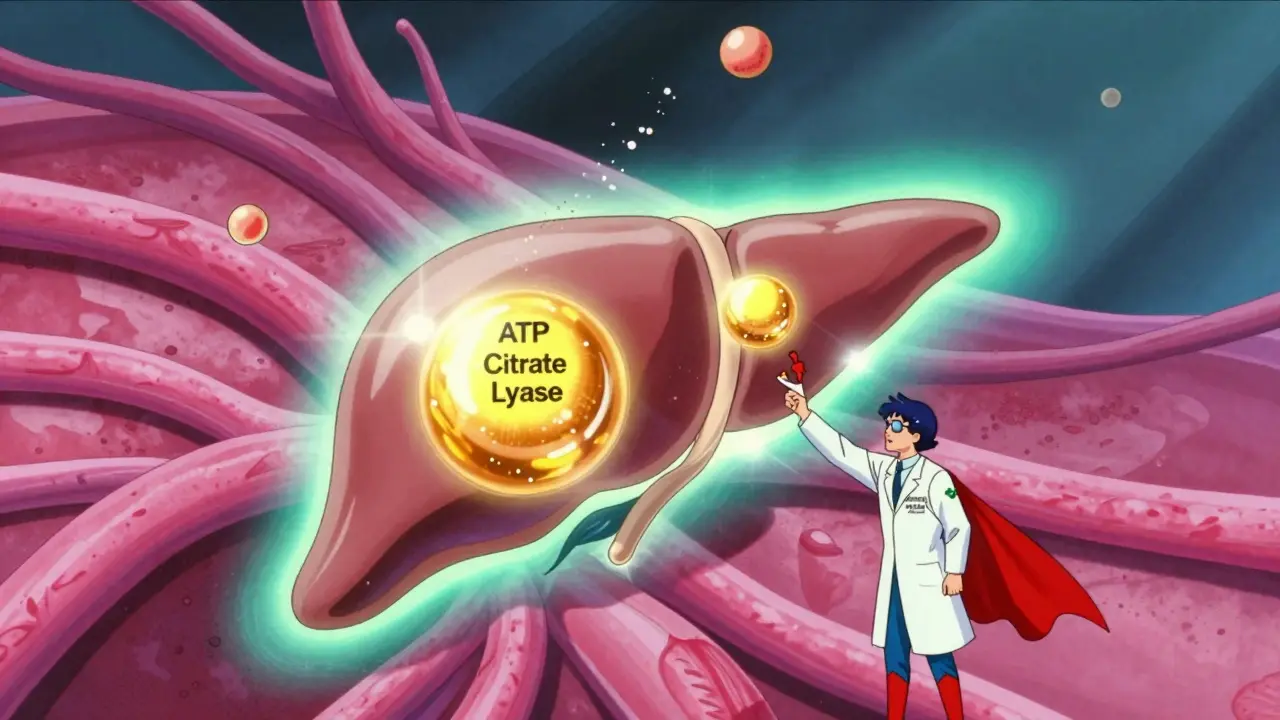
Bempedoic acid (brand name Nexletol) hit the scene in 2020 and quickly became the first oral, non-statin drug with proven heart protection. Unlike statins, which block HMG-CoA reductase in the liver and muscles, bempedoic acid works upstream-targeting an enzyme called ATP citrate lyase that’s only active in the liver. Why does that matter? Because skeletal muscle doesn’t have the enzyme needed to activate the drug. That means no muscle damage. In the CLEAR Outcomes trial with nearly 14,000 patients, only 5.1% of those on bempedoic acid reported muscle pain, compared to 6.8% on placebo.
As a standalone treatment, bempedoic acid lowers LDL by 17 to 23%. When combined with ezetimibe (in the pill Nexlizet), that jump to 35 to 40%. The real win? It doesn’t just lower cholesterol-it lowers risk. After 3.5 years of follow-up, people taking bempedoic acid had a 13% lower chance of heart attack, stroke, or needing heart surgery. That’s the same kind of benefit you’d expect from statins, if you matched the amount of LDL reduction.
How They Compare to Statins and Other Drugs
Let’s be clear: statins still win in raw power. High-intensity statins like atorvastatin or rosuvastatin can slash LDL by 50 to 55%. Ezetimibe and bempedoic acid? They’re in the 15 to 25% range. So if you can tolerate statins, they’re still the first choice.
But here’s where these two shine: for people who can’t take statins. A 2023 study compared doubling a statin dose versus adding bempedoic acid to a statin-ezetimibe combo. The combo group saw a 22.9% drop in LDL. The statin-doubling group? Only 7.5%. That’s a huge difference-and it means bempedoic acid can help people who’ve maxed out their statin dose but still aren’t at target.
Compared to PCSK9 inhibitors (like Repatha or Praluent), which are injectables that lower LDL by 50 to 60%, ezetimibe and bempedoic acid are easier to take. No needles. No monthly doctor visits. Just a daily pill. But they’re less potent. So if you need a big LDL drop and can handle injections, PCSK9 inhibitors are stronger. But if you want something simple and oral, these two are your best bet.
Real People, Real Results
Reddit users share mixed stories. One person wrote, “Switched from atorvastatin to bempedoic acid-my LDL went from 142 to 101 in six months, and no muscle pain.” Another said, “Ezetimibe dropped my LDL by 18 points. Barely worth the copay.”
On GoodRx, Nexletol has a 3.7 out of 5 rating. The top complaints? Cost and not being as strong as statins. The top praises? “No muscle pain” and “easy to take.” Meanwhile, ezetimibe gets better reviews-7.1 out of 10 on PatientsLikeMe-with users loving the low price and reliability.
But there’s a catch: real life isn’t a clinical trial. In the CLEAR Outcomes study, tendon rupture was a rare side effect (0.5%). In real-world reports, joint pain shows up in 12.3% of users-way higher than the trial’s 2.1%. That’s something to watch for, especially if you’re active or older.
Who Should Use These Medications?
You’re a good candidate if:
- You’ve tried at least two different statins and had muscle pain, weakness, or cramps that went away when you stopped
- You’re at high risk for heart disease but can’t take statins due to side effects
- Your LDL is still too high even on the highest tolerable statin dose
Doctors don’t just hand these out. You usually need to prove statin intolerance first-meaning you’ve tried different statins at different doses over 3 to 6 months. That’s not always easy, but it’s necessary to avoid misdiagnosis.

Cost, Insurance, and Accessibility
Ezetimibe is dirt cheap. Generic versions cost $4 to $10 a month. If you’re on Medicare, you’re probably paying less than $5.
Bempedoic acid? Not so much. Without insurance, Nexletol runs about $231 a month. Even with GoodRx discounts, you’re looking at $150 to $200. That’s why many people delay starting it-until their doctor fights the insurance company or they hit a high-deductible plan.
The combo pill, Nexlizet (bempedoic acid + ezetimibe), is even pricier. But if you need both, it’s more convenient than taking two pills. Some insurers will cover it if you’ve tried other options first. Always ask your pharmacist about patient assistance programs-Esperion, the maker of Nexletol, has one.
What You Need to Know Before Starting
These drugs are safe for most people, but there are important rules:
- Don’t take bempedoic acid with high-dose simvastatin (over 20 mg) or pravastatin (over 40 mg). It can raise statin levels dangerously.
- Both are processed by the liver. If you have severe kidney disease (eGFR under 30), avoid bempedoic acid.
- Check your cholesterol 4 to 12 weeks after starting. You should see at least a 10% drop with ezetimibe, 15% with bempedoic acid. If not, your doctor may need to adjust your plan.
- Watch for joint pain or tendon discomfort-especially in your shoulders or heels. Stop and call your doctor if it starts.
Both drugs are safe for long-term use. The CLEAR Outcomes trial followed people for over 40 months. No major red flags popped up beyond the tendon risk, which remains rare.
The Future of Non-Statin Cholesterol Drugs
The market for non-statin meds is growing fast-projected to hit nearly $10 billion by 2030. Bempedoic acid is already grabbing 8% of that market in the U.S. within two years. Ezetimibe, though cheaper and older, still holds 15% of prescriptions because it’s reliable and affordable.
Next up? A new trial called CLEAR CardioTrack, expected to finish in late 2025, is using ultrasound to see if bempedoic acid actually shrinks artery plaque. If it does, that’s huge-it means it’s not just lowering numbers, it’s reversing damage.
For now, ezetimibe and bempedoic acid are the best oral options for people who can’t take statins. They’re not magic bullets. But for the millions of people sidelined by statin side effects, they’re a real lifeline.
Can ezetimibe or bempedoic acid replace statins completely?
They can replace statins only if you can’t tolerate them. Statins are still the most effective and cheapest option for lowering LDL and reducing heart risk. Ezetimibe and bempedoic acid are second-line choices-best for people with statin intolerance or those who still need more LDL reduction after maxing out statins.
Do these drugs cause muscle pain like statins?
Ezetimibe doesn’t cause muscle pain. Bempedoic acid is designed to avoid it-because it only activates in the liver, not the muscles. In clinical trials, muscle pain rates were similar to placebo. Real-world reports show slightly higher joint pain, but true muscle damage is rare.
How long does it take to see results?
You’ll usually see LDL changes within 4 to 6 weeks. A full assessment is done at 8 to 12 weeks. If your LDL hasn’t dropped by at least 10% with ezetimibe or 15% with bempedoic acid, your doctor may adjust your dose or add another medication.
Is bempedoic acid worth the high cost?
It depends. If you’re statin-intolerant and need significant LDL lowering with proven heart protection, yes-it’s worth it. But if you’re only mildly elevated and can use ezetimibe or lifestyle changes, it may not be cost-effective. Ask your doctor about insurance coverage or patient assistance programs.
Can I take ezetimibe and bempedoic acid together?
Yes, and they’re even available in one pill called Nexlizet. Taking them together lowers LDL by 35 to 40%, which is more than either alone. This combo is often used when statins aren’t enough or can’t be used at all.
Are there any long-term safety concerns?
The longest trial lasted 40 months and showed no major safety issues beyond a small risk of tendon rupture (0.5%). That’s rare, but if you notice sudden pain or swelling in your Achilles tendon or shoulder, stop the medication and call your doctor. Long-term data beyond 5 years is still being collected.



Anna Weitz - 29 December 2025
ezetimibe is the real MVP for people who can't handle statins
no muscle pain no brain fog just a quiet little pill that does its job
why are we even debating this
Jane Lucas - 29 December 2025
i tried bempedoic acid for 3 months and my joints felt like they were filled with gravel
my dr said it was 'rare' but i was the one in pain
now i just eat more oats and walk 10k steps
Janice Holmes - 30 December 2025
BEMPEDOIC ACID ISN'T JUST A DRUG IT'S A REVOLUTIONARY PARADIGM SHIFT IN CARDIOVASCULAR THERAPEUTICS
THE FACT THAT IT TARGETS ATP CITRATE LYASE IN THE LIVER ALONE IS A MASTERSTROKE OF PHARMACOLOGICAL ENGINEERING
WE'RE TALKING ABOUT A MECHANISM THAT BYPASSES SKELETAL MUSCLE ACTIVATION COMPLETELY
THIS ISN'T MEDICINE THIS IS BIOLOGICAL SABOTAGE AGAINST ATHEROSCLEROSIS
Gerald Tardif - 30 December 2025
for folks who've been burned by statins, these options are like finding a life raft in a storm
not flashy, not perfect, but they keep you afloat
and ezetimibe? dirt cheap and doesn't turn your legs into cement
that's worth celebrating
Elizabeth Ganak - 1 January 2026
i use ezetimibe and it's been good for me
no issues at all
just take it and forget about it
John Barron - 1 January 2026
I must point out that the CLEAR Outcomes Trial (NCT03119017) demonstrated a statistically significant 13% relative risk reduction in major adverse cardiovascular events (MACE) with bempedoic acid (p < 0.001).
Furthermore, the FDA-approved indication is predicated upon this level of evidence, which exceeds the efficacy profile of ezetimibe monotherapy.
Moreover, the tendon rupture incidence, while low (0.5%), is a Class IIa warning per ACC/AHA guidelines.
And yet, you all are reducing this to a Reddit anecdote thread. This is medically irresponsible.
Elizabeth Alvarez - 2 January 2026
you know what they're not telling you? ezetimibe and bempedoic acid are just the first step
the real agenda? replacing statins with these so Big Pharma can charge $200 a pill
statins have been around for decades and they're cheap because they're generic
but now? they're pushing these new drugs like they're miracle cures
while the real cause of high cholesterol? processed food, sugar, and corporate food lobbying
they don't want you to fix your diet
they want you to buy pills
and don't even get me started on how the trials are funded by the makers of Nexletol
Todd Scott - 3 January 2026
in Nigeria, we don't have access to bempedoic acid at all
ezetimibe? maybe if you're lucky and can afford the import fees
most people here rely on diet, exercise, and traditional herbs like bitter leaf or neem
but i respect that in the US you have options
the real issue isn't the meds-it's that healthcare is a luxury
if you're poor, you're stuck with statins or nothing
and if statins hurt you? good luck finding a doctor who believes you
Andrew Gurung - 5 January 2026
lol you people think ezetimibe is 'good enough'? 🤡
you're settling for 20% LDL reduction like it's a trophy
if you're serious about heart health, you'd be on PCSK9 inhibitors or getting your A1C under 5.2 and your triglycerides below 70
but no-most of you just want a pill that doesn't hurt and then go back to eating pizza on Sunday
pathetic
Paula Alencar - 7 January 2026
It is imperative to underscore that the therapeutic efficacy of non-statin lipid-lowering agents must be contextualized within the broader framework of cardiovascular risk stratification.
For individuals with familial hypercholesterolemia or established atherosclerotic cardiovascular disease, LDL-C targets must be ≤70 mg/dL, and often ≤55 mg/dL.
Ezetimibe, while affordable and well-tolerated, rarely achieves these thresholds in monotherapy.
Bempedoic acid, when combined with ezetimibe, may approach these goals in select patients-but only if adherence is perfect and comorbidities are managed.
Therefore, it is not sufficient to prescribe these agents in isolation; they must be integrated into a comprehensive lifestyle and pharmacological regimen.
Failure to do so constitutes a disservice to patient outcomes.
Nikki Thames - 8 January 2026
i’ve been on bempedoic acid for 11 months and i’ve noticed something…
my doctor never mentioned that it increases uric acid levels
and guess what? i got gout last winter
and now they want to put me on allopurinol
so now i’m taking TWO expensive pills
and they still won’t admit this drug might be the reason
they’re too busy selling you the ‘safe alternative’ narrative
but your kidneys don’t care about marketing
Chris Garcia - 9 January 2026
in my village in Nigeria, we say cholesterol is not the enemy-it's the silence between the doctor and the patient.
you take a pill and think you're safe, but you still eat fried plantain with palm oil every day.
ezetimibe? it's a tool, not a solution.
the real medicine is walking, eating whole foods, and talking to your family about health.
the west thinks a pill can fix everything-but the body remembers what the plate forgets.
James Bowers - 10 January 2026
The data from the CLEAR Outcomes trial is robust and unequivocal. To suggest that ezetimibe is a 'reliable' alternative without acknowledging its lack of mortality benefit is misleading. Bempedoic acid has demonstrated clinical endpoint reduction; ezetimibe has not. This distinction is not semantic-it is foundational to evidence-based practice. Recommending ezetimibe as a primary alternative for high-risk patients is clinically indefensible.