Continuing Education for Pharmacists: Staying Current on Generics
Dec 3 2025 - Health and Pharmaceuticals
When you hear internal hemorrhoids, swollen veins inside the rectum that often don’t cause pain but can bleed. Also known as rectal hemorrhoids, they’re one of the most common digestive issues—yet many people don’t know they have them until they see blood on the toilet paper. Unlike external hemorrhoids, which sit under the skin around the anus and can be painfully swollen, internal ones hide inside. That’s why they’re sneaky: no itching, no lump, just the shock of red streaks after a bowel movement.
What causes them? It’s rarely one thing. Sitting too long, straining during bowel movements, chronic constipation, pregnancy, and even heavy lifting all play a role. The pressure builds up in the veins around the rectum, and over time, they stretch and bulge. It’s not a sign of poor hygiene or bad habits—it’s a mechanical issue. And it happens to people of all ages, not just older adults. A 2023 study in the Journal of Gastroenterology found that nearly 50% of adults over 50 have had them at some point, but many younger people report symptoms too, especially if they sit for hours at a desk or have irregular bowel habits.
Most internal hemorrhoids don’t need surgery. In fact, most get better with simple changes: more fiber, more water, moving more. Over-the-counter creams won’t fix them, but stool softeners and sitz baths can ease discomfort. The real problem comes when bleeding keeps happening or the hemorrhoid prolapses—meaning it pushes out during a bowel movement and doesn’t slide back in. That’s when you need to see a doctor. There are quick in-office procedures, like rubber band ligation, that cut off blood flow and make the hemorrhoid shrink over days. It’s not glamorous, but it works.
What you won’t find in most online advice? The truth about what doesn’t work. Witch hazel wipes? Maybe soothing. Sitz baths? Helpful for relief. But those expensive herbal supplements claiming to "cure" hemorrhoids? No solid evidence. And don’t ignore recurring bleeding. It could be hemorrhoids—but it could also be something else, like polyps or early signs of colorectal issues. That’s why the posts below cover everything from natural relief methods to how doctors diagnose and treat them, with real patient experiences and no fluff.
Below, you’ll find detailed guides on what triggers internal hemorrhoids, how to tell them apart from other conditions, and which treatments actually deliver results—without the hype or the cost.
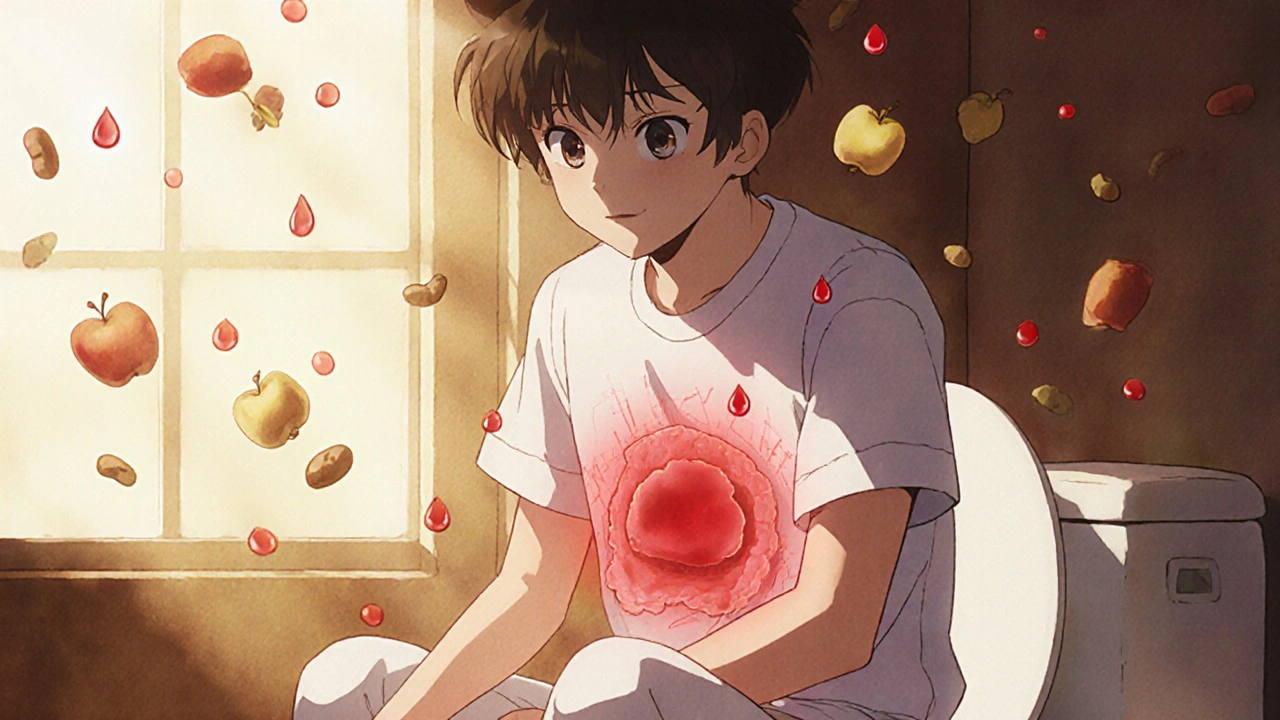
Learn the difference between internal and external hemorrhoids, what symptoms to watch for, and the proven treatments that actually work-from diet changes to surgery. Stop guessing and start feeling better.
read more
© 2026. All rights reserved.