
What Is Single-Sided Deafness?
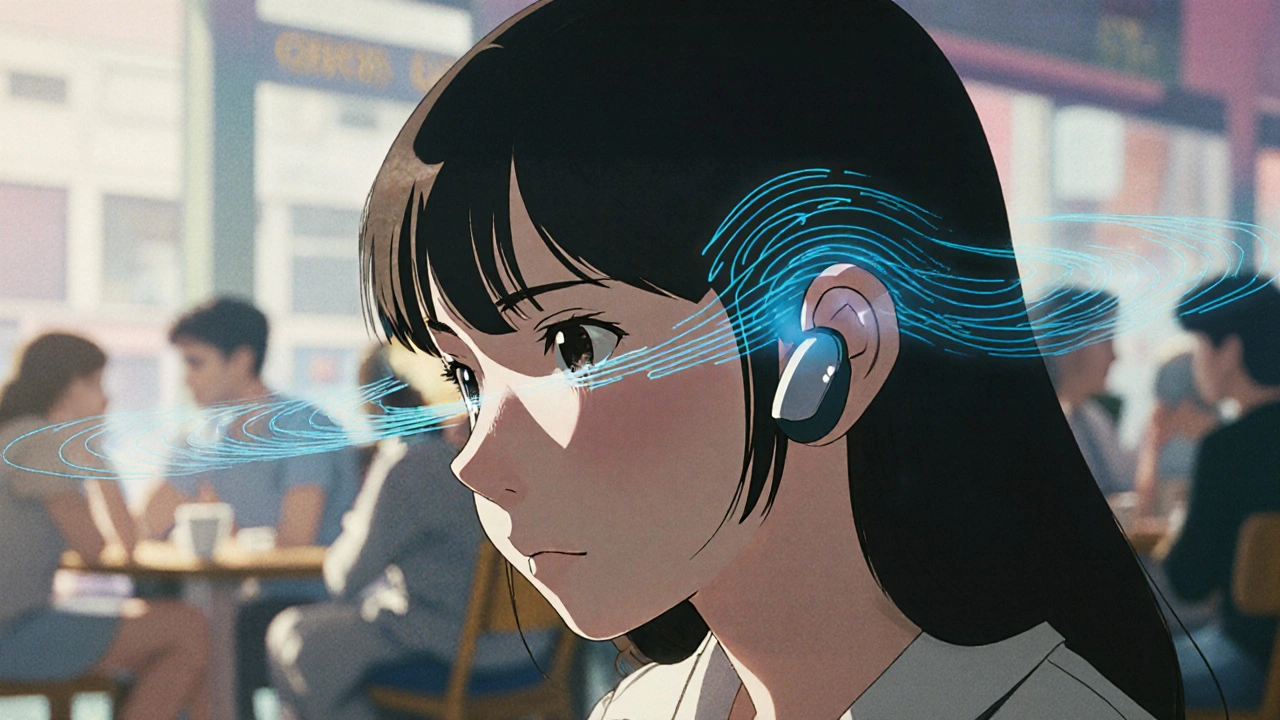
Single-sided deafness (SSD) means you have little to no hearing in one ear, but your other ear hears normally. It’s not just a minor inconvenience-it changes how you hear in real life. Imagine trying to follow a conversation in a busy restaurant while someone speaks to you from your deaf side. The sound doesn’t reach your good ear because your head blocks it. This is called the head shadow effect. You might miss high-pitched voices, struggle to tell where sounds come from, or feel exhausted after social events because your brain is working overtime to fill in the gaps.
SSD affects about 1 in 1,000 people. It can happen suddenly after an infection, trauma, or surgery-or develop slowly due to tumors, Meniere’s disease, or noise damage. Many people assume hearing aids won’t help if one ear is dead. That’s not true. Two main technologies now exist to restore balance: CROS hearing aids and bone-anchored devices. Neither fixes the deaf ear. But both help your good ear hear what’s happening on the other side.
CROS Hearing Aids: How They Work and Who They’re For
CROS stands for Contralateral Routing of Signals. It’s a non-surgical system with two parts: a tiny microphone on your deaf side and a hearing aid on your good ear. The microphone picks up sound from your deaf side and sends it wirelessly to the hearing aid on your better ear. Modern versions like the Phonak CROS Marvel or Oticon CROS Free use Bluetooth-like signals, not wires. They’re small, nearly invisible, and easy to put on.
These devices work best if your good ear has normal hearing-no more than 25 dB loss. If your better ear already struggles to hear, CROS won’t help much. The sound gets mixed in with what your good ear is already struggling with, making it harder to understand speech.
Most users adapt quickly. About 78% feel comfortable within two weeks. Fitting takes two to three visits over four to six weeks. You don’t need surgery. No scars. No recovery time. But there are trade-offs.
The Hidden Downsides of CROS Systems
Many people love CROS at first. It’s simple. It’s affordable. But long-term use reveals problems.
First, battery life. Most CROS systems need new batteries every two to three days. That’s not just annoying-it’s expensive. Over a year, you could spend $150 just on batteries.
Second, sound quality. Voices from your deaf side often sound like they’re coming from inside your head. One user on Reddit said, “It feels like my brain is replaying the sound instead of hearing it from outside.” That unnatural feeling makes some users quit.
Third, noise. In loud places, CROS can make things worse. If noise comes from your deaf side-like a blender or a passing truck-the device amplifies it. Your good ear hears both the person talking and the noise at the same volume. A 2022 study found CROS users had a 1.2 dB worse signal-to-noise ratio in restaurants than when they wore nothing at all. That means more effort, more frustration, and more withdrawal from social situations.
And then there’s abandonment. In one study, nearly half of CROS users stopped using their device after a year. Why? Because the benefits didn’t match the daily hassle.
Bone-Anchored Hearing Devices: The Surgical Alternative
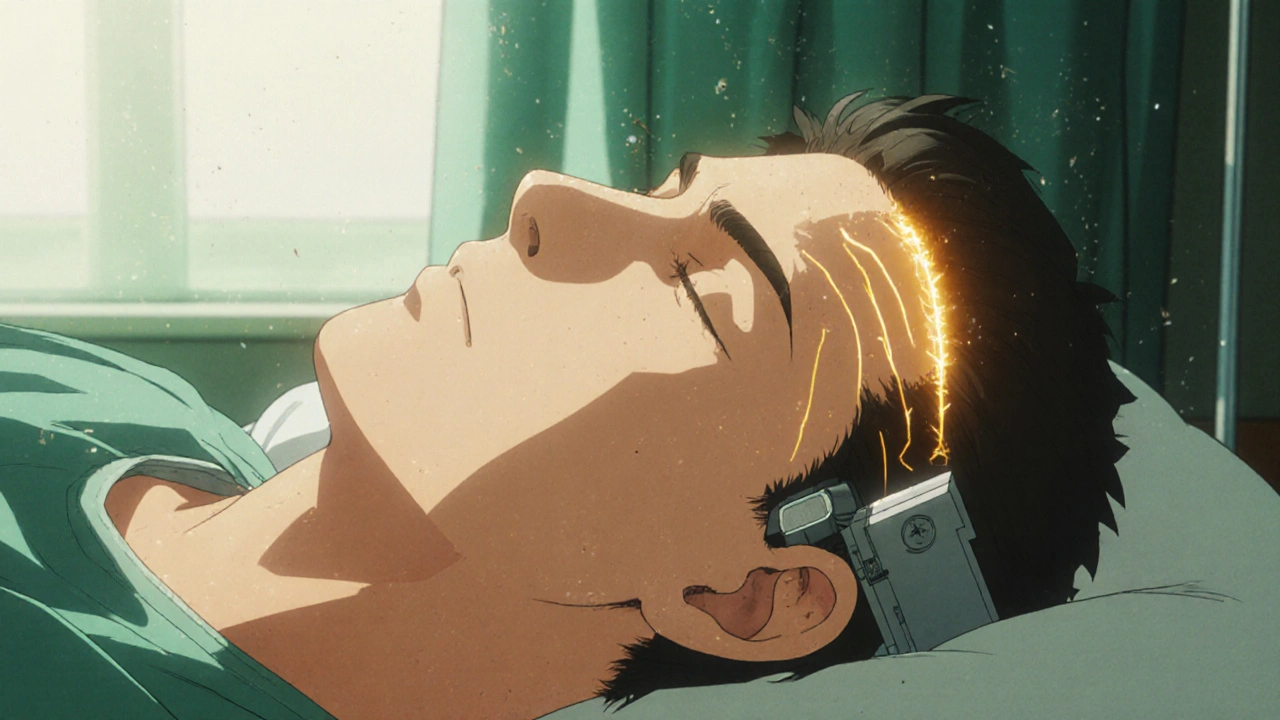
Bone-anchored hearing devices (BAHD), also called bone conduction systems, work differently. Instead of sending sound through the air, they send vibrations directly through your skull bone to your inner ear. Think of it like tapping on your skull-you hear the vibration even if your ear canal is blocked.
There are two types: percutaneous and transcutaneous. Percutaneous systems (like Cochlear Baha) use a titanium implant that fuses with your skull bone over three to six months. A small post sticks out of your skin, and the sound processor snaps onto it. Transcutaneous systems (like Oticon Medical Ponto) use magnets to hold the processor against your skin-no post, no hole.
BAHDs are more complex. You need surgery. A CT scan. A recovery period. Costs range from $7,000 to $15,000 total, including surgery. But they work better in tough listening situations.
Why BAHDs Outperform CROS in Real Life
BAHDs don’t just transmit sound-they restore balance. Because the signal travels through bone, not air, it avoids the head shadow effect more completely. In noisy rooms, BAHD users understand speech 3.5 dB better than CROS users when the noise is on their deaf side.
They also handle wind better. If you walk outside on a breezy day, CROS picks up wind noise like a microphone in a storm. BAHDs don’t. The vibration goes straight to your bone, bypassing the outer ear entirely.
Another advantage: no occlusion effect. CROS systems often plug up your good ear with a hearing aid, making your own voice sound hollow or echoey. BAHDs leave your good ear open. You hear your voice naturally.
One user on HearingTracker said: “The surgery was scary, but the sound quality? Worth it. I can finally tell where my kids are calling from in the backyard.”
The Catch: Skin Issues and Maintenance
BAHDs aren’t perfect. Skin problems are common. About 15% to 63% of percutaneous users get redness, swelling, or infection around the implant post. That’s not rare-it’s expected. You need to clean the area daily with alcohol wipes or special solutions. Some users report needing antibiotic cream twice a month.
Transcutaneous systems reduce skin issues but lose about 10-15 dB in sound power because the signal has to pass through skin and tissue. They’re also bulkier and can slip off during exercise.
Repair times are longer too. If your CROS device breaks, you can usually get a replacement in two business days. For BAHDs, repairs often take over two weeks because only a few specialized centers handle them.
Cost, Insurance, and Real-World Value
CROS systems cost $2,500 to $4,000. BAHDs cost $7,000 to $15,000 total, including surgery. Insurance coverage varies. Medicare and many private plans cover BAHD surgery if you meet criteria (like a hearing loss in your good ear under 45 dB). CROS devices are rarely covered-they’re often considered “cosmetic” or “convenience” devices.
But cost isn’t just about the price tag. Think long-term. CROS users replace batteries, devices, and accessories every 2-3 years. BAHD users replace only the processor every 5-7 years. The implant lasts a lifetime.
Employers are starting to notice. Workers with SSD in noisy jobs-construction, aviation, manufacturing-are more likely to choose BAHD. A 2023 VA study found BAHD users had 40% fewer work absences than CROS users.

Who Should Choose What?
Here’s a simple guide:
- Choose CROS if: Your good ear is perfectly healthy, you hate surgery, you’re on a tight budget, and you mostly listen in quiet places. You’re okay with changing batteries often and accepting that noisy rooms will still be hard.
- Choose BAHD if: You work in noisy environments, you value sound clarity over convenience, you’re willing to manage skin care, and you want a long-term solution that improves your quality of life.
There’s a third option: cochlear implants. They’re now recommended for SSD patients who still struggle after six months of BAHD use. But that’s a deeper topic.
What Experts Say
Dr. John Kelly from the University of Washington puts it plainly: “CROS systems can’t give you true binaural hearing. They just move sound from one side to the other. Bone conduction restores some of the spatial cues your brain needs.”
Dr. David Jung from Harvard adds: “The dropout rate for CROS tells us something. People think it’s going to fix everything. It doesn’t. It helps, but not like people expect.”
On the other hand, Dr. H. Gustav Mueller from Vanderbilt says: “For many, CROS is the right first step. No surgery. No risk. If it works, great. If not, you can still move to BAHD.”
The Future of SSD Treatment
Wireless CROS tech is getting better. New models now include tinnitus masking and AI noise filters. But they’re still limited by physics. Bone conduction is evolving too. Cochlear’s 2024 Baha 7 uses AI to reduce background noise in real time.
The biggest shift? The medical community is moving away from “CROS or BAHD” to a step-by-step approach: try CROS first for four weeks. If it doesn’t help enough, go to BAHD. If you still struggle after six months, consider a cochlear implant.
SSD isn’t just about hearing. It’s about safety, confidence, and connection. The right device doesn’t just make sounds louder-it brings you back into the world.
Can CROS hearing aids restore normal hearing in single-sided deafness?
No. CROS hearing aids don’t restore hearing in the deaf ear. They simply pick up sound from that side and send it wirelessly to your better ear. This helps reduce the head shadow effect and improves awareness of sounds from your deaf side, but you’re still hearing with only one ear. True binaural hearing-where your brain uses input from both ears to locate sound and filter noise-isn’t possible with CROS.
Is bone-anchored hearing surgery risky?
The surgery is generally safe but not risk-free. The most common issue is skin irritation or infection around the implant post, affecting 15-63% of users. Less common risks include poor bone integration, nerve damage, or implant failure. Most complications are manageable with proper hygiene and follow-up care. Recovery takes about 3-6 months before the device is activated. Many patients report high satisfaction once they adjust.
How long do CROS and bone-anchored devices last?
CROS hearing aids typically need replacement every 3-5 years due to battery wear, technology upgrades, or damage. The internal components aren’t designed for long-term use. Bone-anchored implants, however, are meant to last a lifetime. Only the external sound processor needs replacing-every 5-7 years. The titanium implant fuses with your skull and stays in place permanently.
Can you wear a CROS device while sleeping or showering?
No. CROS devices are not waterproof and must be removed before showering, swimming, or sleeping. Moisture can damage the electronics. Most users take them out at night and charge or replace batteries daily. Bone-anchored devices can be removed for showering too, but the implant itself stays in place. Transcutaneous models are more resistant to water, but the processor still needs to be taken off.
Are there any non-device treatments for single-sided deafness?
For some, hearing recovery is possible if SSD is caused by a temporary issue like a viral infection or sudden sensorineural hearing loss. Steroid treatment within two weeks of onset can sometimes restore hearing. If hearing doesn’t return, devices are the only option. There’s no medication or therapy that can restore hearing in a permanently deaf ear. Cochlear implants are now considered for SSD patients who don’t benefit from CROS or BAHD after six months.
Does insurance cover CROS or bone-anchored hearing devices?
Medicare and many private insurers cover bone-anchored hearing systems if you meet clinical criteria, including documented SSD and hearing loss in the better ear under 45 dB. Coverage for CROS devices is rare-they’re often denied as non-essential. Some Medicaid programs and VA facilities cover them for veterans. Always check with your provider and ask for a pre-authorization letter from your audiologist.



Brittany Medley - 26 November 2025
Just wanted to say this is one of the clearest breakdowns I’ve seen on SSD options. I’ve worn a CROS for two years and switched to a Ponto 5 last month. The difference in noise filtering? Night and day. No more flinching at kitchen noises. My dog barking from my left side? I hear it. No brain fatigue. Worth every penny and every scab on my skull.
mohit passi - 27 November 2025
bro. i had ssd after a viral infection. tried the cros. felt like my brain was playing a tape recorder of sounds from my dead side. then i got the bone implant. now i can hear my kid’s voice in the car from the backseat. no more turning my whole body to hear someone. life changed. no regrets. 🙏
Joe bailey - 28 November 2025
Love this post. Real talk: if you’re in a job where safety matters-construction, driving, ER-skip the CROS. It’s not just convenience, it’s survival. I’m a paramedic. I used to miss calls from my deaf side. Now I hear sirens from both sides. BAHD isn’t just a device, it’s a tool for staying alive.
Ali Miller - 30 November 2025
Let’s be real-CROS is a band-aid for people too lazy to get surgery. You want to hear like a normal human? You pay the price. The fact that insurance won’t cover it says everything. This isn’t about vanity, it’s about neuroplasticity and spatial awareness. If you’re okay with hearing like a one-eyed monster, fine. But don’t pretend it’s equivalent.
james thomas - 30 November 2025
They’re hiding the truth. CROS devices are a scam pushed by hearing aid corporations because they’re profit machines. Batteries? $150 a year? That’s a subscription model disguised as medical tech. Meanwhile, BAHDs are suppressed because they’re a one-time cost. Big Pharma doesn’t want you to know you can fix this permanently. Wake up.
Micaela Yarman - 1 December 2025
As someone who grew up in a multilingual household with a parent who had SSD, I’ve watched the emotional toll this takes. It’s not just about hearing-it’s about connection. The silence on one side makes people feel isolated, even when surrounded. That’s why this post matters. It’s not just technical-it’s human. Thank you for writing it with such care.
Sanjay Menon - 2 December 2025
How quaint. You treat CROS as if it’s a legitimate auditory solution. It’s a glorified Bluetooth speaker taped to your ear. The head shadow effect isn’t ‘mitigated’-it’s mocked. Bone conduction, at least, engages the natural biomechanics of the skull. CROS is auditory colonialism: taking sound from one side and forcibly colonizing the good ear. How poetic. How tragic.
Aaron Whong - 4 December 2025
From a neuroacoustic perspective, CROS fundamentally disrupts binaural integration by introducing temporal and spectral misalignment. The brain’s superior olivary complex relies on interaural time and level differences for spatial localization. CROS introduces an artificial, non-physiological latency that exacerbates cognitive load. BAHD, by contrast, preserves the natural bone-conducted phase coherence, allowing for more efficient cortical processing. This isn’t just preference-it’s neuroengineering.
Amanda Wong - 4 December 2025
Everyone’s acting like this is some revolutionary breakthrough. Newsflash: both devices are garbage. You’re still deaf on one side. You’re just being tricked into thinking you’re not. The real solution? Accept it. Learn to lip-read. Use sign language. Stop wasting money on gadgets that pretend to fix what can’t be fixed. This is performative medicine.
Ezequiel adrian - 4 December 2025
man i got the cros cause i was broke. lasted 3 months. then my ear got infected from the mold in the shell. now i got the bone thing. yeah the skin is a pain. but i can hear my baby cry from the other room. i dont care if i gotta scrub it with alcohol every day. its worth it. 🤘
JAY OKE - 5 December 2025
Just got my BAHD activated last week. The first time I heard my own footsteps from my left side? I cried. Not because it was loud. Because it was… natural. Like my brain finally remembered how to listen. This isn’t tech. It’s restoration.
Cynthia Springer - 7 December 2025
Can someone clarify-do BAHDs work if you have chronic ear infections? My ENT said my ear canal is too compromised for any air-conducted device, but I’m worried the implant site might get infected too. Is transcutaneous safer for me?
Rachel Whip - 9 December 2025
Hi Cynthia-yes, transcutaneous is generally safer if you have recurrent infections. The skin doesn’t break, so there’s less risk of deep tissue exposure. But you’ll lose about 10-15 dB in volume, so make sure your audiologist does a real-world speech-in-noise test before choosing. Also, ask about the Ponto 5 SuperPower-it’s the best for low-frequency loss.
Marissa Coratti - 9 December 2025
As a former audiologist who now lives with SSD, I can tell you this: the emotional recovery is just as important as the physical one. I tried CROS first. I felt like a fraud. Like I was pretending to be whole. When I got the implant, I didn’t just hear better-I stopped apologizing for turning my head. That’s the real metric. Not decibels. Not cost. It’s whether you feel like yourself again.
Stephen Adeyanju - 10 December 2025
BAHD is the only way to go. CROS is for people who want to look normal but don’t want to feel normal. I got mine 5 years ago. Skin issues? Yeah. But I don’t care. I hear my wife’s laugh from behind me. I hear the car behind me turn. I hear the world. And I don’t miss a single second. You want to live? Go for the implant. Stop wasting time.