

You wake up with a gnawing pain in your upper abdomen. It feels like hunger, but eating doesn't fix it. Maybe there's a metallic taste in your mouth, or you feel nauseous after coffee. You might be dealing with gastritis, which is inflammation of the stomach lining (mucosa). For decades, doctors thought stress or spicy food caused this. Then, in 1982, Australian researchers Barry Marshall and Robin Warren discovered Helicobacter pylori (H. pylori), a bacterium that survives in stomach acid. This discovery changed everything. If you have persistent stomach issues, understanding how H. pylori works and how to treat it is the first step toward relief.
What Is Gastritis Really?
Your stomach isn't just a bag for food. It's lined with a protective mucus layer that stops digestive acids from burning the organ itself. When that barrier breaks down, the tissue gets inflamed. That's gastritis. It’s not one single disease; it’s a spectrum. You can have acute gastritis, which hits suddenly and hard, often from alcohol or painkillers. Or you can have chronic gastritis, which develops slowly over years, usually driven by an H. pylori infection. About 70-80% of people with acute gastritis report upper abdominal pain, while nausea affects roughly 60%. But here’s the tricky part: up to half of people with chronic gastritis feel nothing at all until complications arise.
The H. pylori Connection
H. pylori is a spiral-shaped bacterium that burrows into the stomach lining. It’s incredibly common-about 50% of the world’s population carries it. In developed countries like Australia or the US, rates are lower (10-15%), but they rise sharply in Asia and Africa. Why does this matter? Because H. pylori causes about 90% of duodenal ulcers and a huge chunk of gastric ulcers. The bacteria produce enzymes that neutralize stomach acid locally, allowing them to survive, while simultaneously triggering an immune response that damages the tissue. Not everyone infected gets sick, but if you have symptoms, H. pylori is the prime suspect.
Spotting the Symptoms
Symptoms vary wildly. Some people describe a burning sensation; others feel full too quickly during meals. Common signs include:
- Upper abdominal pain or discomfort (epigastric pain)
- Nausea and vomiting
- Bloating or excessive belching
- Loss of appetite
- A feeling of fullness soon after starting a meal
Watch out for red flags. Black, tarry stools or vomiting blood-like material (coffee grounds) indicate bleeding. These require immediate medical attention. Chronic low-grade bleeding can lead to anemia, causing fatigue and shortness of breath. If you’re constantly tired without reason, ask your doctor to check your iron levels alongside your stomach health.
How Doctors Diagnose It
You can’t diagnose gastritis just by how you feel. Doctors use specific tests to confirm inflammation and find the cause. The gold standard is an endoscopy (EGD), where a camera looks directly at your stomach lining. They’ll take tiny tissue samples (biopsies) to check for H. pylori or cellular changes like atrophy. If an endoscopy isn’t needed immediately, non-invasive tests work well. The urea breath test is highly accurate (95% sensitivity) for detecting active H. pylori infection. Stool antigen tests are also reliable. Blood tests show past exposure but can’t tell if you currently have an active infection, so they’re less useful for diagnosis.
| Cause/Type | Primary Driver | Best Diagnostic Test | Typical Treatment Duration |
|---|---|---|---|
| H. pylori Gastritis | Bacterial infection | Urea Breath Test or Biopsy | 10-14 days antibiotics |
| NSAID-induced | Ibuprofen, Aspirin, Naproxen | Endoscopy + History | Stop NSAIDs + PPIs (4-8 weeks) |
| Alcohol-related | Excessive alcohol intake | History + Endoscopy | Abstinence + Acid suppression |
| Autoimmune | Immune system attack | Blood tests (Antibodies) + B12 levels | Lifelong B12 injections/supplements |
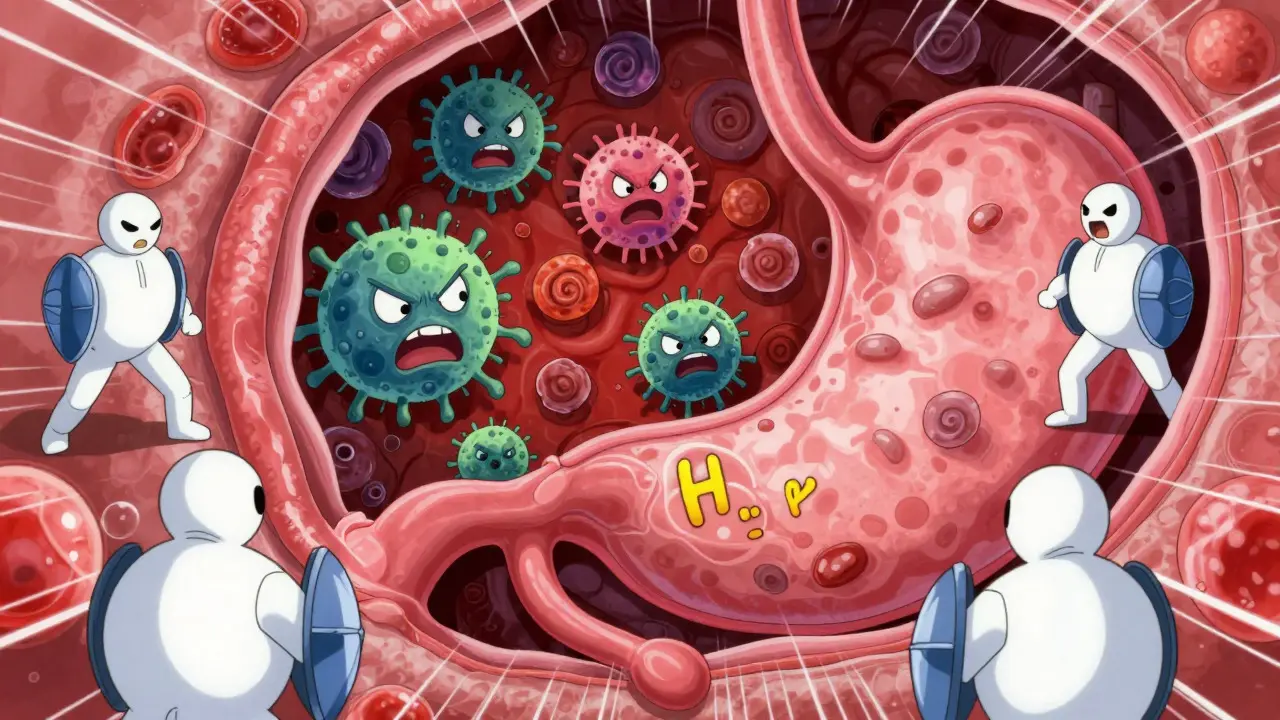
Treating H. pylori: The Triple Threat
If tests confirm H. pylori, you need to kill it. Standard care involves "triple therapy": two antibiotics plus a proton pump inhibitor (PPI) like omeprazole or pantoprazole. The PPI lowers stomach acid, helping the antibiotics work better and letting the lining heal. Success rates hover around 80-90%, but antibiotic resistance is rising. Clarithromycin resistance has jumped to over 35% in some regions. If triple therapy fails, doctors switch to bismuth quadruple therapy (four drugs) or newer options like vonoprazan-based regimens. Adherence is critical. Missing doses allows resistant bacteria to survive. Expect side effects like metallic taste, diarrhea, or nausea-they’re unpleasant but temporary. Finish the course even if you feel better on day three.
Managing Non-H. pylori Gastritis
Not all gastritis comes from bacteria. Painkillers like ibuprofen (NSAIDs) are major culprits, accounting for 25-30% of erosive cases. Alcohol and severe stress play roles too. Treatment here focuses on removing the irritant. Stop taking NSAIDs if possible, or switch to acetaminophen. Cut back on alcohol. PPIs help reduce acid production, giving the stomach time to repair itself. For autoimmune gastritis, where the body attacks its own stomach cells, vitamin B12 absorption drops. These patients need lifelong B12 supplements or injections to prevent nerve damage and anemia.
Diet and Lifestyle Tweaks
There’s no single "gastritis diet," but certain foods trigger symptoms for many people. Avoid spicy foods, acidic fruits (like oranges), fried items, and caffeine if they worsen your pain. Eat smaller, more frequent meals to avoid overwhelming your stomach. Quit smoking; it slows healing and increases cancer risk. Stress management matters, too. While stress doesn’t cause H. pylori, it can worsen symptom perception. Try mindfulness, walking, or simple breathing exercises. Probiotics might help restore gut balance during antibiotic treatment, though evidence is mixed. Yogurt with live cultures is a safe, easy addition.

When to Worry About Complications
Untreated chronic gastritis can lead to ulcers, bleeding, or even stomach cancer. H. pylori-infected individuals with CagA-positive strains face a 10-20 times higher risk of gastric cancer. Atrophic gastritis, where the lining thins out, is a pre-cancerous condition. Regular monitoring via endoscopy is recommended for those with significant atrophy or intestinal metaplasia. Don’t ignore persistent symptoms. If antacids don’t touch your pain, or if you lose weight unintentionally, see a gastroenterologist. Early detection saves lives.
Frequently Asked Questions
Can gastritis go away on its own?
Acute gastritis from alcohol or NSAIDs often resolves within days once the irritant is removed. However, chronic gastritis caused by H. pylori rarely goes away without antibiotics. Untreated chronic inflammation can persist for years and lead to complications.
Is H. pylori contagious?
Yes, H. pylori can spread through person-to-person contact, likely via saliva, vomit, or fecal contamination. Close family members are at higher risk. Good hygiene, like washing hands before eating and after using the bathroom, reduces transmission.
Do I need an endoscopy for every stomach ache?
No. Guidelines suggest testing for H. pylori first in younger patients without warning signs. Endoscopy is reserved for those over 55-60, those with alarm symptoms (bleeding, weight loss, difficulty swallowing), or those who don’t improve after initial treatment.
Why do I still have pain after H. pylori treatment?
Healing takes time. Even after bacteria are killed, inflammation may persist for weeks or months. Additionally, functional dyspepsia (pain without obvious structural cause) can remain. Your doctor may recommend continuing PPIs briefly or adjusting your diet.
Are probiotics effective for gastritis?
Probiotics aren’t a cure for gastritis or H. pylori. However, they may reduce side effects like diarrhea during antibiotic treatment. Look for strains like Lactobacillus and Saccharomyces boulardii. Discuss adding them with your doctor.
Next Steps for Relief
If you suspect gastritis, start by tracking your triggers. Keep a food diary for two weeks. Note what you eat and when pain flares up. Schedule a visit with your GP. Ask specifically for H. pylori testing if symptoms persist beyond two weeks. Follow prescribed treatments exactly-skipping antibiotics risks resistance. Once treated, focus on gentle lifestyle changes: limit NSAIDs, moderate alcohol, and manage stress. Most people recover fully with proper care. Listen to your stomach; it’s trying to tell you something.