
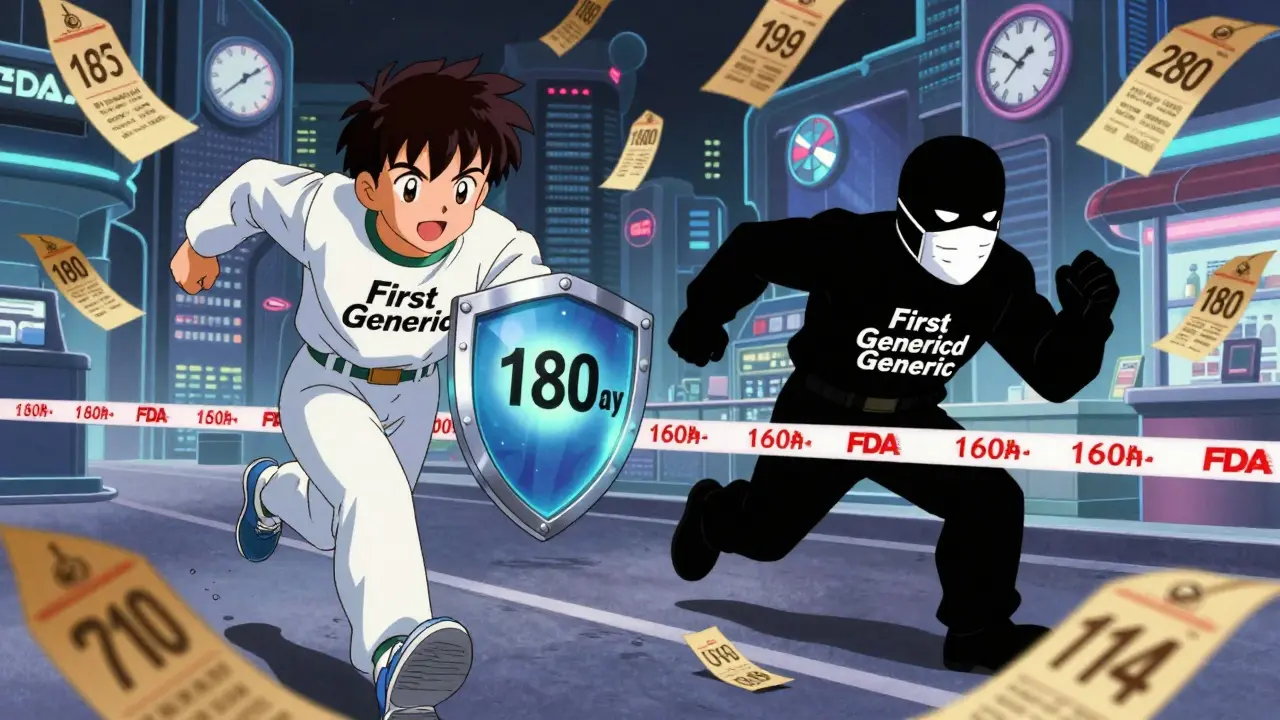
When a brand-name drug loses its patent, the race to sell the first generic version begins. But here’s the twist: the company that made the original drug might launch its own generic version at the exact same time. This isn’t a mistake. It’s a strategy. And it changes everything about how much you pay for medicine.
What’s the difference between a first generic and an authorized generic?
A first generic is the very first generic version of a brand-name drug approved by the FDA. The company that files the first successful Abbreviated New Drug Application (ANDA) gets 180 days of exclusive rights to sell that generic. During that time, no other generic can enter the market - unless it’s an authorized generic.
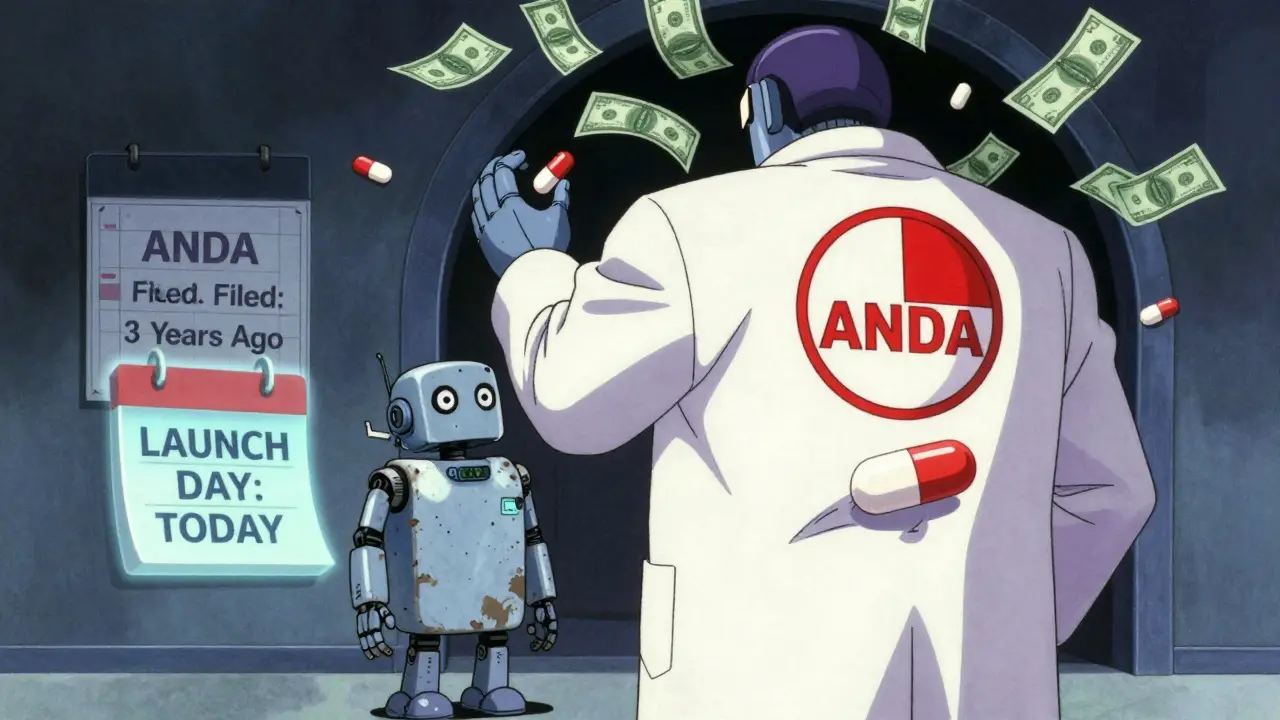
An authorized generic is the exact same drug, made in the same factory, with the same ingredients and packaging - but sold under a generic label. The brand-name company either makes it themselves or licenses it to another company. They don’t need to go through the full FDA approval process because they’re already using the original New Drug Application (NDA). That means they can launch it in days, not months or years.
Think of it this way: the first generic is like a new store opening across the street from a big chain. The authorized generic? That’s the big chain opening its own discount store right next door - selling the exact same products, just under a different name.
Why timing matters more than you think
The 180-day exclusivity period was meant to reward the first generic company for taking the risk. Filing an ANDA means challenging a patent, which can cost $5 million to $10 million and take years of legal battles. In return, they get a monopoly. That’s the promise of the Hatch-Waxman Act of 1984.
But here’s what happens in practice: brand companies watch for when a first generic is about to be approved. They time their authorized generic launch to hit the market on the same day - or even a few days before. According to research from Health Affairs (2022), 73% of authorized generics launch within 90 days of the first generic’s approval. Over 40% launch on the exact same day.
This isn’t coincidence. It’s calculated. When Pfizer launched its authorized generic of Lyrica (pregabalin) the same day Teva’s first generic hit shelves, Teva’s expected market share dropped from 80% to under 50% within weeks. Pfizer’s version captured about 30% of the market immediately. That’s not competition - that’s a takeover.
How this affects drug prices
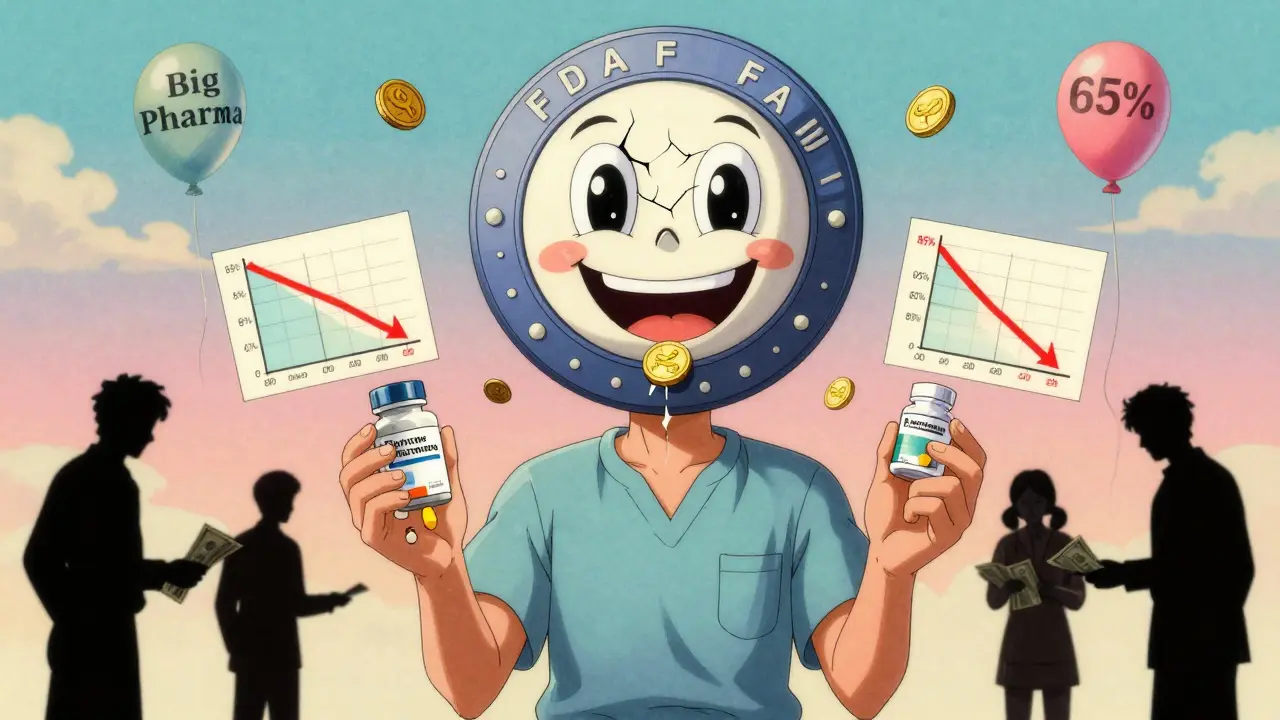
Generic drugs usually cut prices by 80% to 90%. That’s the whole point. But when an authorized generic enters during the first generic’s exclusivity window, the price drop slows down. Instead of 85% off, you might only see 65% off.
RAND Corporation found that authorized generics reduce the overall price savings for the healthcare system by billions of dollars every year. Why? Because now there are two generic versions competing - but neither has the full incentive to slash prices. The first generic doesn’t want to lose too much market share. The authorized generic doesn’t need to compete aggressively - it’s backed by the brand company’s distribution network and brand trust.
Take atorvastatin (Lipitor). When generics entered, prices fell hard. But when Pfizer launched its authorized generic, the drop stalled. The same thing happened with omeprazole (Prilosec) and gabapentin (Neurontin). Consumers thought they were getting a discount. But the savings weren’t as deep as they should’ve been.
Who wins? Who loses?
The brand-name companies win. They keep control of the market. They keep revenue flowing. They avoid the full price collapse that comes with true generic competition.
The first generic companies lose. They spent millions, waited years, and got undercut before they could fully profit. Many mid-sized generic manufacturers now say the window for profitable first-generic entry has shrunk to just 45 to 60 days. Some have stopped filing ANDAs altogether.
Patients and insurers lose too. Higher prices mean higher out-of-pocket costs. Medicare and Medicaid pay more. Employers pay more for employee health plans. Even if you’re not on insurance, you’re still paying more at the pharmacy counter.
The FDA doesn’t stop it. Authorized generics are legal. They’re even listed in the FDA’s Orange Book as approved products. But the agency admits the system is being gamed. In 2017, only 10% of generic applications were approved on the first try. Meanwhile, brand-name drugs get approved at a 90% rate. The playing field isn’t level.
What’s being done about it?
The Inflation Reduction Act of 2022 took a small step. It explicitly says authorized generics don’t count as “generic competitors” when the government negotiates drug prices for Medicare. That means when Medicare tries to lower the price of a drug like Eliquis or Jardiance, they can ignore the authorized generic and negotiate based on the brand price - which puts pressure on the brand company to lower their price more.
The FTC has also taken action. In the 2013 Supreme Court case FTC v. Actavis, the court ruled that “pay-for-delay” deals - where brand companies pay generic companies to delay entry - are illegal. But authorized generics aren’t pay-for-delay. They’re legal, and they’re still being used aggressively.
Some experts, like the Association for Accessible Medicines (AAM), argue that authorized generics still increase access and lower prices overall. They point to the fact that millions of patients now get cheaper versions of Lipitor and Prilosec. But public health researchers say that’s not the full story. The system was meant to encourage independent generic companies to challenge patents. Instead, it’s become a tool for brand companies to protect their profits.
What’s next for generic drug competition?
By 2027, authorized generics could make up 25% to 30% of all generic prescriptions - up from 18% in 2022. That’s a massive shift.
Leading generic manufacturers are adapting. Some are building dual strategies: filing ANDAs for multiple drugs at once, so if one gets undercut, another might still pay off. Others are partnering with pharmacies or specialty distributors to bypass traditional channels. A few are even developing their own authorized generic deals - turning the tables on brand companies.
But for most small and mid-sized generic firms, the odds are stacked. The financial risk is too high. The timeline is too short. The competition is too unfair.
The system was built to save money. But today, it’s often saving the drugmakers - not the patients.
What should you do as a patient?
You can’t control when a drug goes generic. But you can control what you pay.
- Ask your pharmacist: “Is this an authorized generic?” If it is, it’s the same as the brand - but cheaper. Sometimes, it’s the best deal.
- Compare prices. Sometimes, the first generic is cheaper than the authorized one. Sometimes it’s the other way around.
- Use pharmacy discount programs. GoodRx, SingleCare, and others often show price differences between the two.
- Don’t assume all generics are the same. Ask your doctor if switching between versions affects your treatment. For most drugs, it doesn’t. But for narrow-therapeutic-index drugs like warfarin or levothyroxine, consistency matters.
The bottom line: the race to be first isn’t what it used to be. The rules changed. The players changed. And the cost? It’s still rising - even when the drug is supposed to be cheaper.


Chiraghuddin Qureshi - 21 January 2026
Bro this is wild 😱 I just checked my insulin price last week - thought I got lucky with the generic… turns out it was an authorized one. Brand made it themselves. My wallet cried. 🤦♂️
Lauren Wall - 21 January 2026
This is disgusting. The system is rigged. End of story.
Kenji Gaerlan - 23 January 2026
so like… the big pharma company just opens a fake generic store? bro that’s not even sneaky, that’s just cheating. 🤡
Ryan Riesterer - 24 January 2026
The Hatch-Waxman Act’s original intent was to incentivize patent challenges through market exclusivity. However, the emergence of authorized generics as a strategic countermeasure effectively neutralizes the 180-day exclusivity window, creating a structural distortion in generic market dynamics. The result is suboptimal price elasticity and reduced consumer surplus.
Akriti Jain - 25 January 2026
They’re not just gaming the system… they’re running the whole damn game. 😏 FDA? More like FDA: For Drug Execs. The whole thing’s a front. They even make the packaging look different so you think you’re getting a deal. 💸
Mike P - 26 January 2026
USA invented this system and now we’re the only ones getting screwed? Come on. Other countries don’t let this crap happen. We’re letting Big Pharma walk all over us while we sit here arguing about whether ‘authorized’ means ‘fake.’
Brenda King - 26 January 2026
Hey everyone - if you're on meds, just ask your pharmacist if it's an authorized generic. It's the same stuff, but sometimes cheaper. And if you're on Medicare, check GoodRx - it's saved me hundreds. You're not powerless here 💛
Keith Helm - 27 January 2026
It is a matter of public record that authorized generics are legally permissible under the provisions of 21 CFR 314.93. The regulatory framework is not defective; the market incentives are misaligned.
Oren Prettyman - 27 January 2026
Let’s be honest - the entire generic drug industry was designed as a temporary market correction mechanism, not a permanent structural reform. The 180-day exclusivity period was never intended to be a sustainable business model for small manufacturers. It was a political compromise. The fact that anyone still believes in its efficacy today is a testament to the power of naive idealism in policy-making. The market has evolved. The law hasn’t. And now we’re all paying the price - literally - for institutional inertia. The real scandal isn’t that authorized generics exist. It’s that we still pretend this system was ever meant to work.
Tatiana Bandurina - 28 January 2026
Interesting how the FDA’s own data shows that 90% of brand applications get approved on the first try, while generics struggle to clear 10%. That’s not inefficiency - that’s a bottleneck engineered to favor incumbents. The system doesn’t just favor big pharma. It’s built to protect them.
Philip House - 29 January 2026
It’s not capitalism. It’s not even free markets. It’s corporate feudalism. The brand-name companies are the lords. The generics are the serfs. And the authorized generic? That’s the lord opening a serf’s farm and selling the same wheat under a new name. We call it innovation. It’s just theft with a patent lawyer.
Daphne Mallari - Tolentino - 31 January 2026
One must question whether the commodification of pharmaceuticals, particularly in the context of post-patent market entry strategies, constitutes a violation of the social contract inherent in public health policy. The erosion of price transparency and equitable access undermines the foundational principles of therapeutic justice.
Neil Ellis - 1 February 2026
It’s wild how something so technical - authorized generics - can feel like a betrayal. But here’s the silver lining: people are waking up. Pharmacists are talking. Patients are asking questions. The tide’s turning. We might not fix the system overnight, but we’re no longer just accepting the bill. And that? That’s the first real dose of hope in years. 🌱