
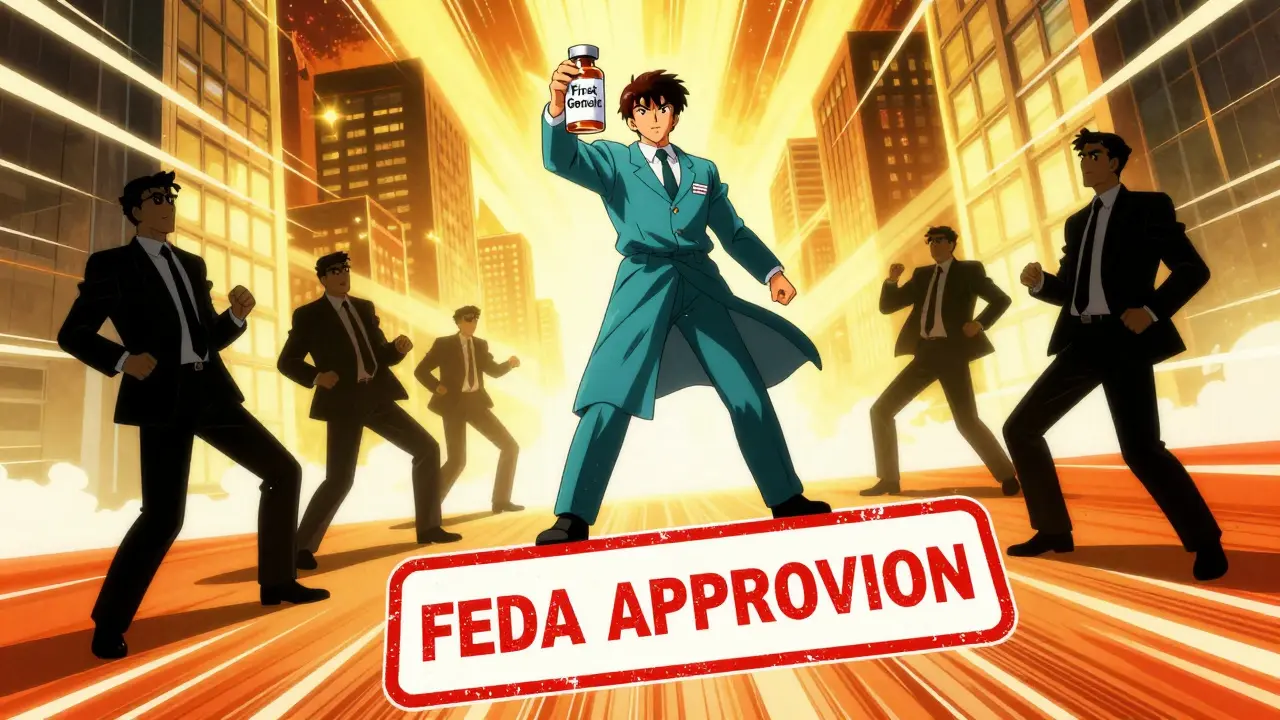
When the first generic version of a blockbuster drug hits the market, it doesn’t just lower the price-it reshapes the entire healthcare system. The first generic approval from the FDA isn’t just a bureaucratic milestone. It’s the moment when millions of patients suddenly gain access to life-saving medications at a fraction of the cost. And behind that approval is a complex, high-stakes race between drug companies, patent lawyers, and regulators-all shaped by a 40-year-old law that still drives how America buys medicine today.
What Exactly Is a First Generic Approval?
A first generic approval is given to the first company that successfully files an Abbreviated New Drug Application (ANDA) for a drug whose patent has expired-or successfully challenges its patents. This isn’t just any generic drug. It’s the very first one allowed to compete with the brand-name version. And because of that, it gets something no other generic gets: 180 days of exclusive market rights. This system was created by the Hatch-Waxman Act of 1984. Before that, generic drug makers had to run full clinical trials to prove their version was safe and effective-even though the brand-name drug had already been proven. That made generics too expensive to produce. Hatch-Waxman changed everything. It let generic companies rely on the brand’s existing safety data, as long as they proved their version absorbed into the body the same way. That cut development costs by up to 90%. The catch? To get that 180-day exclusivity, the generic company must file what’s called a Paragraph IV certification. That means they’re saying, “We believe this patent is invalid or won’t be infringed.” That triggers a lawsuit from the brand-name company. If the generic wins, they get their exclusivity. If they lose, they get nothing. It’s a gamble that can cost $5 million to $15 million in legal fees.Why Does This 180-Day Window Matter So Much?
Imagine a drug that sells for $10,000 a year. That’s not unusual for a top-selling medication. When the first generic hits, it typically launches at 15-20% below the brand price. Because it’s the only generic on the market for six months, it captures 70-80% of the sales. That means the first generic maker could make $100 million to $500 million in extra profits during that window. Take Humira, for example. When Amgen launched its first generic version in September 2023, it grabbed 42% of the market in just 90 days. The brand had been selling for over $7,000 per year. The generic? Around $3,000. That’s a massive shift in spending-for patients, insurers, and Medicare. But here’s the twist: the exclusivity doesn’t always go as planned. If two companies file on the same day, they both get the 180 days. That’s called a “multiple first filer” situation. It happened in 10.6% of cases between 2001 and 2022. Suddenly, the market splits, and the price drops faster than expected. That’s why some companies delay filing-waiting to see who else might jump in. And then there’s the authorized generic. That’s when the brand-name company itself releases an unbranded version of its drug, often at a discount. It’s legal. And it’s common. In 38% of first generic cases between 2015 and 2022, the brand launched its own generic version during the exclusivity window. That can eat into the first generic’s profits by 20-30%.How Do We Know Generic Drugs Work the Same?
Patients often worry: “Is this generic really the same?” The answer is yes-and the science backs it up. The FDA requires generic drugs to match the brand in strength, dosage form, and how quickly they’re absorbed. That’s measured by bioequivalence testing. The generic’s absorption rate (AUC) and peak concentration (Cmax) must fall within 80-125% of the brand’s. That’s not a wide range-it’s tight. In fact, a 2007 FDA review of over 2,000 studies found that the average difference between a generic and its brand-name counterpart was just 3.5%. That’s less than the variation between two different batches of the same brand-name drug. Patient reviews on Drugs.com show first generics averaging 4.2 out of 5 stars-almost identical to the 4.3 for brand-name versions. Common comments: “No difference in side effects,” “Works just as well,” “Half the price.” Pharmacists surveyed in 2024 said 87% of patients saw better access to meds after a first generic launched. And 73% reported higher adherence-meaning people actually kept taking their pills because they could afford them.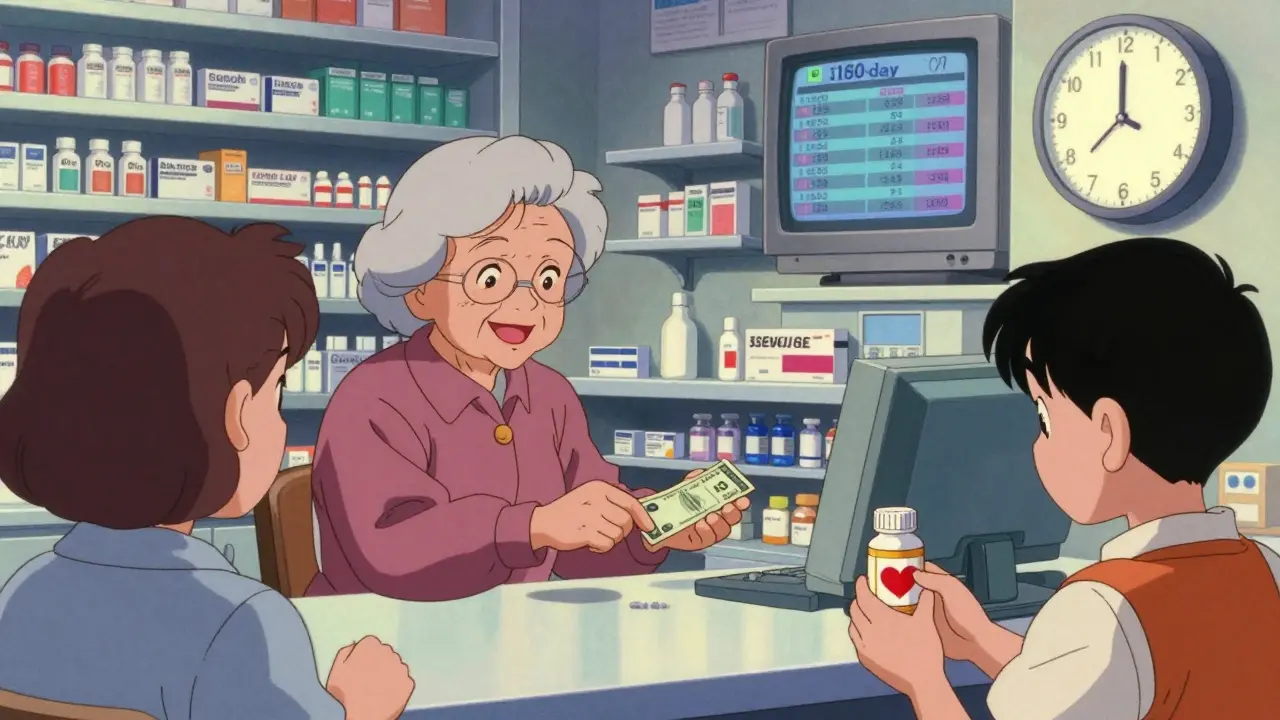
What’s the Catch? The Hidden Risks
It’s not all smooth sailing. The path to first generic approval is full of traps. One major issue? Patent thickets. Brand-name companies pile on dozens of patents-sometimes 7 or more-for one drug. Some are legitimate. Others are just to block competition. Between 2010 and 2020, 42% of first generics were delayed because of these tactics. Some companies even pay generic makers to wait-called “pay-for-delay” deals. Those are now illegal under antitrust rules, but they still happen in subtle ways. Another problem? Manufacturing. A third of first-time generic applicants get delayed because their production facilities fail FDA inspections. It’s not about quality-it’s about paperwork, processes, or equipment. One company spent $80 million developing a first generic for a complex injectable drug… only to be rejected because their labeling didn’t match the brand’s font size. And then there’s the clock. The 180-day exclusivity starts when the drug is first sold. But if the company doesn’t launch within 75 days of approval, they lose it. That’s happened. And when they do, the market floods with competitors overnight-and prices crash even harder.Who’s Winning the Race?
Some companies specialize in this high-risk game. Teva, the world’s largest generic drugmaker, got 14 first generic approvals in 2023 alone. Hikma Pharmaceuticals came in second with 11. Both have teams of 20+ regulatory experts, legal counsel, and bioequivalence scientists working full-time on these filings. The average development cost for a first generic? $50 million to $100 million. That includes everything: studies, legal battles, facility upgrades, and FDA submissions. The ANDA process itself takes 18-24 months just to prepare. And even then, only 78% of “substantially complete” applications get approved on the first try. Incomplete ones? Only 42%. The FDA has been trying to speed things up. Since 2017, under the Generic Drug User Fee Amendments (GDUFA), they’ve committed to reviewing first generics in 10-12 months-faster than the 14-18 months for regular generics. In 2023, they approved 112 first generics out of 939 total generic approvals. That’s 12%.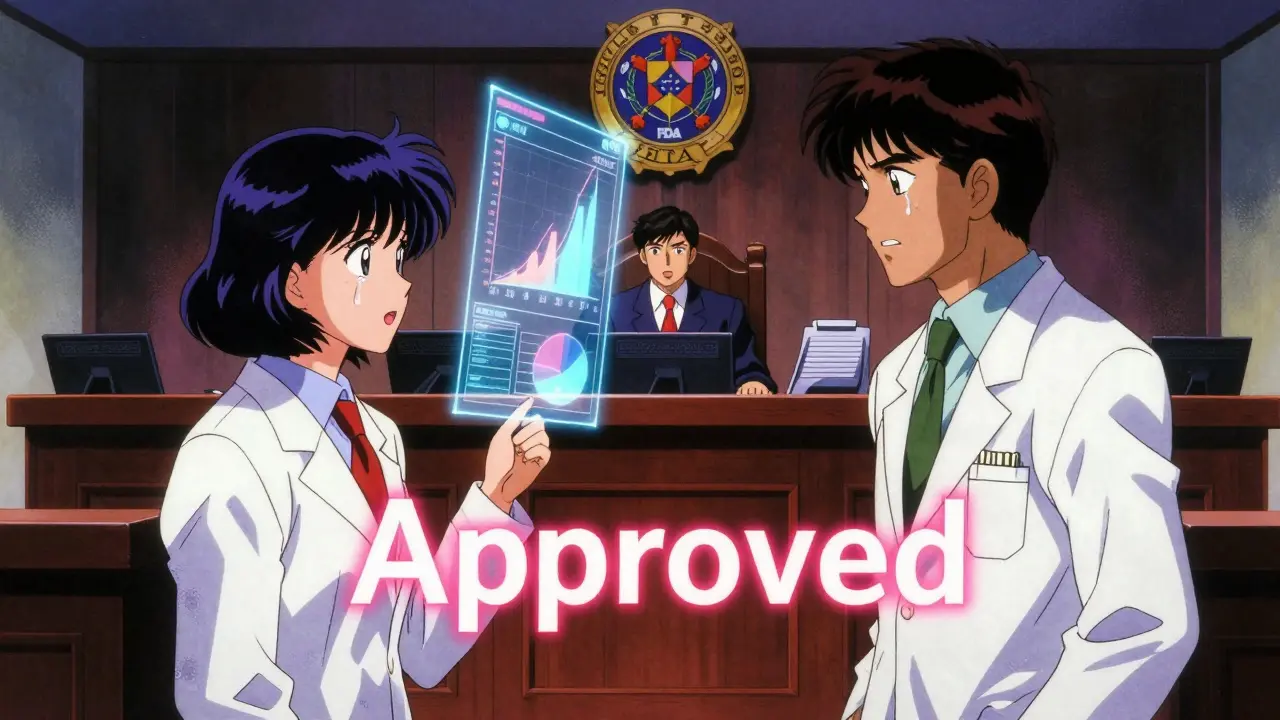
What’s Changing in 2026?
The landscape is shifting. The 2022 Inflation Reduction Act removed a loophole that let brand-name companies pause the 180-day clock if the drug had a Risk Evaluation and Mitigation Strategy (REMS). That means faster market entry now. The FDA is also pushing harder on complex generics-drugs that are hard to copy, like inhalers, eye drops, or topical creams. In 2023, 17 complex generics got first approval, up from just 9 the year before. That’s a big deal. These drugs used to be protected by technical barriers. Now, more companies are cracking them. And the pipeline? Huge. Over $156 billion worth of brand-name drugs are set to lose patent protection by 2028. That means more first generics coming. But so do more challenges: biologics, biosimilars, and international supply chain risks.What This Means for You
If you’re a patient, first generic approval means lower bills. More consistency. Fewer refusals from pharmacies because the drug is too expensive. If you’re a caregiver, it means less stress about choosing between meds and rent. If you’re in healthcare, it means more patients sticking to their treatment plans. And if you’re watching drug prices, you’re watching the first generic. Because that’s where the biggest drop happens. After the 180 days, other generics come in-and prices fall another 30-50%. But the real savings? That first one. The FDA says the Hatch-Waxman Act has saved the U.S. healthcare system over $1.7 trillion since 1984. That’s not a number-it’s millions of people getting their insulin, their blood pressure meds, their cancer drugs, without going broke. First generic approval isn’t just a legal term. It’s the moment when medicine becomes affordable again.What is the difference between a first generic approval and a regular generic approval?
A first generic approval goes to the first company that files a complete ANDA and either clears all patent blocks or wins a patent challenge. That company gets 180 days of market exclusivity. A regular generic approval is for any company that files after that exclusivity period ends. They don’t get exclusivity, so they enter a crowded market and price drops fast.
Can a brand-name company sell its own generic version?
Yes. These are called authorized generics. The brand-name company can produce and sell an unbranded version of its drug, often at a discount, during the first generic’s 180-day exclusivity window. This can reduce the first generic’s market share by 20-30%. It’s legal and common-used by companies like AbbVie and Pfizer to protect profits.
Why do some first generics never launch even after FDA approval?
There are a few reasons. The company might be waiting to avoid a lawsuit, or they may have manufacturing delays. Sometimes, the FDA requires changes to the labeling or facility. Other times, the company just doesn’t have the resources to scale up production. If they don’t launch within 75 days of approval, they lose their 180-day exclusivity.
How long does it take to get a first generic approved?
Preparation takes 18-24 months. Once submitted, the FDA aims to review a first generic application in 10-12 months-faster than the 14-18 months for standard generics. But if there’s a patent lawsuit, the approval can be delayed up to 30 months while litigation plays out.
Are first generics safer or more effective than brand-name drugs?
No. They are required by the FDA to be identical in strength, dosage, safety, and effectiveness. Bioequivalence testing ensures they perform the same in the body. Patient reviews and clinical studies show no meaningful difference in outcomes. The only difference is the price.
What happens after the 180-day exclusivity period ends?
Other generic manufacturers can enter the market. Prices typically drop another 30-50% within months. Within six months of the first generic launch, the total price of the drug usually falls 70-90% from the original brand price. That’s when most patients see the biggest savings.


Ryan Hutchison - 16 January 2026
Let’s be real-this whole Hatch-Waxman system is a rigged game. Big Pharma writes the rules, and the FDA just signs off like a bureaucrat on coffee break. The 180-day exclusivity? That’s not a reward for innovation-it’s a monopoly handout to the first guy who can afford a $10M lawsuit. And don’t get me started on authorized generics. The brand-name company just slaps a white label on their own drug and calls it ‘competition.’ That’s not capitalism, that’s corporate theater.
Meanwhile, real patients are still skipping doses because even $3K a year for Humira is a stretch. We need price caps, not more loopholes. This isn’t about innovation-it’s about profit maximization dressed up as public health.
And don’t tell me generics are ‘just as good.’ I’ve seen people switch and have seizures. The 80-125% bioequivalence window? That’s not science-it’s a gamble with lives. FDA should be stricter, not cheerleading this mess.
Samyak Shertok - 17 January 2026
Oh wow, another love letter to capitalism’s greatest hit: the generic drug racket. Let me get this straight-we’ve turned medicine into a poker game where the house always wins, and the only thing that matters is who files their paperwork first? How poetic.
180 days of monopoly? That’s not a market incentive, that’s a time-limited cartel. And the fact that companies delay filing just to see who else is in the room? That’s not competition. That’s corporate ballet with a spreadsheet.
And let’s not pretend the FDA is some impartial referee. They’re the bouncer at a club where the VIPs pay in patents and lawsuits. Meanwhile, the rest of us are stuck outside wondering why our insulin costs more than our rent.
Maybe the real question isn’t ‘how do we fix this?’ but ‘why are we still playing this game?’
evelyn wellding - 18 January 2026
OMG this is so important!! 🙌 I’ve been on a generic blood pressure med for 3 years and I swear I didn’t even notice the switch-except my bank account did 😭 Thank you to everyone who fights to make these affordable!! We need MORE first generics, not less!! 💪❤️
Chelsea Harton - 20 January 2026
generic work same. price lower. people live longer. why is this hard? 🤷♀️
Bianca Leonhardt - 20 January 2026
People who think generics are ‘just as good’ are either naive or paid by Teva. The FDA’s 80-125% bioequivalence window? That’s a 45% variance. You wouldn’t accept that in your car engine, your phone battery, or your child’s vaccine-so why accept it in your heart medication?
And don’t get me started on the ‘authorized generic’ loophole. That’s not competition, that’s a hostile takeover disguised as consumer choice. The system is broken. And the FDA? They’re complicit.
kanchan tiwari - 20 January 2026
They’re lying. All of it. The FDA, the drug companies, the ‘bioequivalence’ studies-they’re all connected. The 180-day window? That’s a trap. The moment a generic launches, the government slips in a backdoor patent extension under ‘REMS’ or ‘manufacturing delays.’ You think that $80M spent on a failed injection was just bad paperwork? Nah. That was a warning. A message.
And the ‘authorized generics’? That’s not legal. That’s collusion. The brand-name company owns the generic. They own the FDA. They own your prescription. They own your life. And they’re laughing all the way to the Swiss bank.
Wake up. This isn’t about medicine. It’s about control.
Bobbi-Marie Nova - 22 January 2026
Okay but can we just take a second to appreciate how wild it is that a $10K drug drops to $3K because someone filed a form? 😮 That’s the power of competition, baby! 🎉
And yes, I know the system’s messy-patent thickets, authorized generics, lawsuits galore-but at least we’re getting *something*. I’ve seen friends cry because they couldn’t afford their meds. Now? They’re alive. That’s the win.
Let’s fix the loopholes, sure-but don’t throw the baby out with the bathwater. First generics saved my aunt’s life. That’s not nothing.
Allen Davidson - 22 January 2026
I’ve worked in pharmacy for 18 years. I’ve seen the shift from $8K insulin to $35 in generics. It’s not perfect, but it’s real. Patients who used to ration pills now take them consistently. Depression meds? Diabetes? Blood thinners? All of it.
The system is flawed? Absolutely. Patent trolling? Yes. Authorized generics? Annoying. But the fact that 87% of patients report better access? That’s not noise-that’s human impact.
Let’s push for reform: faster FDA reviews, crack down on pay-for-delay, ban authorized generics during exclusivity. But don’t dismiss the wins. This system, broken as it is, is still the best thing we’ve got to make medicine affordable.
john Mccoskey - 23 January 2026
Let’s cut through the PR fluff. The FDA’s ‘10-12 month review’ for first generics? That’s a fantasy. The average time from submission to approval is 18.7 months. The ‘12% of generics are first’ stat? That’s because 78% of applicants are incompetent. Half of them submit incomplete ANDAs-missing bioequivalence data, wrong labeling formats, outdated facility certifications. The FDA doesn’t ‘speed things up’-they just reject more people.
The ‘$50M development cost’? That’s for the ones who actually get approved. The rest? They burn $15M and disappear. Teva and Hikma aren’t heroes-they’re oligopolists with legal teams bigger than some countries’ militaries.
And the ‘$1.7 trillion saved’? That’s calculated using the brand’s inflated price as the baseline. If we’d regulated prices in 1984 instead of letting monopolies run wild, we’d have saved $5 trillion. This isn’t a success story. It’s a cautionary tale about letting corporations write the rules of survival.
Stephen Tulloch - 24 January 2026
First generic approval? More like first corporate loophole approval 🤦♂️
180 days of monopoly? Bro, that’s not capitalism-that’s feudalism with a FDA stamp. And don’t even get me started on the ‘authorized generic’-it’s like the king lets his cousin sell the same wheat at a discount so the peasants think they’re getting a deal. Meanwhile, the king’s still hoarding the gold.
And the FDA? They’re the royal scribe who writes the rules but never questions them. We need a revolution. Not more paperwork. Not more loopholes. Just… lower prices. Period. 🇨🇦✌️
Joie Cregin - 26 January 2026
I just want to say thank you to the people who make this possible. My mom’s on a generic for her autoimmune disease. She used to cry at the pharmacy counter. Now she laughs because she can afford to refill it. That’s not just a drug-it’s dignity.
Yeah, the system’s messy. Yeah, there are shady tactics. But the fact that someone fought through lawsuits, inspections, and patent thickets so my mom could breathe easier? That’s worth celebrating.
Let’s fix the flaws-but don’t forget the humanity behind the numbers. ❤️
Melodie Lesesne - 27 January 2026
So… the first generic is like the first domino? Once it falls, everything else just… follows? That’s kinda beautiful. Even if the system’s rigged, at least one person gets to knock it over first. And then everyone else gets to walk through the door.
Also-authorized generics are the ultimate flex. Like, ‘Hey, we made the drug. We own the patent. But we’ll sell it cheaper… to make you think we’re nice.’ 🤨
Still. More access = better. I’ll take the messy win.
Corey Sawchuk - 29 January 2026
My uncle took a generic for his heart condition. He said it worked the same. He saved $400 a month. He’s still here. That’s enough for me.
Don’t need the drama. Don’t need the conspiracy. Just let people live.
Ryan Hutchison - 30 January 2026
Re: Bobbi-Marie Nova-‘celebrate the wins’? Sure. But don’t call it justice. Celebrating a $3K insulin when it should be $10 is like celebrating a prison sentence that’s 20 years instead of 25.
And Allen Davidson-you’re right that patients are alive. But they’re alive because the system broke, not because it worked. We need to fix the root, not just the symptoms.
That’s why I’m not thankful for the first generic. I’m furious it had to exist in the first place.