
Chronic heartburn isn’t just annoying-it can be a silent warning sign of something far more serious. If you’ve had acid reflux for five years or more, especially if you’re a man over 50, overweight, or a smoker, your risk of developing esophageal cancer is rising. And most people don’t even realize it until it’s too late. The truth is, esophageal cancer doesn’t come out of nowhere. It grows slowly, quietly, over years, often starting with something as common as GERD. But not everyone with GERD gets cancer. The difference? Knowing the red flags-and acting on them before it’s too late.
How GERD Turns Into Cancer
Every time stomach acid backs up into your esophagus, it burns the delicate lining. Your body tries to protect itself by changing the cells there. Instead of the normal squamous cells, they start to look more like stomach cells. This is called Barrett’s esophagus a condition where the lining of the esophagus changes due to long-term acid exposure, making it a known precursor to esophageal adenocarcinoma. It’s not cancer. But it’s the only known step between chronic GERD and cancer.
According to a 2023 NIH study tracking over 100,000 people for nearly a decade, those with chronic GERD had more than a 3-fold higher risk of developing esophageal cancer. That’s not a small increase. And the longer you’ve had GERD, the worse it gets. People with symptoms for 10+ years are at the highest risk. Even if your reflux feels mild, if it’s been going on for five years or more, your esophagus has been under constant assault.
Here’s the scary part: only about 5 to 15% of people with long-term GERD develop Barrett’s esophagus. But of those, up to half a percent each year turn into cancer. It’s rare, yes-but when it happens, it’s often caught too late. That’s why understanding your personal risk matters more than ever.
Who’s Really at Risk?
Not everyone with GERD needs to panic. But some people are sitting on a ticking clock. The biggest risk factors stack up like dominoes:
- Age over 50 - 90% of esophageal adenocarcinoma cases happen in people over 55.
- Male sex - Men are 3 to 4 times more likely than women to develop this cancer.
- White non-Hispanic ethnicity - White Americans have three times higher rates than Black Americans.
- Obesity (BMI ≥30) - Extra weight increases pressure on the stomach, forcing acid upward. It’s linked to 30-40% of GERD cases.
- Smoking - Whether you quit yesterday or 20 years ago, past smoking raises your risk by 2-3 times.
- Family history - If a close relative had esophageal cancer, your risk jumps.
Having just one of these doesn’t mean you’ll get cancer. But if you’re a 58-year-old white man with a BMI of 32, who’s been on PPIs for eight years and smoked until 2018? You’re in the high-risk group. The American College of Gastroenterology says you should have an endoscopy. Yet, only 13% of people like you actually get screened.
The Red Flags You Can’t Ignore
Cancer doesn’t always scream. But when it does, here’s what it sounds like:
- Dysphagia - Feeling like food gets stuck in your chest or throat. Starts with solids, then moves to liquids. Found in 80% of cases at diagnosis.
- Unexplained weight loss - Losing 10 pounds or more in six months without trying. Happens in 60-70% of patients.
- Heartburn that won’t quit - More than twice a week for five+ years. Nearly all adenocarcinoma patients had this.
- Food impaction - Food literally gets stuck. You feel it. You can’t swallow it. You’re not imagining it.
- Chronic hoarseness or cough - Lasting more than two weeks. Acid can irritate your vocal cords and lungs.
These aren’t "maybe" symptoms. They’re warning signs. And if you’ve had GERD for years and now have one of these, you need an endoscopy. Not next month. Not after your vacation. Now.
The American Cancer Society says 75% of esophageal cancers are diagnosed at late stages-because people brushed off the symptoms. "It’s just heartburn." "I’ve always had trouble swallowing." "I lost weight because I’m stressed." That’s how it slips through.
What You Can Do to Lower Your Risk
It’s not all doom and gloom. You have real power here.
Quit smoking. Even if you smoked for 30 years, quitting cuts your cancer risk by half within a decade. The sooner, the better.
Loosen your belt. Losing just 5-10% of your body weight reduces GERD symptoms by 40%. That’s not just about appearance-it’s about survival.
Limit alcohol. One drink a day for women, two for men. Heavy drinking doesn’t raise adenocarcinoma risk as much as GERD does-but it still adds fuel to the fire.
Take your PPIs as prescribed. If you have Barrett’s esophagus, consistent proton pump inhibitor use for five+ years cuts cancer risk by 70%. Don’t skip doses. Don’t stop because you "feel better." This isn’t about comfort-it’s about stopping cancer before it starts.
Get screened. If you’re a white male over 50 with chronic GERD and two other risk factors (smoking, obesity, family history), endoscopy is recommended. It’s not scary. It’s quick. And it could save your life.
What’s Changing in Screening
Endoscopy isn’t perfect. It’s invasive. It’s expensive. And many people avoid it. That’s why new tools are emerging.
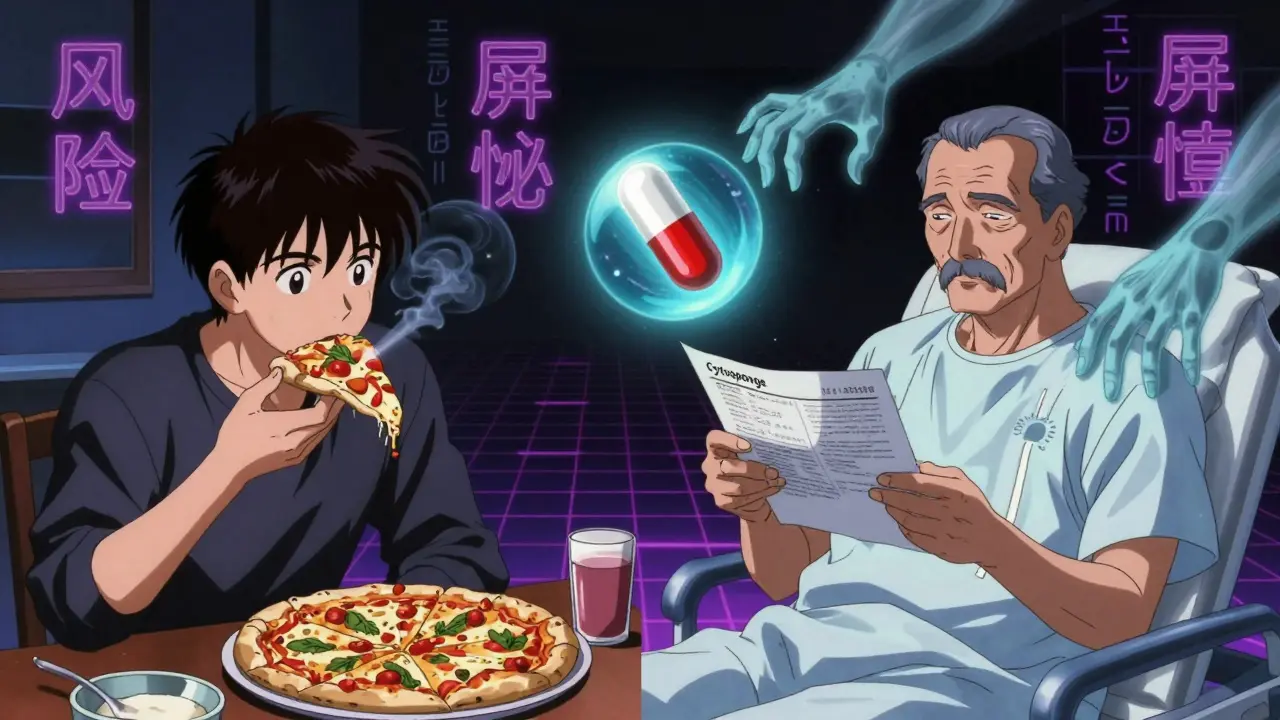
The Cytosponge a pill-sized sponge on a string that collects esophageal cells for testing, offering a non-endoscopic screening option for Barrett’s esophagus is one of them. You swallow a capsule on a string. It opens in your stomach, then gets pulled back up, collecting cells from your esophagus. A 2022 Lancet study found it detects Barrett’s with 79.9% accuracy. It’s not perfect-but it’s a game-changer for people who won’t get an endoscopy.
Doctors are also using tools like narrow-band imaging an advanced endoscopic technique that enhances visualization of abnormal tissue in the esophagus, improving Barrett’s esophagus detection rates and confocal laser endomicroscopy a real-time microscopic imaging method used during endoscopy to identify precancerous changes without biopsy. These help spot trouble earlier.
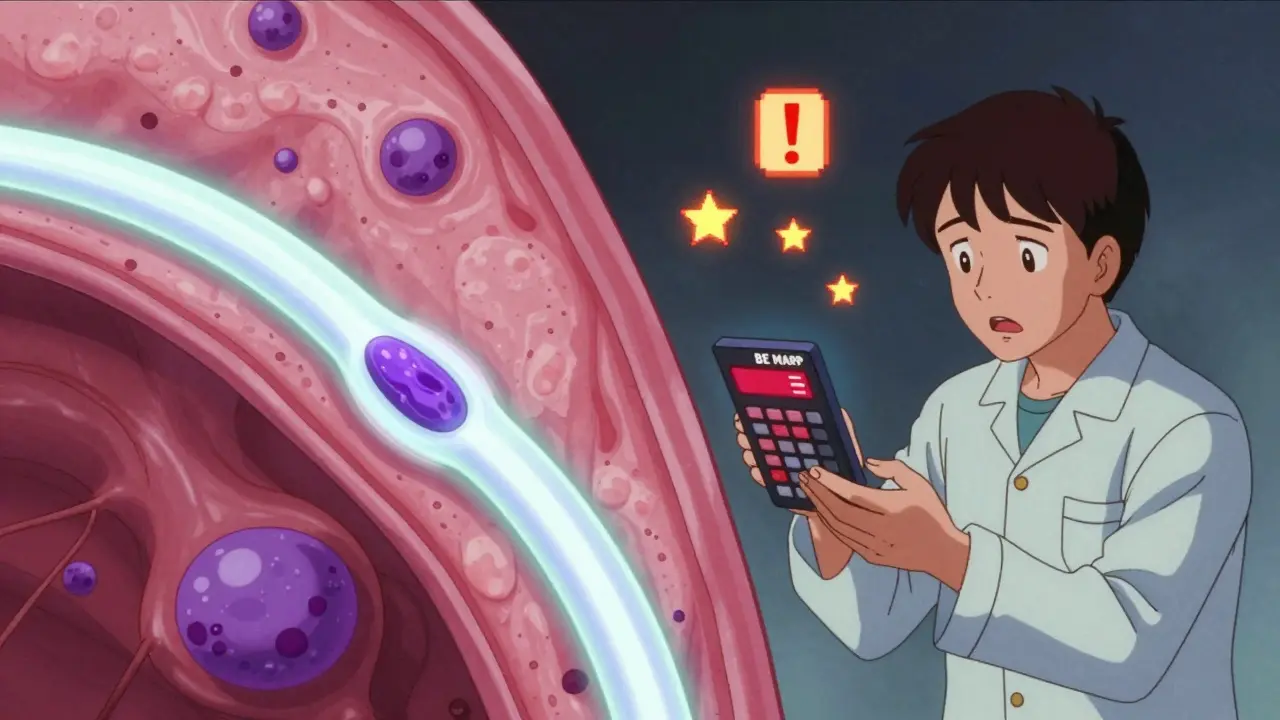
And soon, we may have risk calculators built into apps. The BE MAPPED a validated clinical risk calculator that uses age, sex, BMI, smoking, GERD duration, family history, and race to estimate individual risk of Barrett’s esophagus with 85% accuracy tool already exists. Plug in your numbers, and it tells you your risk level. If it’s high, you get flagged for screening.
Why This Matters Now
Since 1975, esophageal adenocarcinoma has gone up by 850%. Why? Because obesity and GERD have exploded. In 1980, 15% of Americans were obese. Today, it’s 42%. More acid reflux. More Barrett’s. More cancer.
And the survival rate? Only 21% for all stages combined. But if caught early-before it spreads-your chance of living five years jumps to 50-60%. That’s the difference between a death sentence and a second chance.
Most people with GERD will never get cancer. But if you’re in the high-risk group? You’re not just managing heartburn. You’re managing your future. And that means listening to your body. Not ignoring it.
Can GERD go away on its own without treatment?
No. GERD doesn’t resolve without intervention. Even if symptoms improve with diet or medication, the underlying damage to the esophagus continues. The cells keep being exposed to acid, increasing the chance of Barrett’s esophagus over time. Stopping medication doesn’t mean the disease is gone-it just means you’re not managing it anymore.
Is esophageal cancer hereditary?
Most cases aren’t inherited, but family history does matter. If a parent or sibling had esophageal cancer, your risk increases. Researchers are now studying genetic markers like CRTC1 mutations that may raise your risk 2-3 times if you also have chronic GERD. This doesn’t mean you’ll get cancer-it means you should be more vigilant about screening.
Do I need an endoscopy if I have GERD but no symptoms?
If you’ve had GERD for over five years and you’re a man over 50 with obesity or a history of smoking, yes. Even if you feel fine. Barrett’s esophagus often has no symptoms. That’s why screening is critical. The goal isn’t to wait for pain-it’s to catch changes before they become cancer.
Can lifestyle changes reverse Barrett’s esophagus?
Not usually. Once the cells have changed, they rarely return to normal. But lifestyle changes-weight loss, quitting smoking, consistent PPI use-can stop the progression to cancer. In fact, studies show these changes reduce cancer risk by 40-60%. You can’t undo the damage, but you can stop it from getting worse.
Is Barrett’s esophagus the same as cancer?
No. Barrett’s esophagus is a precancerous condition, not cancer. It means your esophagus has changed in response to long-term acid damage. Most people with Barrett’s never develop cancer. But because it’s the only known precursor, doctors monitor it closely with regular endoscopies to catch any dysplasia early.
How often should I get screened if I have Barrett’s esophagus?
If your biopsy shows no dysplasia, you should get an endoscopy every 3-5 years. If low-grade dysplasia is found, it’s every 6-12 months. High-grade dysplasia often leads to treatment to remove the abnormal tissue. The key is consistency-missing a screening can mean missing the window to prevent cancer.
Can I reduce my risk if I’m already diagnosed with Barrett’s esophagus?
Absolutely. Consistent use of PPIs cuts cancer risk by 70%. Losing weight, quitting smoking, and avoiding alcohol make a big difference. Studies show people who follow these steps have significantly lower rates of progression. It’s not about curing Barrett’s-it’s about stopping it from turning into cancer.
Does acid reflux after age 50 mean I have cancer?
No. New or worsening reflux after 50 doesn’t mean you have cancer-but it does mean you need evaluation. Especially if you have other risk factors. This could be a sign that Barrett’s is developing. Early endoscopy at this stage can catch it before cancer forms.
What to Do Next
If you’ve had GERD for five years or more and you’re over 50, male, overweight, or a smoker: don’t wait. Talk to your doctor about an endoscopy. If you’re not sure whether you’re at risk, use the BE MAPPED calculator to get a sense of your personal risk level. If you’ve lost weight without trying, or food keeps getting stuck-get checked now. This isn’t about being paranoid. It’s about being smart. Your esophagus has been fighting for years. It’s time you fought back.


Dean Jones - 1 March 2026
Let’s be real for a second. We live in a world where every damn thing is a cancer risk now. GERD? Oh no, it’s a ticking time bomb. But here’s the thing-most people with acid reflux never get cancer. Ever. The stats say 5-15% develop Barrett’s, and of those, half a percent per year turn into cancer. That’s not a crisis. That’s a statistical blip. We’re so obsessed with fear-based medicine that we’re turning routine discomfort into a life-or-death narrative. I’m not saying ignore it-I’m saying stop panic-scrolling. If you’re asymptomatic and have no family history, you’re not a walking tumor. You’re a person who ate tacos last night.
And let’s talk about the screening push. Endoscopies aren’t harmless. They’re invasive. They cost money. They carry risk. And yet we’re telling people who’ve had heartburn for seven years they’re basically dead men walking unless they submit to a scope. Where’s the balance? Where’s the nuance? We’ve replaced medical judgment with algorithmic fear. The BE MAPPED calculator? Sounds like a marketing tool disguised as science. I’d rather trust my doctor than a spreadsheet that says I’m 85% likely to die because I’m a 58-year-old white guy with a beer belly.
Yes, obesity and smoking raise risk. Yes, early detection saves lives. But let’s not turn every burp into a eulogy. The real epidemic isn’t esophageal cancer. It’s anxiety dressed up as prevention.
Betsy Silverman - 1 March 2026
I appreciate how thorough this post is. As someone whose mom was diagnosed with esophageal cancer at 62 after years of "just heartburn," I can’t stress enough how important early screening is. She never thought it was serious-until she couldn’t swallow water. By then, it was stage IV.
What nobody talks about is the emotional toll of living with chronic reflux. It’s not just physical-it’s exhausting. You start avoiding foods, social dinners, even sleeping flat. And then you feel guilty for "making a big deal." But this isn’t about being dramatic. It’s about survival.
I’m so glad the Cytosponge is gaining traction. My mom would’ve taken a pill on a string over an endoscope any day. And yes, losing 10% of body weight changed everything for me. Not because I care about looks, but because my chest stopped feeling like it was on fire all the time.
Stop brushing off symptoms. If you’ve had GERD for five+ years and you’re over 50, get checked. Not because you’re scared-but because you deserve to live without your body betraying you.
Ivan Viktor - 3 March 2026
So let me get this straight. I’m supposed to get a scope because I had a burp after pizza in 2019? Cool. I’ll just add that to my list of medical traumas, right after the colonoscopy that gave me PTSD and the mammogram that felt like a car crash. Thanks for the fearmongering, doc.
Zacharia Reda - 4 March 2026
Wow. This is the most clinically accurate post on GERD I’ve ever seen. And yet, I’m still baffled why so many people dismiss this. I work in primary care. Every week, someone comes in saying, "I’ve had heartburn for ten years, but I’m fine." Then they lose 20 pounds. Then they can’t swallow. Then they’re in surgery.
Let’s talk about the real elephant in the room: access. The people who need screening the most-low-income, uninsured, rural-are the least likely to get it. The BE MAPPED calculator? Useless if you don’t have a doctor to interpret it. The Cytosponge? Still not widely available outside academic centers.
So yeah, this info is gold. But let’s not pretend that knowledge alone fixes systemic failure. We need policy changes. We need insurance coverage for non-endoscopic screening. We need outreach. We need to stop making prevention a personal responsibility and start treating it like public health.
And for the love of God, if you’re a smoker with GERD, quit. Not because of cancer. Because your lungs are screaming. And your esophagus? It’s just the first to go.
Jeff Card - 5 March 2026
My dad had Barrett’s. He didn’t even know he had it until he got an endoscopy for a different reason. He’s 72 now, cancer-free, because he quit smoking, lost weight, and took his PPIs like clockwork. No drama. No miracle cures. Just consistency.
I used to think he was overreacting. Now I get it. It’s not about fear. It’s about respect. Your body doesn’t shout. It whispers. And if you’re not listening, it stops trying.
Don’t wait for symptoms. Don’t wait for weight loss. Don’t wait for food to get stuck. If you’ve had reflux for five years and you’re over 50, talk to your doctor. Not because you might die. Because you still have time to change the outcome.
Helen Brown - 7 March 2026
Did you know the government is using GERD to track your DNA? They’re implanting microchips in endoscopes to monitor your acid levels and sell your data to Big Pharma. That’s why they push screenings so hard. They want to know when you’re vulnerable. I heard a nurse say they’re already linking Barrett’s to 5G towers. I don’t know if it’s true, but I stopped drinking soda after that. Also, I only eat organic kale now. And I sleep standing up. Just in case.
Mariah Carle - 7 March 2026
People need to stop acting like this is some new revelation. My grandma had GERD in the 70s. No one knew about Barrett’s then. She died at 78. No cancer. Just old age. We’ve turned a common condition into a moral panic. "You must get screened!" No, I must live my life. If I want to eat spicy food, drink wine, and sleep on my back, that’s my choice. I’m not a patient. I’m a person.
And for the record, I hate that we’re now expected to calculate our cancer risk like a spreadsheet. What’s next? A daily heartburn score? A "Barrett’s Index"? I’d rather die than live in a world where every burp is a statistical event.
Justin Rodriguez - 7 March 2026
As a gastroenterology nurse for 18 years, I’ve seen this play out a hundred times. The patients who survive? They didn’t wait. They got scoped. They lost weight. They quit smoking. They took their meds. No fanfare. No heroics. Just discipline.
Barrett’s esophagus isn’t a death sentence. It’s a warning light. And like any warning light, ignoring it doesn’t make it go away-it just makes the repair more expensive.
Most people think endoscopy is scary. It’s not. It’s 15 minutes. You’re asleep. You wake up with a sore throat and a chance to live. That’s not a burden. That’s a gift.
And yes, lifestyle changes don’t reverse Barrett’s. But they stop it from turning into cancer. That’s not a miracle. That’s biology. And it’s worth every sacrifice.
Raman Kapri - 8 March 2026
This post is a classic example of Western medical overreach. You claim esophageal cancer risk is rising due to obesity and GERD, yet in countries like India and Bangladesh, where GERD is rampant due to spicy diets and poor access to PPIs, esophageal adenocarcinoma remains rare. Why? Because the majority of cases there are squamous cell carcinoma, not adenocarcinoma. This entire narrative is tailored for white, middle-class Americans with BMI >30. It ignores epidemiology. It ignores genetics. It ignores that 90% of esophageal cancer cases globally occur in low-resource settings with entirely different risk profiles.
Stop universalizing your privilege. What saves your life in Ohio may be irrelevant in Odisha. Your fear-based screening protocol is not a global solution. It’s a marketing campaign dressed in white coats.
Richard Elric5111 - 8 March 2026
The philosophical underpinning of this medical narrative reveals a profound epistemological crisis in contemporary healthcare: the conflation of probabilistic risk with deterministic fate. When we reduce complex biological systems to algorithmic risk scores-BE MAPPED, for instance-we surrender autonomy to quantification. The human body is not a data point; it is a phenomenological field of becoming. To treat Barrett’s esophagus as a predestined pathway to malignancy is to misunderstand the essence of cellular adaptation-it is not pathology, but an expression of homeostatic resilience.
Moreover, the imperative toward screening, while ostensibly benevolent, functions as a disciplinary mechanism. It transforms the healthy subject into a surveilled patient, compelled to perform compliance through endoscopic submission. The ethical question is not whether screening saves lives, but whether the cost to bodily sovereignty is justified by a statistical abstraction. We must ask: who benefits from the proliferation of surveillance medicine? And at what ontological expense?
Perhaps the true pathology lies not in the esophagus, but in the epistemic architecture that equates vigilance with virtue, and silence with surrender.
Megan Nayak - 9 March 2026
Let’s cut the bullshit. This whole "early detection saves lives" narrative is a lie. Why? Because they don’t want you to know that most esophageal cancers are diagnosed late because the system doesn’t care. They don’t fund research. They don’t train enough endoscopists. They don’t pay for Cytosponge tests in Medicaid. And yet, they sell you this fairy tale so you’ll pay for your own screening-because insurance won’t cover it unless you’re "high risk," and even then, you’ll wait six months.
Meanwhile, Big Pharma is making billions off PPIs. They don’t want you cured. They want you dependent. They want you to believe that swallowing a pill every day is the same as preventing cancer. It’s not. It’s a Band-Aid on a bullet wound.
And don’t get me started on the "lifestyle changes" advice. Lose weight? Quit smoking? That’s great if you’re rich. For the working class, food is cheap and addictive. Smoking is stress relief. And your job doesn’t give you time to go to a specialist.
This isn’t medicine. It’s capitalism with a stethoscope.
Sharon Lammas - 9 March 2026
I read this post slowly. Twice. I thought about my aunt. She had GERD for 12 years. Never went to the doctor. Said it was "just part of aging." Then, one day, she couldn’t swallow her coffee. By the time they found it, the cancer had spread. She died six months later.
I didn’t know until after she was gone that Barrett’s was a thing. I didn’t know that losing 10 pounds could cut risk by 40%. I didn’t know that smoking-even 20 years ago-still mattered.
So I got screened. Last month. It was quick. I was nervous. But I’m glad I did. No Barrett’s. No dysplasia. Just a clean bill.
I wish I’d known sooner. I wish someone had told me like this. Not with fear. Not with a checklist. But with care. Because that’s what this is about. Not statistics. Not algorithms. Just one person deciding to listen-to really listen-to their body before it’s too late.
Dean Jones - 10 March 2026
Re: Richard Elric5111’s philosophical rant-yes, the system is flawed. But your abstraction ignores the people who actually die. You talk about "ontological expense" while someone’s esophagus is turning into a scarred, precancerous mess. Philosophy doesn’t stop cancer. Screening does.
And yes, the system is broken. But that doesn’t mean we should stop trying to fix it. We don’t abandon heart attack prevention because not everyone has access to ambulances. We don’t stop teaching CPR because the healthcare system is unequal.
Knowledge is power. And right now, knowledge is the only thing standing between a person and a death sentence they didn’t know they were carrying.