

Imagine trying to breathe through a narrow straw while running up a flight of stairs. For millions of people living with COPD, or Chronic Obstructive Pulmonary Disease, this isn't just an imagination exercise-it’s their daily reality. It is a progressive lung condition that makes it increasingly difficult to get air in and out of your lungs. If you or a loved one has been diagnosed, the medical jargon can feel overwhelming. What do those numbers on the test mean? Is there a cure? How bad will it get?
The short answer is that while there is no cure for COPD, understanding the disease stages and available treatments gives you control. You can manage symptoms, slow progression, and maintain a good quality of life. This guide breaks down exactly what COPD is, how doctors stage it using the global standard, and what treatment options exist at every step of the journey.
What Is COPD and Who Gets It?
Chronic Obstructive Pulmonary Disease (COPD) is a group of lung diseases that block airflow and make it difficult to breathe. It primarily includes two conditions: chronic bronchitis (inflammation of the bronchial tubes) and emphysema (damage to the air sacs in the lungs).
Think of your lungs like a sponge. In emphysema, the walls between the tiny air sacs break down, creating large, inefficient spaces that trap old air. In chronic bronchitis, the tubes carrying air become swollen and filled with mucus, narrowing the path for fresh oxygen. Most often, these two happen together.
Who gets it? The vast majority of cases-about 85% to 90%-are linked to cigarette smoking. However, long-term exposure to other noxious particles or gases, such as secondhand smoke, chemical fumes, or dust from workplaces, also plays a significant role. According to the World Health Organization, COPD affects approximately 380 million people worldwide and remains the third leading cause of death globally. It is not just an "old person's disease"; early diagnosis is becoming more common as awareness grows.
How Doctors Diagnose and Stage COPD
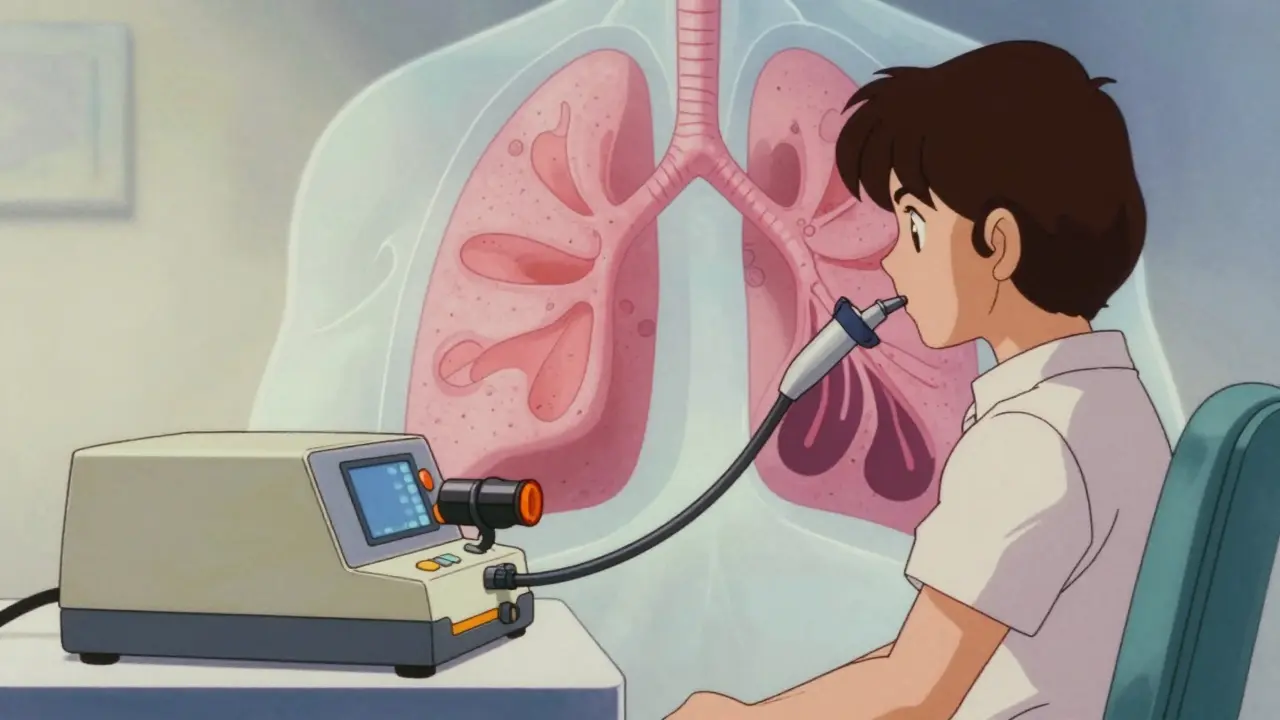
You cannot diagnose COPD by looking at someone or even by listening to their lungs alone. The gold standard for diagnosis is a simple, non-invasive test called spirometry is a breathing test that measures how much air you can exhale and how fast.
During spirometry, you blow into a machine after taking a deep breath. The key number doctors look at is the FEV1 (Forced Expiratory Volume in 1 second). This tells them what percentage of normal lung capacity you have left. Based on this number, the Global Initiative for Chronic Obstructive Lung Disease (GOLD) classifies COPD into four stages.
| Stage | Severity | FEV1 % of Predicted | Typical Symptoms |
|---|---|---|---|
| Stage 1 | Mild | ≥ 80% | Minimal symptoms; occasional cough or shortness of breath during vigorous activity. |
| Stage 2 | Moderate | 50-79% | Shortness of breath during moderate activity (e.g., walking on level ground); frequent need to stop and rest. |
| Stage 3 | Severe | 30-49% | Significant shortness of breath during daily activities (dressing, cooking); frequent exacerbations. |
| Stage 4 | Very Severe | < 30% | Breathlessness even at rest; potential respiratory failure; high risk of life-threatening complications. |
It is important to note that since 2023, the GOLD guidelines have moved beyond just these numbers. Doctors now also group patients based on symptom burden and history of exacerbations (sudden worsening of symptoms). This helps tailor treatment more personally, because two people with the same FEV1 might have very different experiences.
Treatment Options by Stage
Treatment for COPD is not one-size-fits-all. It evolves as the disease progresses. The goal is always the same: relieve symptoms, prevent flare-ups, and keep you active.
Stage 1: Mild COPD
At this stage, many people don’t even realize they have COPD. They might blame their shortness of breath on being "out of shape." The primary intervention here is smoking cessation. Quitting smoking can slow the decline of lung function by up to 50%. Doctors may prescribe short-acting bronchodilators, like albuterol, to use only when you feel tightness in your chest. These are rescue medications that open the airways quickly but temporarily.
Stage 2: Moderate COPD
As symptoms become noticeable during everyday tasks, treatment intensifies. Long-acting bronchodilators become the cornerstone of therapy. Medications like tiotropium (Spiriva) or salmeterol (Serevent) work over 12 to 24 hours to keep airways open. At this stage, starting a pulmonary rehabilitation program is a supervised exercise and education program designed to improve physical and emotional well-being is highly recommended. Studies show these programs can improve walking distance by over 50 meters and significantly reduce hospital visits.
Stage 3: Severe COPD
In Stage 3, daily activities like showering or preparing meals can leave you gasping. Treatment usually involves combination therapy. This means using both a long-acting muscarinic antagonist (LAMA) and a long-acting beta-agonist (LABA) together. If you suffer from frequent exacerbations, doctors may add an inhaled corticosteroid (ICS) to reduce inflammation. Supplemental oxygen therapy may be introduced if your blood oxygen levels drop below 88% while resting.
Stage 4: Very Severe COPD
This is end-stage COPD. Breathing becomes difficult even when sitting still. Continuous oxygen therapy (often 15+ hours a day) is critical, as it has been proven to extend survival in patients with severe low oxygen levels. Other options include lung volume reduction surgery for select patients with upper-lobe emphysema, or lung transplantation for those under 65 with specific criteria. Palliative care also plays a vital role here, focusing on comfort and quality of life rather than just prolonging it.
Lifestyle Changes and Self-Management
Medication is only part of the puzzle. How you live your day matters just as much.
- Vaccinations: Your lungs are vulnerable. Get the annual flu shot, pneumococcal vaccine, and stay up to date with COVID-19 boosters. Respiratory infections can trigger severe exacerbations.
- Nutrition: Being overweight puts pressure on your diaphragm, but being underweight weakens your breathing muscles. Aim for a balanced diet rich in protein and antioxidants. Small, frequent meals are often easier to digest than large ones.
- Air Quality: Avoid triggers. Use air purifiers at home, wear masks when cleaning or gardening, and check local air quality indexes before going outside on high-pollution days.
- Energy Conservation: Learn to pace yourself. Sit while shaving or brushing your teeth. Use a rolling walker instead of a cane to save energy. Plan your most demanding tasks for when you have the most energy, usually in the morning.

Emerging Treatments and Future Outlook
The landscape of COPD care is evolving. Recent years have seen the approval of single-inhaler triple therapies (combining LAMA, LABA, and ICS), which simplify regimens and improve adherence. New drugs like ensifentrine are showing promise in clinical trials for improving lung function without the side effects of steroids.
Digital health is also changing the game. Apps that track symptoms and predict exacerbations using AI are becoming more common, allowing for earlier intervention. While climate change poses a threat by increasing pollution-related flare-ups, improved early detection and targeted therapies offer hope for reducing mortality rates in the coming decade.
Frequently Asked Questions
Is COPD the same as asthma?
No, they are different. Asthma is often reversible and starts in childhood, triggered by allergens. COPD is progressive, irreversible, and typically develops in adults due to long-term exposure to irritants like smoke. However, some people have both conditions, known as Asthma-COPD Overlap (ACO).
Can COPD be cured?
Currently, there is no cure for COPD. The damage to the lung tissue is permanent. However, treatments can effectively manage symptoms, slow the progression of the disease, and prevent complications, allowing many people to live full, active lives.
What causes an COPD exacerbation?
An exacerbation is a sudden worsening of symptoms. Common triggers include viral or bacterial infections (like colds or flu), air pollution, strong chemical fumes, and extreme weather changes. Recognizing early signs, such as increased mucus or color change in phlegm, is crucial for quick treatment.
Does quitting smoking help if I already have COPD?
Yes, absolutely. Quitting smoking is the single most effective action you can take. It slows the rate at which your lung function declines. Even in later stages, stopping smoking reduces the frequency of exacerbations and improves overall survival rates.
When should I use supplemental oxygen?
Oxygen therapy is prescribed when your blood oxygen saturation levels are consistently low (usually below 88-90%). It is not just for emergencies; long-term use (15+ hours/day) has been proven to increase life expectancy in severe cases. Always follow your doctor's prescription for flow rates and duration.

Brian Irwin - 6 June 2026
hey man i really appreciate this breakdown. my dad was diagnosed last year and we were so confused by all the doctor talk. knowing that quitting smoking still helps even if he already has it is a huge relief for us to hear. keeps me going on the rehab exercises too
Rosy Centire - 6 June 2026
This article is dangerously simplistic and ignores critical nuances in pulmonary pathology. The distinction between chronic bronchitis and emphysema is not merely semantic; it dictates entirely different therapeutic approaches. Furthermore, the assertion that spirometry is the 'gold standard' without mentioning body plethysmography or impulse oscillometry as superior alternatives for detecting small airway disease is intellectually lazy. Patients deserve precision, not platitudes.
Aswin Ashokan - 7 June 2026
typical western medicine obsession with pills instead of lifestyle. in india we understand lungs better without these fancy machines. smoke less eat clean breathe deep. why complicate simple things with expensive drugs that have side effects nobody talks about. just quit smoking and move on with life stop whining about symptoms
William Storm - 9 June 2026
One must consider the existential weight of breath itself. To be denied the fundamental act of respiration is to be alienated from one's own biological essence. This article, while competent in its mediocrity, fails to address the philosophical implications of living within a shrunken world of limited capacity. It is a tragedy of modern existence, isn't it? We trade our vitality for convenience, and then marvel at the decay.
Wendy Engelmann - 10 June 2026
i find it interesting how people react to this stuff. some get angry some get scared but mostly everyone just needs to take it one day at a time. the part about energy conservation is actually really smart advice not just for copd but for anyone feeling overwhelmed. sit down while you brush your teeth sounds silly until you try it
Lisa Thomas - 11 June 2026
thank you for sharing this info! 😊 it’s scary to think about lung health but knowledge is power. i’ve been trying to keep my home air quality up since my cat has allergies too. did you know air purifiers can help with that? 🌿 let’s all look out for each other’s breathing health!
Nicholas Bowling - 13 June 2026
another article telling smokers they are doomed. wow what a shocker. i bet the author never smoked a day in their life. everything is always about blame and shame instead of actual solutions. people are stressed enough without being lectured on their moral failures every time they cough
Jay Foreman - 14 June 2026
Look, I’m not saying this article is perfect, but honestly, most people here are missing the point. It’s not about blaming smokers, it’s about surviving. My uncle has stage 3 and he’s miserable. He needs options, not judgment. If reading this helps someone avoid that fate, good for them. Stop fighting over semantics and start helping people breathe.
Cathy N - 15 June 2026
i agree with jay. the tone matters. when you are sick you feel vulnerable. attacking people for smoking doesn’t help them quit. it just makes them hide their habits. supportive communities work better than shaming ones. we need more empathy in healthcare discussions
Adelaide Motata - 15 June 2026
urgh this is so basic. obviously u should quit smoking duh. also the part about oxygen therapy is misleading. lots of ppl dont qualify for it even if they are dying. the system is broken and only rich people get the good surgeries. poor people just suffer. typical biased info
Mike Crump - 16 June 2026
G'day folks! 👋 Mike here from Down Under. Just wanted to chime in on the pulmonary rehab bit. It’s an absolute game-changer, mate. I started mine six months ago after my diagnosis and I’ve gone from struggling to walk to the mailbox to hiking moderate trails. It’s tough work, sure, but the community support in those groups is incredible. Don’t sleep on it!
Samantha Arbuckle - 17 June 2026
love the positive vibes from mike! 💪🏼 yes rehab is amazing. also don’t forget the mental health aspect. dealing with chronic illness is hard emotionally. meditation and mindfulness can really help with the anxiety of shortness of breath. stay strong everyone! ✨🌈
Stephanie Francis - 18 June 2026
I must strongly object to the casual dismissal of medical protocols seen in some of these comments. While emotional support is valuable, it does not replace clinical intervention. The data regarding LAMA/LABA combinations is robust and should not be undermined by anecdotal skepticism. Please consult qualified professionals before altering any treatment plan based on internet discourse.
Daniel Tremblay - 20 June 2026
Oh, bravo. Another lecture from the self-appointed guardian of medical orthodoxy. How utterly tedious. One would think that after decades of pharmaceutical marketing, we’d learn to question the 'robust data' pushed by industry-funded guidelines. But no, we must all bow to the altar of the inhaler. Enjoy your compliance, Stephanie.