
You get your blood work back. Everything looks fine except for one number: your Thyroid-Stimulating Hormone (TSH) is slightly high. Your doctor tells you it’s "subclinical"-not quite disease, but not normal either. Do you start medication? Wait and see? This gray area confuses millions of patients and even doctors.
Subclinical Hypothyroidism is a condition defined by an elevated serum thyroid-stimulating hormone (TSH) level with normal free thyroxine (T4) concentration. It represents mild thyroid dysfunction where the gland is struggling, but still producing enough hormone to keep your body running. The big question isn't just what the number is, but whether treating it helps you live better or actually causes harm.
Key Takeaways
- Treatment is generally recommended if TSH exceeds 10 mIU/L due to high progression risk.
- For TSH between 4.5 and 10 mIU/L, decisions depend on symptoms, age, and antibody status.
- Positive Thyroid Peroxidase Antibodies significantly increase the chance of developing overt hypothyroidism.
- Elderly patients (over 65) often benefit from a wait-and-see approach to avoid heart risks.
- Pregnant women require stricter control, as even mild elevation can affect fetal development.
Understanding the Diagnosis: More Than Just a Number
To decide on treatment, we first need to pin down exactly what subclinical hypothyroidism is. Unlike overt hypothyroidism, where the thyroid fails completely, here the pituitary gland is shouting louder (high TSH) to get the thyroid to work, but the thyroid is still listening enough to keep Free T4 levels in the normal range.
This condition affects roughly 4% to 20% of the population, depending on how you define "normal." The definition has shifted over time. In the 1970s, sensitive assays allowed doctors to detect these subtle changes. Today, the upper limit of normal TSH varies by lab, typically sitting around 4.12 mIU/L for nonpregnant adults, though some experts argue this should be lower for younger people.
Diagnosis requires more than a single test. Because TSH fluctuates daily and seasonally, guidelines from the American Thyroid Association recommend confirming the elevation with a second test taken two to three months later. If both tests show high TSH with normal Free T4, you have subclinical hypothyroidism.
The Treatment Threshold: Where Do We Draw the Line?
This is where the medical community disagrees. There is no universal rule. Instead, there are ranges that dictate different strategies.
| TSH Range (mIU/L) | General Consensus | Key Considerations |
|---|---|---|
| 4.5 - 10.0 | Controversial / Individualized | Depends on symptoms, age, pregnancy, and antibodies. |
| > 10.0 | Treat | High risk of progression to overt hypothyroidism; clear benefit from treatment. |
| < 4.5 | No Action | Considered normal; monitor if symptomatic. |
For TSH levels above 10 mIU/L, almost all major organizations-including the American Thyroid Association (ATA), the Endocrine Society, and the American College of Physicians (ACP)-agree: treat it. The risk of progressing to full-blown hypothyroidism is too high, and the benefits of restoring normal function outweigh the risks.
The middle ground, TSH between 4.5 and 10.0 mIU/L, is the battlefield. Here, the decision shifts from "should we treat?" to "who should we treat?" Factors like age, symptoms, and the presence of autoantibodies become the deciding variables.
Who Should Be Treated in the Gray Zone?
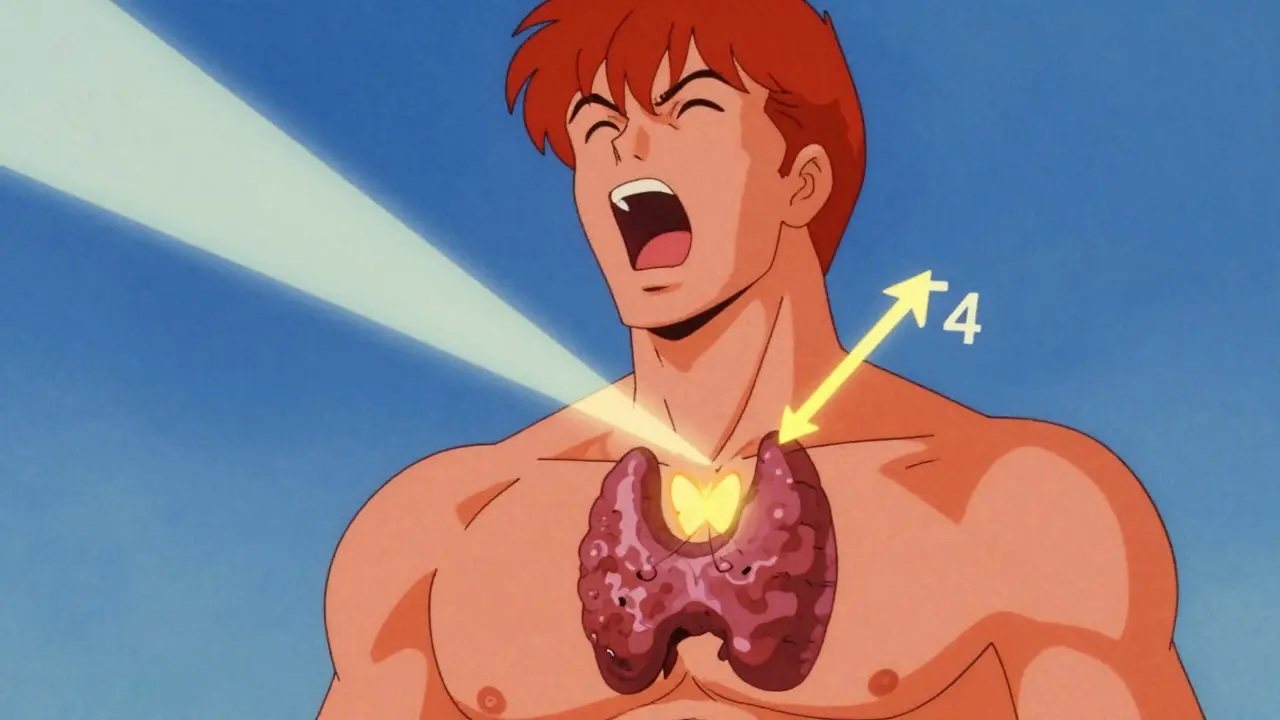
If your TSH is 7.5, you aren't automatically getting a prescription. Doctors look for specific markers that suggest your thyroid is failing fast or that you are suffering from the effects of low thyroid hormone.
1. Positive Thyroid Peroxidase (TPO) Antibodies
This is perhaps the most critical factor. TPO antibodies indicate Hashimoto’s thyroiditis, an autoimmune attack on the thyroid. Research shows that patients with positive TPO antibodies have a 2.3-fold higher rate of progression to overt hypothyroidism compared to those without them. If your TSH is rising and you have these antibodies, starting low-dose levothyroxine may help preserve remaining thyroid function and prevent future decline.
2. Presence of Symptoms
Subclinical doesn't always mean "no symptoms." Many patients report fatigue, brain fog, weight gain, and depression. While studies like the TRUST trial found no significant improvement in quality of life for older adults treated with levothyroxine, other data suggests that younger patients (<50 years) with TSH >7 mIU/L do experience symptom relief. If you feel unwell, and other causes are ruled out, a trial of medication might be warranted.
3. Pregnancy and Women Trying to Conceive
The stakes are much higher here. Even mild elevations in TSH can impact fetal brain development and increase the risk of miscarriage. Guidelines from the American Society for Reproductive Medicine (ASRM) recommend treating pregnant women with TSH levels above 2.5-3.0 mIU/L, especially if they have positive TPO antibodies. For women trying to conceive, keeping TSH below 2.5 mIU/L is often the goal.
4. Cardiovascular Risk
Hypothyroidism is linked to higher cholesterol and increased cardiovascular risk. Some endocrinologists argue that treating subclinical cases in patients with existing heart disease or high lipid profiles could reduce this burden. However, evidence here is mixed. The ACP states that current evidence is insufficient to prove clear cardiovascular benefits for treating TSH <10 mIU/L.
When to Hold Off: The Risks of Overtreatment
Medication is not harmless. Levothyroxine is a potent hormone. Giving it to someone who doesn't strictly need it can push them into subclinical *hyper*thyroidism, which carries its own dangers.
The biggest concern is in the elderly. A 2021 meta-analysis published by the American Academy of Family Physicians (AAFP) found that treating adults over 65 with TSH <10 mIU/L was associated with a 12.3% increase in all-cause mortality. Why? Because excess thyroid hormone stresses the heart, potentially triggering atrial fibrillation (an irregular heartbeat) or worsening osteoporosis.
For a 75-year-old with a TSH of 6.0 and no symptoms, the safest move is often to watch and wait. The natural aging process also raises TSH slightly. What looks abnormal on a standard lab chart might be normal for an octogenarian. Age-adjusted reference ranges are becoming more common to address this.
How Treatment Works: Dosage and Monitoring
If you and your doctor decide to treat, the approach is gentle. You don't need the full replacement dose used for overt hypothyroidism (which averages 75-125 μg daily). Instead, you start small.
- Starting Dose: Typically 25-50 μg of levothyroxine daily.
- Goal: To lower TSH into the normal range, not necessarily to zero.
- Monitoring: Blood tests every 6-8 weeks after starting or changing the dose.
- Maintenance: Once stable, testing every 6-12 months.
It takes about six weeks for your body to adjust to a new dose because levothyroxine has a long half-life. Patience is key. Also, remember that absorption matters. Take your pill on an empty stomach, at least 30-60 minutes before breakfast. Avoid taking it with iron supplements, calcium, or coffee, as these can block absorption by up to 39%.
Navigating Conflicting Guidelines
It’s frustrating that guidelines differ. Here is a snapshot of where major organizations stand:
- American Thyroid Association (ATA): Treat if TSH >10 mIU/L. Consider treatment for TSH 4.5-10 mIU/L if symptomatic or antibody-positive.
- American College of Physicians (ACP): Recommends against routine treatment for TSH <10 mIU/L due to lack of proven benefit in quality of life or cardiovascular outcomes.
- American Association of Clinical Endocrinologists (AACE): Suggests considering treatment for TSH >7-8 mIU/L based on progression risk.
- Royal Australian College of General Practitioners (RACGP): Explicitly advises avoiding routine treatment for TSH 4-10 mIU/L.
This divergence creates confusion. As Dr. David Cooper noted in a JAMA editorial, the push to lower thresholds sometimes reflects industry influence rather than solid evidence. As a patient, you need a doctor who listens to your specific context, not just a flowchart.
Practical Next Steps for Patients
If you have an elevated TSH, don’t panic, but don’t ignore it. Here is a checklist to guide your conversation with your healthcare provider:
- Confirm the diagnosis: Ensure you’ve had two tests spaced apart.
- Get tested for antibodies: Ask for TPO antibodies. This changes the prognosis significantly.
- Assess symptoms objectively: Use a validated tool like the Thyroid Symptom Rating Scale rather than relying on vague feelings of "tiredness," which can have many causes.
- Review medications: Check if anything you take interferes with thyroid function or absorption.
- Discuss your age and heart health: If you are over 65 or have heart issues, lean conservative.
- Plan for monitoring: Whether you treat or wait, you need regular follow-ups. Progression rates are high-up to 70% of patients with TSH >8 mIU/L progress to overt hypothyroidism within four years.
What is the difference between subclinical and overt hypothyroidism?
In overt hypothyroidism, both TSH is high AND Free T4 is low, meaning the thyroid is failing to produce enough hormone. In subclinical hypothyroidism, TSH is high, but Free T4 remains within the normal range. The thyroid is working harder to maintain normal levels, but hasn't failed yet.
Can subclinical hypothyroidism go away on its own?
Yes, in some cases. About 10-15% of patients with subclinical hypothyroidism will return to normal TSH levels spontaneously, especially if the elevation was caused by temporary illness or stress. However, if TPO antibodies are present, spontaneous recovery is rare, and progression to overt disease is more likely.
Does diet affect subclinical hypothyroidism?
Diet does not cure autoimmune thyroiditis, but certain foods can interfere with medication absorption or thyroid function. Excessive intake of raw cruciferous vegetables (like kale and broccoli) or soy can inhibit iodine uptake. Selenium and zinc support thyroid health, but megadoses are not recommended without medical supervision.
Why do my symptoms persist if my T4 is normal?
Even with normal T4, cellular conversion of T4 to the active hormone T3 may be impaired in some individuals. Additionally, high TSH itself can cause symptoms like fatigue and mood changes. However, many "hypothyroid symptoms" are non-specific and overlap with depression, anemia, or vitamin deficiencies, so thorough evaluation is needed.
Is levothyroxine safe for long-term use?
Yes, when dosed correctly to keep TSH in the normal range, levothyroxine is considered very safe for lifelong use. It is identical to the hormone your body produces. The risks arise only from overtreatment (too much dose), which can strain the heart and bones.