Quercetin & Medication Interaction Risk Estimator
Estimated Increase in Drug Level
Interaction Risk Level
—Clinical Considerations
—
Pathways: —
Potential concern: —
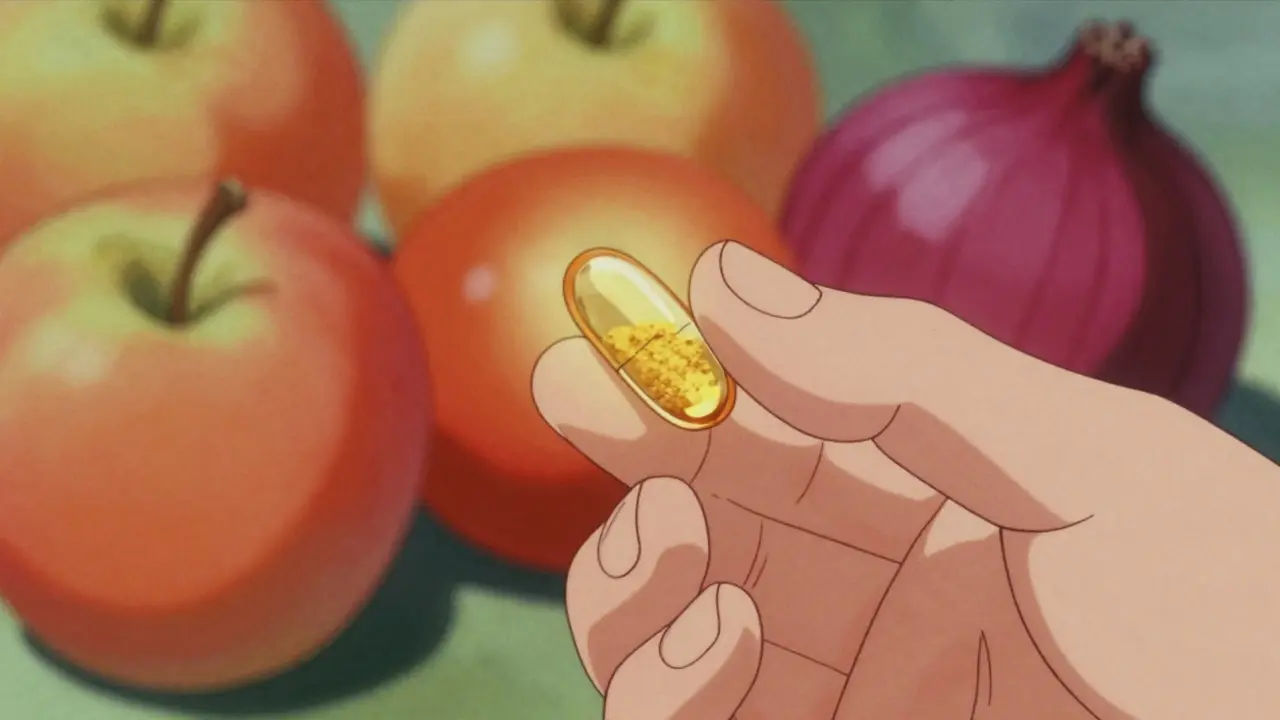
Imagine taking your daily blood thinner or antidepressant, only to find out that the antioxidant supplement you added for extra protection is quietly changing how those drugs work in your body. This isn't science fiction; it's a real pharmacological phenomenon involving Quercetin is a flavonoid compound found naturally in fruits, vegetables, and dietary supplements that can inhibit cytochrome P450 enzymes, thereby altering the pharmacokinetics of co-administered medications. First isolated in 1856 by French chemist Chevreul, quercetin has gained significant attention in pharmacological research since the 1990s as dietary supplement usage increased globally. Many people view quercetin as harmless because it occurs in onions and apples, but high-dose supplements tell a different story. When you pop a 500mg or 1,000mg capsule, you are introducing a potent inhibitor into your metabolic system. This article breaks down exactly how this happens, which drugs are at risk, and what you can do to stay safe without giving up your health routine.
The Mechanism: How Quercetin Blocks Metabolism
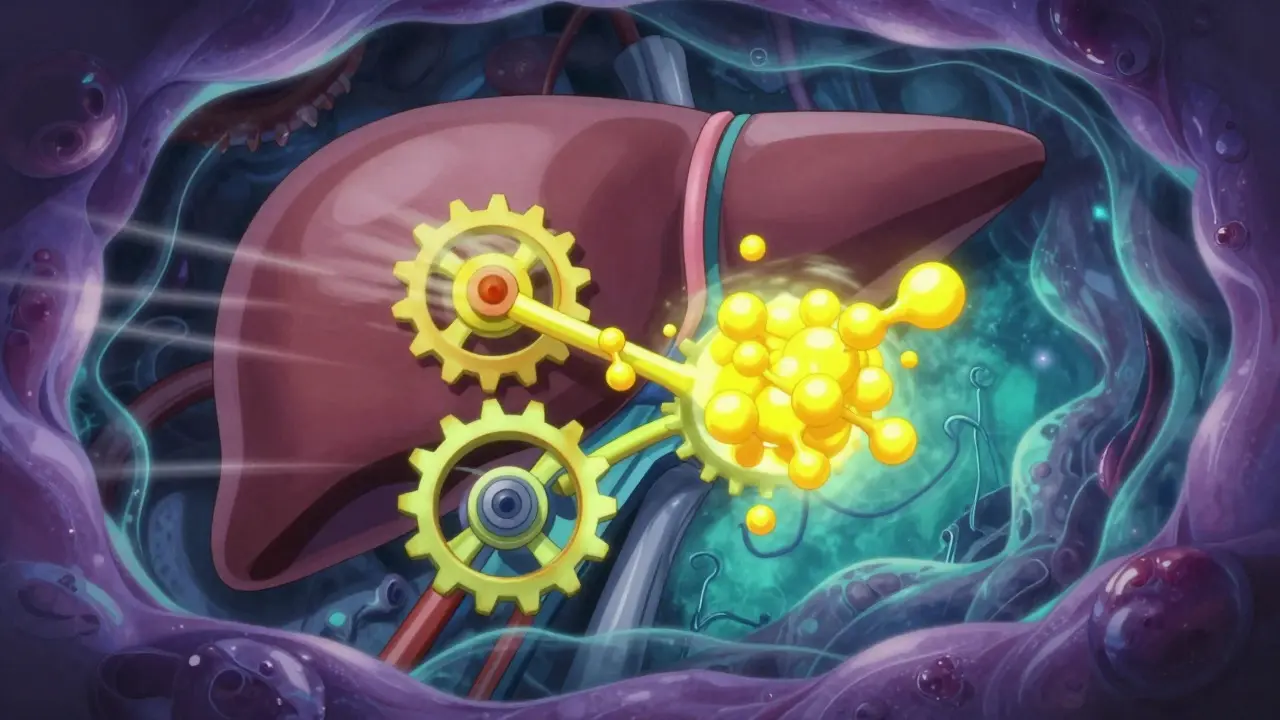
To understand the risk, you need to know how your body processes most prescription drugs. Your liver and intestines use a family of enzymes called Cytochrome P450 (CYP) to break down medications so they can be eliminated from your system. If these enzymes get blocked, the drug stays in your bloodstream longer and at higher concentrations. Quercetin acts as a brake on these engines. Research published in Nutrients in 2020 confirmed that quercetin and its metabolites significantly inhibit several key CYP enzymes. Specifically, it targets CYP3A4, CYP2D6, and CYP2C19. These three enzymes are responsible for metabolizing roughly 75% of all common prescription drugs. When quercetin binds to them, it doesn't just slow them down slightly; in some cases, it reduces their activity by 70-85%. This means a standard dose of medication could effectively become a double dose in terms of biological impact.
The potency varies depending on the specific enzyme. For CYP2D6, quercetin is a strong inhibitor, often reducing enzyme activity by more than 70% at physiologically relevant concentrations. For CYP3A4, the inhibition is moderate, typically ranging between 30-50%, but because CYP3A4 handles such a vast array of drugs, even moderate inhibition creates significant interaction potential. The IC50 value for quercetin against these pathways is documented as low as 43 nM in some studies, indicating that it takes very little quercetin to start affecting enzyme function. This is why the form matters too. Quercetin glycosides, like rutin found in buckwheat, show about 60-70% less inhibition than the aglycone form found in many concentrated supplements. So, if you are buying a pure quercetin extract, you are dealing with the more potent version of the molecule.
Which Medications Are Most at Risk?
Not every pill you take is affected equally. Drugs with a "narrow therapeutic index" are the biggest concern. These are medications where the difference between a helpful dose and a toxic dose is small. If quercetin increases the level of these drugs by just 20-30%, you might cross into dangerous territory. Here are the primary categories of medications that interact with quercetin via enzyme inhibition:
- Blood Thinners (Anticoagulants): Warfarin is a classic example. Quercetin can increase INR levels by 0.8-1.5 points, raising the risk of bleeding. Direct oral anticoagulants (DOACs) like apixaban and rivaroxaban are also affected, potentially seeing a 20-35% increase in exposure due to transporter inhibition alongside enzyme effects.
- Immunosuppressants: Cyclosporine and tacrolimus rely heavily on CYP3A4 for clearance. Co-administration with quercetin can lead to a 30-50% increase in trough levels, which may cause kidney toxicity or other side effects.
- Chemotherapy Agents: Drugs like abemaciclib see their serum levels rise by 25-35% when combined with quercetin. For cancer patients, this unpredictability can complicate treatment plans.
- Statins and Heart Medications: Simvastatin and lovastatin are CYP3A4 substrates. Increased levels can raise the risk of muscle pain or rhabdomyolysis. Midazolam, a sedative, showed a 2.3-fold increase in area under the curve (AUC) in rat studies when given with quercetin, suggesting similar risks for human sedatives.
- Psychiatric Medications: Many antidepressants and antipsychotics are metabolized by CYP2D6 or CYP2C19. Since quercetin inhibits both, levels of drugs like fluoxetine or risperidone could rise, leading to exaggerated side effects.
Dose Matters: Supplements vs. Food
You likely don’t have to worry if you’re eating an apple or a handful of berries. The amount of quercetin in whole foods is relatively low compared to supplemental doses. However, the supplement market has exploded. Global sales reached $387 million USD in 2022, with a 12.7% annual growth rate. According to the 2021 National Health Interview Survey, about 18.3 million Americans use quercetin supplements. Crucially, 42% of these users take doses exceeding 500 mg/day, and 23% take more than 1,000 mg/day. At these levels, the interaction risk becomes clinically relevant. The European Food Safety Authority (EFSA) issued a scientific opinion in 2018 stating that doses above 1,000 mg/day pose potential concerns for drug interactions with narrow therapeutic index medications. Even at lower doses, individual variation in gut health and genetics can make some people more susceptible to these effects.
It’s also worth noting that bioavailability is tricky. Only about 1-2% of orally ingested quercetin reaches systemic circulation unchanged. However, much of the action happens in the gut wall itself, where intestinal CYP3A4 enzymes are inhibited before the drug even reaches the liver. This "first-pass" effect is often more significant than hepatic effects because it prevents the initial breakdown of the medication. Dr. Basheer Kerem, a pharmacologist at the Hebrew University of Jerusalem, noted that oral administration of quercetin leads to significant enhancement in drug bioavailability primarily through this intestinal mechanism. This means that timing your doses can matter, but separating them entirely is safer for high-risk meds.
Practical Strategies for Safe Use
If you love quercetin and want to keep it in your regimen, you don’t necessarily have to quit cold turkey. You just need to be strategic. Pharmacists at the University of California San Francisco developed a management protocol in 2021 that offers clear guidance. Here is how you can minimize the risk:
- Check Your Med List: Ask your pharmacist specifically if any of your current medications are metabolized by CYP3A4, CYP2D6, or CYP2C19. If yes, proceed with caution.
- Limit the Dose: For most people on interacting medications, staying below 500 mg/day is a reasonable threshold. If you are over 65, consider going lower, as elderly patients show 25-40% reduced clearance of quercetin metabolites.
- Stagger Your Timing: Separating quercetin from your medication by 4-6 hours can reduce interaction potential by 30-50%. Take one in the morning and the other in the evening. This allows the peak concentration of the quercetin to pass before you introduce the medication.
- Monitor Blood Work: If you are on warfarin, monitor your INR more frequently when starting or stopping quercetin. For cyclosporine or tacrolimus, regular trough level checks are essential.
- Avoid High-Dose Stacking: Don’t combine quercetin with other known inhibitors like grapefruit juice or St. John’s Wort unless directed by a doctor. The cumulative effect can be unpredictable.

Regulatory Landscape and Future Outlook
Currently, quercetin is classified as a dietary supplement under the DSHEA act of 1994. This means manufacturers don’t have to prove safety or efficacy before selling it. While the FDA has issued warning letters for unsubstantiated claims, the focus has largely been on marketing rather than interaction labeling. However, this is changing. The FDA’s 2020 draft guidance on drug interaction studies lists quercetin as a "dietary supplement of concern," recommending that new drug applications assess potential interactions with quercetin at concentrations reflecting high-dose use. Furthermore, a proposed 2024 rule aims to require enhanced labeling of potential drug interactions for high-risk supplements. Until then, the burden of knowing what interacts falls on you and your healthcare team. Ongoing Phase II clinical trials are currently investigating these interactions to establish evidence-based dosing guidelines, but until those results are finalized, erring on the side of caution is the best approach.
| Medication Class | Primary Enzyme Affected | Potential Increase in Drug Level | Clinical Risk |
|---|---|---|---|
| Warfarin | CYP2C9 / Transporters | INR +0.8 to 1.5 points | Bleeding events |
| Cyclosporine | CYP3A4 | 30-50% in trough levels | Kidney toxicity |
| Abemaciclib | CYP3A4 | 25-35% | Altered chemotherapy efficacy/toxicity |
| Midazolam | CYP3A4 | ~130% (2.3-fold AUC) | Excessive sedation |
| Apixaban/Rivaroxaban | P-gp / BCRP Transporters | 20-35% | Increased bleeding risk |
Frequently Asked Questions
Is quercetin safe to take with statins?
It depends on the specific statin. Simvastatin and lovastatin are metabolized by CYP3A4, so quercetin can increase their levels, potentially raising the risk of muscle pain. Atorvastatin and rosuvastatin have different metabolic pathways and are generally considered lower risk, but consulting your doctor is always wise. If you must take them together, stagger your doses by at least 4-6 hours.
Does quercetin interact with birth control pills?
Most combined oral contraceptives contain ethinylestradiol, which is metabolized by CYP3A4. Quercetin can inhibit this enzyme, potentially increasing hormone levels. While this usually doesn't cause failure, it can increase side effects like nausea or breast tenderness. There is no strong evidence it reduces contraceptive efficacy, but monitoring for side effects is recommended.
What is the maximum safe dose of quercetin for someone on multiple medications?
There is no single universal limit, but experts suggest keeping doses below 500 mg/day if you are on narrow therapeutic index drugs. If you are healthy and not on interacting meds, doses up to 1,000 mg/day are generally well-tolerated, though long-term data is limited. Always discuss your specific med list with a pharmacist.
Can I eat quercetin-rich foods freely while on medication?
Yes. Whole food sources like apples, onions, and berries contain much lower concentrations of quercetin than supplements. Unless you are eating extreme quantities (like 10+ apples a day), the interaction risk from diet alone is negligible. The concern is primarily with concentrated extracts found in capsules or powders.
How long does quercetin stay in the system?
Quercetin has a short half-life, but its metabolites persist. Peak plasma levels occur within 1-2 hours after ingestion. To minimize interaction, waiting 4-6 hours before taking your medication ensures that the peak concentration of quercetin has passed, reducing the window of maximum enzyme inhibition.