
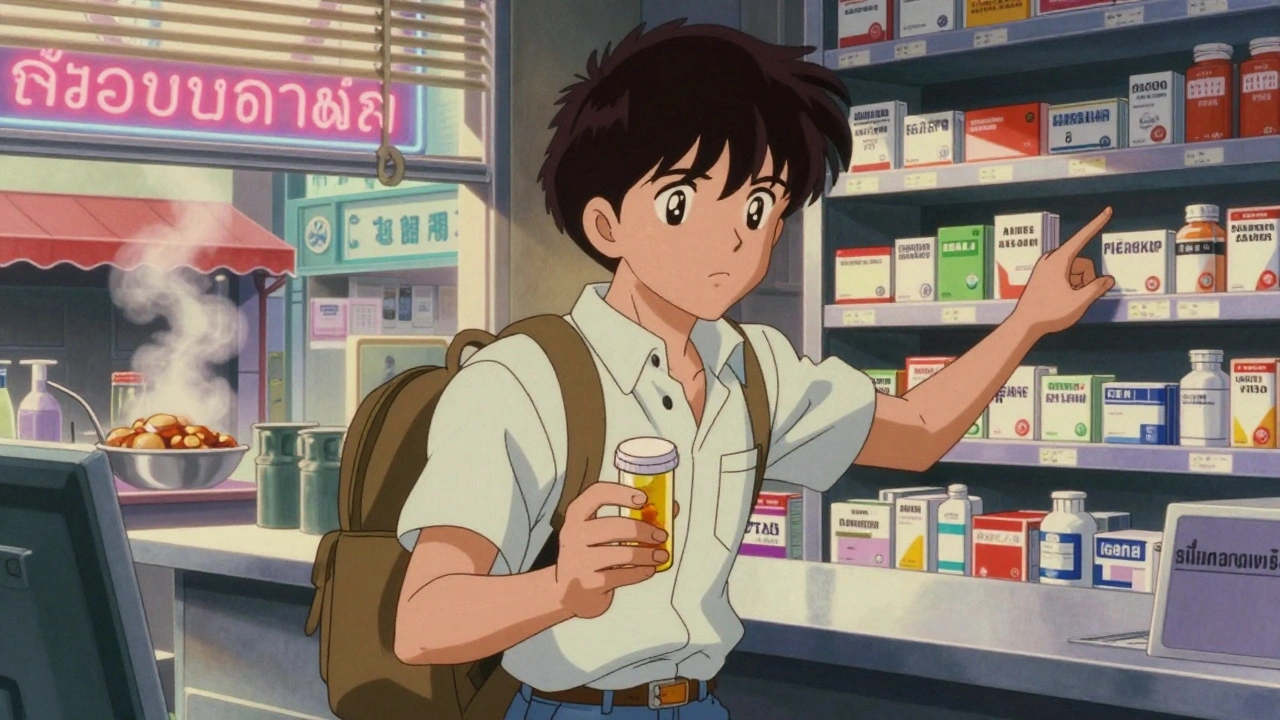
Imagine you’re in Bangkok, halfway through your trip, when your anxiety medication runs out. The local pharmacy doesn’t recognize the brand name on your bottle. The pharmacist speaks no English. You don’t know where to turn. This isn’t rare - 41% of travelers face at least one medication issue abroad, according to a 2023 survey by CoverTrip. Whether you’re managing diabetes, depression, or high blood pressure, getting your meds overseas isn’t as simple as walking into a drugstore. But with the right prep, you can avoid panic and keep your trip on track.
Know Your Medication Rules Before You Fly
Every country has its own rules about what drugs you can bring in - and many are stricter than you think. The U.S. Department of State says 63% of countries limit travelers to a 30-day supply of prescription meds, even with a valid prescription. Some places, like Japan, ban common medications entirely. ADHD drugs like Adderall, certain painkillers, and even some antihistamines can be classified as controlled substances overseas. Always check your destination’s rules before packing. The CDC’s free MedAbroad tool (launched in May 2023) gives you country-specific regulations for all 195 nations. For example, in the UK, you can get emergency prescriptions through the NHS for £9.65 per item. In France, pharmacists can give you up to 72 hours of medication without a prescription for conditions like asthma or infections. But in Thailand or Cambodia, you might find fake pills on the street - 68% of meds bought in open markets there are counterfeit or substandard, per the WHO.Pack Smart: What to Bring and How to Pack It
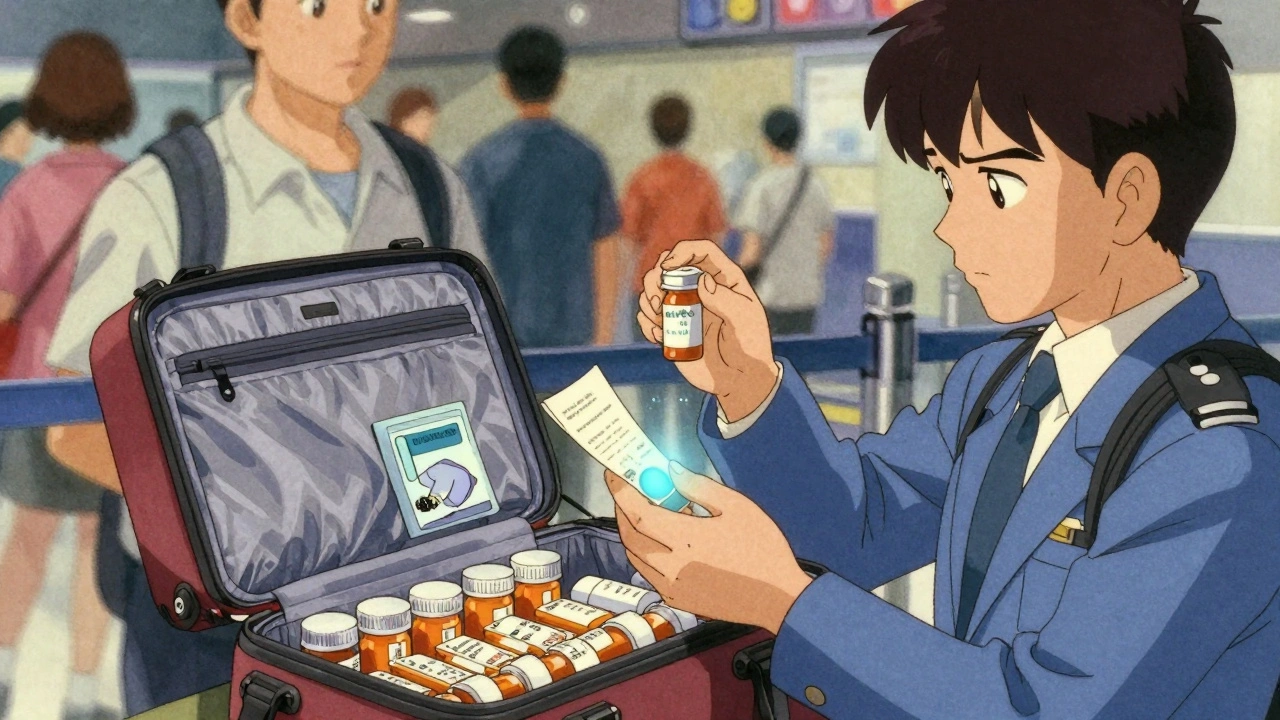
Never rely on buying meds abroad. Always pack more than you think you’ll need. The International Society of Travel Medicine recommends bringing at least 10 extra days’ worth of medication. Why? Flight delays, lost luggage, or sudden itinerary changes happen. One traveler in Istanbul missed her flight for three days because of a storm. Her insulin ran out on day four. She ended up in the ER. Here’s how to pack correctly:- Keep all meds in their original bottles with pharmacy labels showing your name, doctor’s name, and dosage.
- Carry a copy of your prescription and a letter from your doctor in English - and get it translated into the local language if possible. Johns Hopkins research shows this cuts confiscation risk by 73%.
- Don’t put meds in checked luggage. Always carry them in your carry-on. TSA and international customs can hold you up if they find unmarked pills.
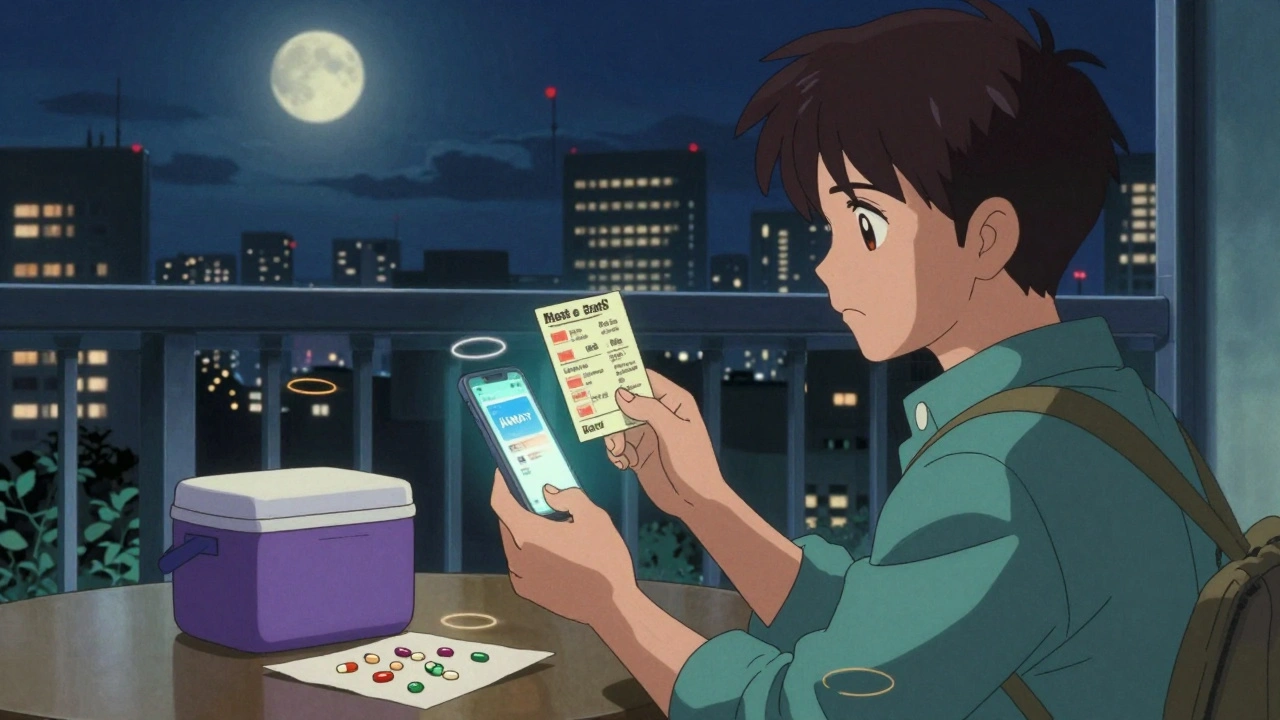
- If you use insulin, keep it cool. The International Air Transport Association says it must stay between 2°C and 8°C (36°F-46°F). Use a small cooler pack or insulated bag with a cold gel pack.
Time Zones and Med Schedules: Don’t Get Caught Off Guard
Crossing time zones isn’t just about jet lag - it can mess with your meds. The CDC found that 47% of travelers have trouble adjusting their medication timing. Insulin, blood thinners, and seizure meds are especially sensitive. Here’s how to handle it:- For once-daily meds: Stick to your home time zone for the first 2-3 days. Take your pill at 8 a.m. your home time, even if it’s 2 a.m. local time. Then gradually shift to local time.
- For insulin: Split your dose during the transition. If you normally take 10 units at night, take 5 units at your home time and 5 units at local bedtime until you adjust.
- For anticoagulants like warfarin: Talk to your doctor before you leave. They may recommend a blood test before and after your trip to check your levels.
What to Do If You Run Out or Lose Your Meds
If you lose your meds or they’re stolen, don’t panic. You have options. First, contact IAMAT. The International Association for Medical Assistance to Travelers runs a free 24/7 referral service connecting travelers with vetted doctors in 110 countries. Their 2022 report shows an 89% satisfaction rate among users. They’ll help you find a local doctor who can write a new prescription. Second, check if your hotel has a medical service. Many upscale hotels in Europe and Asia have partnerships with local pharmacies. Ask the front desk. Third, use Walgreens’ international network. Walgreens has partnered with pharmacies in 18 countries, including the UK, Spain, and Mexico. You can call ahead or use their app to find the nearest location. They can fill prescriptions if you have a valid U.S. script and ID. Avoid street pharmacies. Especially in Mexico, Southeast Asia, and parts of Eastern Europe. Trustpilot reviews show 74% of complaints about international pharmacies involve fake or weak meds. If a pill looks different from your usual brand - different color, shape, or smell - don’t take it.How to Talk to Foreign Pharmacists
Language barriers are one of the top three issues travelers face. In Thailand, one Reddit user spent three hours trying to get escitalopram because the pharmacist only knew the brand name, Lexapro. She didn’t know the generic name. That’s a common mistake. Always carry both names:- Brand name (e.g., Prozac)
- Generic name (e.g., fluoxetine)
Insurance and Costs: What’s Covered?
Medicare doesn’t cover meds overseas. Most U.S. private plans don’t either. But some travel insurance policies do. World Nomads, for example, covers up to $2,000 for emergency medication purchases. Check your policy before you leave. In countries with public healthcare - like the UK, Canada, or Australia - you may be able to get meds at a discount if you’re from a reciprocal country. Australians can use their PBS system if they’re from the UK, New Zealand, or Ireland. But Americans? You pay full price. No exceptions. Pro tip: If you’re traveling to Europe, consider buying travel insurance that includes prescription coverage. It costs less than $50 for a two-week trip and can save you hundreds if something goes wrong.What’s Changing in 2025 and Beyond
The world of travel meds is shifting fast. The European Medicines Agency is testing a new standardized prescription form in 12 EU countries - meant to make it easier for doctors to write scripts that pharmacists across borders can understand. By 2026, they hope to cut access issues by 40%. Pharmacy chains are also expanding. The International Pharmaceutical Federation just launched a global pharmacy locator API that works with Google Maps. Soon, you’ll be able to search “pharmacy near me” in Tokyo, Rome, or Rio and see which ones accept foreign prescriptions. But the trend isn’t all good. The International Narcotics Control Board reports that 31 countries tightened restrictions on meds between 2022 and 2023. Opioids, ADHD drugs, and sedatives are being banned or limited more than ever. If you take any of these, check your destination’s rules twice - and consider carrying a doctor’s note explaining your medical need.Final Checklist Before You Leave
- ☑️ Get a 10-day surplus of all meds
- ☑️ Keep meds in original containers with labels
- ☑️ Carry a doctor’s letter in English + local language
- ☑️ Know both brand and generic names of your meds
- ☑️ Download the CDC’s MedAbroad app or print country rules
- ☑️ Save IAMAT’s emergency contact number (available at iamat.org)
- ☑️ Check your travel insurance for medication coverage
- ☑️ Pack a small cooler pack for insulin or heat-sensitive meds
- ☑️ Tell a travel companion where your meds are stored
Traveling with meds isn’t about fear - it’s about control. The more you plan, the less you worry. And the more you know, the more you enjoy your trip.
Can I bring my prescription meds on an international flight?
Yes, but only if they’re in original containers with your name, the pharmacy label, and the doctor’s info. Always carry them in your carry-on. Checked bags can get lost or delayed. Some countries require a doctor’s note, especially for controlled substances. Check the CDC’s MedAbroad tool for your destination’s rules.
What if my medication isn’t available in the country I’m visiting?
Don’t panic. Contact IAMAT for a referral to a local doctor who can prescribe an equivalent. You may need to switch to a different brand or generic version. Never buy meds from street vendors or unlicensed pharmacies - especially in Southeast Asia or Mexico. Counterfeit drugs are common and dangerous.
Do I need a prescription to buy meds overseas?
It depends. In the U.S., many meds are OTC, but abroad, they might be prescription-only. In France, you can get emergency supplies for asthma or infections without a script. In Japan, you need a local doctor’s note for almost everything. Always assume you need a prescription unless you’ve confirmed otherwise.
Can I use my U.S. insurance for meds abroad?
Almost never. Medicare and most U.S. private plans don’t cover overseas prescriptions. Some travel insurance policies do - like World Nomads, which covers up to $2,000 for emergency meds. Always check your policy before you leave.
How do I handle time zone changes with my meds?
For once-daily meds, stick to your home time zone for the first 2-3 days. For insulin or blood thinners, split doses during the transition. Talk to your doctor before you leave - they can give you a personalized schedule. The CDC says 47% of travelers mess up their timing - planning ahead cuts that risk dramatically.
Are there apps or tools to help find pharmacies abroad?
Yes. The International Pharmaceutical Federation launched a global pharmacy locator API integrated with Google Maps. You can also use Walgreens’ international partner locator for 18 countries. IAMAT’s website has a directory of vetted doctors and pharmacies in 110 countries. Download offline maps and save numbers before you leave.


Paul Dixon - 11 December 2025
Just got back from Bali and this hit home so hard. I ran out of my anxiety med and thought I was done for. Walked into this tiny pharmacy, showed the bottle, and the guy just nodded and handed me the generic. No questions asked. Turned out it was the same stuff, just different label. Learned my lesson: always carry the generic name printed out. Life saver.
Jim Irish - 12 December 2025
Essential reading for anyone traveling with chronic medication. The 30-day supply rule is widely misunderstood. Many assume it’s flexible, but customs officials don’t care about your personal needs. Always check the CDC’s MedAbroad tool. It’s free and accurate. And never trust street vendors. I’ve seen too many stories of people ending up in hospitals because they bought ‘cheap Prozac’ off a cart.
Mia Kingsley - 14 December 2025
OMG this post is so basic. Like duh you pack extra meds? Everyone knows that. But did you know in Japan they ban melatonin?? Like it’s a drug?? And the WHO says 68% of meds in Thailand are fake?? That’s wild. I went to Bangkok last year and bought Adderall off a guy behind a noodle stall. It worked fine. I think the stats are fake. Also my cousin’s dog took my insulin once and didn’t die so maybe cool packs are overrated??
Aidan Stacey - 16 December 2025
Y’all need to hear this. I’m a nurse and I’ve helped travelers in 14 countries. The biggest mistake? Not carrying the doctor’s letter. I had a guy in Prague with Type 1 diabetes who lost his insulin. He had the bottles but no paperwork. The pharmacy refused. I called IAMAT on my phone right there - 12 minutes later, a doctor showed up with a new script. He cried. We all cried. This isn’t just advice - it’s a lifeline. Print the damn letter. Save the number. Tell someone where your meds are. Please.
matthew dendle - 16 December 2025
lol so you wanna carry 10 extra days of meds but you dont wanna carry a doctor's note? what a genius. also walgreens in spain? really? they dont even have walgreens in spain. you mean the pharmacy that looks like walgreens but is called farmacia? and you think the guy behind the counter speaks english? nah bro. just get your meds in the usa and hope your luggage doesnt get lost. also the cdc tool? its a joke. tried it in morocco and it said my antidepressant was legal. it wasnt. i got detained. thanks cdc
Monica Evan - 17 December 2025
Just returned from Vietnam and I’ll say this - the translation card is a GAME CHANGER. I printed mine in Vietnamese, laminated it, and kept it in my wallet next to my passport. When I needed escitalopram, I handed it to the pharmacist. He smiled, went to the back, and came out with the exact same pill. No drama. No panic. Also - don’t sleep on the hotel front desk. My hotel in Hanoi had a 24/7 pharmacy partner. They delivered my blood pressure meds to my room at 2am. I was sobbing. Seriously. Print those cards. Save those numbers. And if you’re on insulin? Get a cooler pack. Not the fancy one. The $8 one from Walmart. Works fine.
Courtney Blake - 17 December 2025
Why are we even talking about this? Americans think the whole world revolves around their prescriptions. In Europe, they don’t even use brand names. In Japan, they don’t care about your ‘mental health’. You want to take Adderall abroad? Tough. Maybe don’t medicate your way through life? Maybe just deal with the anxiety? Also, Walgreens in Mexico? Please. They don’t even accept US insurance. You’re just begging to get scammed. This whole post is just fearmongering for travel insurance ads.
Lisa Stringfellow - 18 December 2025
I read this whole thing and I’m just… tired. Why is it always the traveler’s fault? Why don’t countries just make their laws consistent? Why do we have to carry 10 extra days of meds? Why can’t the world just be easier? I’m exhausted from having to be this careful all the time. And now I have to print cards and download apps and save numbers and… I just want to go on vacation without feeling like a criminal for existing. This isn’t travel. It’s survival.
Kristi Pope - 20 December 2025
This post made me feel seen. I’m a diabetic and I’ve had meds stolen twice abroad. First time in Italy - I was terrified. Second time in Thailand - I used the IAMAT number like you said and a doctor met me at a café at 8am with my insulin. I still have the receipt framed. You’re right - it’s not about fear, it’s about control. And honestly? The most powerful thing you can do is tell someone where your meds are. I used to keep mine locked in my bag. Now I tell my travel buddy. It’s weirdly comforting. Thank you for this. Seriously. I’m sharing this with every friend who’s planning a trip.
Paul Dixon - 22 December 2025
^^^ this. I just got back from Colombia and my insulin got warm in my backpack. I didn’t have a cooler. So I wrapped it in a wet towel and kept it in my shirt. Yeah, I looked weird. But I didn’t die. And I’m still here. Thanks for the reminder - it’s not about being perfect, it’s about being prepared. And yeah, tell someone where your meds are. I told my Airbnb host. She gave me her fridge. Best moment of my trip.