
Danshen Medication Interaction Checker
This tool helps you check if Danshen interacts with your heart medication. Based on the article above, Danshen can dangerously interact with blood thinners and other heart medications, potentially causing severe bleeding.
Select your medication below to see if there's a risk of interaction.
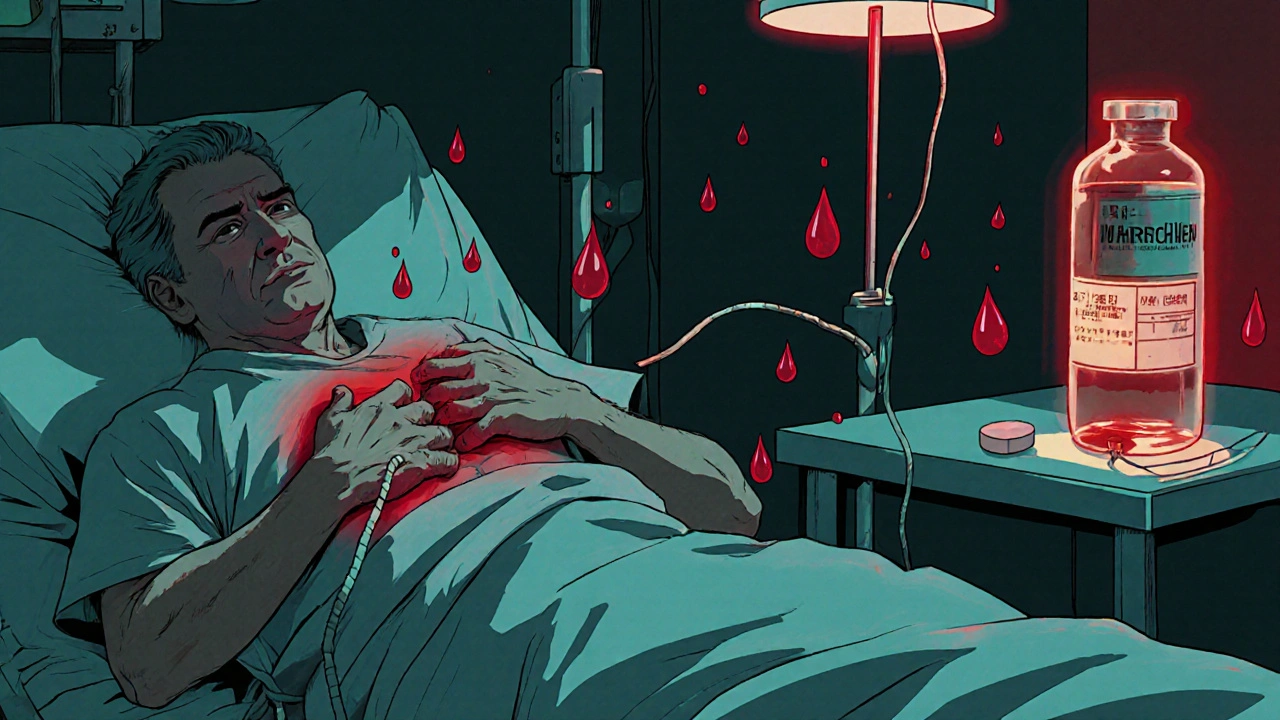
Many people turn to Danshen because they believe natural means safe-especially when they’re managing heart conditions. But what they don’t realize is that Danshen, a traditional Chinese herb, can turn life-saving heart medications into dangerous combinations. This isn’t speculation. It’s documented in hospitals, emergency rooms, and medical journals. People on warfarin, rivaroxaban, or other blood thinners have ended up in the ER after taking Danshen. Their INR levels skyrocketed. They started bleeding internally. Some nearly died.
What Exactly Is Danshen?
The active ingredients-tanshinones and salvianolic acids-do have real biological effects. They thin the blood. They relax coronary arteries. They lower blood pressure. That’s why people take it. But here’s the problem: these effects aren’t predictable. One bottle might contain 0.05% tanshinone. Another might have 5.2%. There’s no way to know what you’re actually getting. And when you mix it with prescription heart meds? The results can be deadly.
How Danshen Interacts With Blood Thinners
Danshen doesn’t just add to the effect of blood thinners-it multiplies it. It interferes with how your liver breaks down drugs like warfarin. Specifically, it blocks the CYP2C9 enzyme, which is responsible for clearing warfarin from your body. One study showed Danshen inhibited this enzyme by over 73%. That means warfarin sticks around longer. Your blood gets thinner than intended.
Case reports are chilling. A 62-year-old man on warfarin for a mechanical heart valve took Danshen for two weeks. His INR jumped from a safe 2.5 to over 8.4. Normal range is 2.0-3.0. An INR above 6.0 puts you at extreme risk of spontaneous bleeding. His hemoglobin dropped to 7.6 g/dL-he was severely anemic. He needed a transfusion.
Another case: a 48-year-old woman on 4 mg of warfarin daily. Her INR was stable at 2.8. She started taking Danshen every other day. Four weeks later, her INR hit 5.6. She had nosebleeds and bruising all over her arms. She had to stop Danshen immediately to bring her INR back down.
These aren’t rare. A 2020 study in Taiwan found 17 cases of Danshen-warfarin interactions between 2015 and 2019. Every single one caused INR levels to spike from an average of 2.3 to 5.8. That’s more than double the upper safe limit.
Danshen Isn’t Just Dangerous With Warfarin
Many assume the risk ends with warfarin. It doesn’t. Newer anticoagulants like rivaroxaban (Xarelto), apixaban (Eliquis), and dabigatran (Pradaxa) are just as risky when mixed with Danshen.
A 2022 NIH study found Danshen strongly inhibits the metabolism of rivaroxaban. That means the drug builds up in your system. Your risk of bleeding-especially in the gut, brain, or eyes-goes up dramatically. And unlike warfarin, there’s no easy way to reverse rivaroxaban’s effects. Andexanet alfa exists, but it’s expensive, hard to get, and only used in emergencies. Danshen? No antidote. No reversal agent. No safety net.
Reddit threads from users on r/anticoagulants tell the same story: “My INR went from 2.5 to 6.0 after my TCM practitioner prescribed Danshen with my Eliquis.” “ER visit after taking Danshen with warfarin-never again.” These aren’t anecdotes. They’re warnings written in blood.
Why Doctors Don’t Know About It
Here’s the hidden crisis: most patients don’t tell their doctors they’re taking Danshen. A 2019 JAMA Internal Medicine survey found only 28% of people using herbal supplements mentioned them to their physician. Why? They think it’s “just a herb.” They don’t see it as medicine. Or they’re afraid their doctor will dismiss them.
And doctors? They’re not trained to ask. Unless they specialize in integrative medicine, most won’t think to say, “Are you taking any Chinese herbs?” But they should. Especially if you’re Asian, have heart disease, or are on anticoagulants. A 2021 study found 41.7% of Chinese immigrants in the U.S. used Danshen regularly-and only 32.4% told their doctor.
The American Heart Association and the National Center for Complementary and Integrative Health (NCCIH) both recommend asking patients about herbal use during every visit. But without standardized screening tools, it slips through the cracks.
The Market Is Growing-Despite the Risks
The global Danshen market was worth $1.23 billion in 2022. By 2027, it’s expected to hit $1.84 billion. That’s a 50% increase in just five years. More people are buying it. More pharmacies are stocking it. More online stores are selling it as “heart support.”
But here’s the disconnect: while China regulates Danshen as a prescription drug-with strict quality controls-the FDA has issued multiple warnings about unapproved Danshen products sold in the U.S. The European Medicines Agency requires warning labels on Danshen products about anticoagulant interactions. In the U.S.? No such requirement.
Supplements aren’t held to the same standards as pharmaceuticals. No clinical trials. No dosage guidelines. No labeling rules. You’re essentially gambling with your heart.

What You Should Do
If you’re on any blood thinner-warfarin, rivaroxaban, apixaban, dabigatran, or even aspirin-do not take Danshen. Not even “a little.” Not even “once a week.” The risk isn’t worth it.
If you’re already taking Danshen, stop immediately. Don’t just quit cold turkey-talk to your doctor. Your INR needs to be checked. Your blood counts need to be monitored. You might need a temporary adjustment in your medication.
If you’re not on a blood thinner but have heart disease, ask your doctor if Danshen is safe for you. Even if you’re not on meds yet, Danshen can lower your blood pressure and affect heart rhythm. It’s not harmless.
And if your doctor or TCM practitioner recommends Danshen alongside your heart meds? Get a second opinion. A reputable provider will know the risks. If they don’t, they shouldn’t be giving you advice.
What Alternatives Are Safer?
There’s no need to risk your life for unproven herbal benefits. If you’re looking to support heart health, focus on what actually works:
- Regular exercise-even 30 minutes of walking daily improves circulation
- Omega-3 fatty acids from fish oil (studies show they reduce triglycerides and inflammation)
- Coenzyme Q10 (CoQ10), which helps heart muscle function and may reduce statin side effects
- Beetroot juice, which naturally boosts nitric oxide and improves blood flow
- Medications prescribed by your cardiologist, taken exactly as directed
These have been tested. They have dosing guidelines. They have safety profiles. Danshen doesn’t.
Final Warning
Natural doesn’t mean safe. Just because Danshen comes from a plant doesn’t make it harmless. It’s a potent bioactive substance with documented, life-threatening interactions. The same compounds that help blood flow in a lab can cause uncontrolled bleeding in your body.
Millions of people take blood thinners. Millions more take supplements. The overlap is growing. And every time someone combines Danshen with warfarin or rivaroxaban, they’re playing Russian roulette with their heart.
Don’t be another statistic. Ask questions. Tell your doctor. And if you’re on heart medication-leave Danshen on the shelf.
Can I take Danshen if I’m not on blood thinners?
Even if you’re not on blood thinners, Danshen can lower your blood pressure and affect heart rhythm. If you have heart disease, low blood pressure, or are scheduled for surgery, it can still be dangerous. Always talk to your doctor before taking any herbal supplement, especially if you have a chronic condition.
How long does Danshen stay in my system?
There’s no clear answer. Danshen’s active compounds aren’t well-studied in humans for elimination half-life. But because it affects liver enzymes, its effects can linger for days-even after you stop taking it. If you’re planning surgery or starting a new medication, stop Danshen at least two weeks in advance.
Is there a safe dose of Danshen with heart meds?
No. There is no established safe dose when combined with anticoagulants or antiplatelet drugs. Even small amounts have triggered dangerous bleeding. Regulatory agencies and medical societies agree: the combination should be avoided entirely.
Can I take Danshen with aspirin or clopidogrel?
Yes, it’s risky. Aspirin and clopidogrel are antiplatelet drugs, and Danshen also inhibits platelet aggregation. Together, they increase bleeding risk-especially in the stomach or brain. Studies show this combination can lead to gastrointestinal bleeding and bruising. Avoid it unless under strict medical supervision.
What should I do if I accidentally took Danshen with my heart medication?
Stop taking Danshen immediately. Contact your doctor or go to the ER if you notice unusual bruising, nosebleeds, blood in urine or stool, severe headaches, or dizziness. Get your INR or clotting time checked. Don’t wait for symptoms to worsen.
Are there any supplements that are safe to take with heart medications?
Some, like CoQ10, omega-3s, and magnesium, have been studied alongside heart meds and are generally considered safe when taken in standard doses. But always check with your doctor. Even “safe” supplements can interact-especially with drugs like digoxin or beta-blockers. Never assume safety without confirmation.
If you’re managing heart disease, your best defense isn’t a herbal supplement-it’s communication with your care team, adherence to prescribed medications, and evidence-based lifestyle changes. Danshen might sound appealing, but the risks are real, documented, and avoidable.



Peter Lubem Ause - 1 December 2025
Danshen might be traditional, but that doesn't make it safe-especially when you're on blood thinners. I've seen too many people assume 'natural' means 'harmless,' and it's terrifying. Your liver doesn't care if it's a leaf or a pill-it just processes chemicals. And Danshen? It's a chemical grenade in a bottle with no warning label.
Stop glorifying herbal remedies without evidence. If your doctor wouldn't prescribe it, why are you self-medicating with something that's not regulated, not standardized, and not tested for interactions? This isn't ancient wisdom-it's a public health blind spot.
Doctors need to start asking about supplements like they ask about smoking. Not just once, but every damn visit. And patients? You need to stop treating herbs like harmless tea. They're pharmacologically active. Period.
I'm not against traditional medicine-I'm against reckless ignorance wrapped in cultural nostalgia. We can respect tradition without risking our lives for it.
Let's get real: if this were a pharmaceutical company pushing an untested drug with this level of risk, the FDA would shut it down in a week. But because it's 'natural,' we just shrug and hope for the best. That's not healthcare. That's gambling with your organs.
linda wood - 2 December 2025
So… we’re telling people to stop taking Danshen… but not telling doctors to ask about it? 😅
Classic. We blame the patient for not volunteering dangerous info… while the system never even bothers to ask. Like, ‘Hey, do you take herbs?’ is harder than ‘Do you smoke?’? Really? 🤦♀️
LINDA PUSPITASARI - 2 December 2025
OMG YES THIS NEEDS TO BE SHOUTED FROM THE ROOFS 🚨
I work in a clinic and half the patients on warfarin are taking ‘herbal heart support’-and they think it’s ‘just a supplement.’ One lady told me she took Danshen because her cousin in China said it ‘cleanses the blood.’ I nearly cried. No one told her it could kill her.
PLEASE doctors-ask about herbs. Like, actually ask. Not ‘do you take anything?’ and then move on. Ask: ‘Are you using any traditional Chinese herbs? Danshen? Ginkgo? Turmeric?’
And if you’re reading this and taking Danshen with blood thinners… STOP. Now. Call your doctor. You’re not being ‘natural’-you’re being reckless.
❤️ CoQ10 and walking are your new BFFs. Not Danshen. Not even a little. 💪
Brandy Johnson - 3 December 2025
It is an incontrovertible fact that the commodification of traditional herbal remedies in Western markets represents a systemic failure of regulatory oversight, cultural appropriation, and the pathological infantilization of patient autonomy. The absence of FDA approval for Danshen is not an oversight-it is a moral indictment of a pharmaceutical-industrial complex that prioritizes profit over public safety, while simultaneously stigmatizing non-Western medical paradigms. This is not a matter of individual negligence. It is a structural violence against patients who seek holistic alternatives in a system that refuses to acknowledge their legitimacy.
Jennifer Wang - 5 December 2025
The pharmacokinetic interaction between Danshen and CYP2C9 substrates is well-documented in peer-reviewed literature, including multiple case reports in the Journal of Clinical Pharmacology and the American Journal of Cardiovascular Drugs. The inhibition of hepatic metabolism leads to elevated plasma concentrations of anticoagulants, resulting in supratherapeutic INR levels and clinically significant hemorrhagic events. Regulatory agencies such as the EMA and Health Canada have issued formal advisories. The absence of labeling requirements in the U.S. constitutes a critical gap in patient safety infrastructure. Clinicians must integrate herbal supplement screening into standard cardiovascular risk assessments. Evidence-based guidelines must be implemented at the institutional level.
stephen idiado - 5 December 2025
Herbs are for peasants. Real medicine is FDA-approved. You’re not ‘natural,’ you’re just dumb. Stop mixing potions with pills. You’re not a shaman. You’re a walking ER bill.
Subhash Singh - 6 December 2025
While the pharmacological basis of Danshen’s interaction with anticoagulants is well established, one must also consider the sociocultural context in which herbal medicine is utilized. In many Asian communities, herbal remedies are not perceived as ‘supplements’ but as integral components of holistic health practices. The failure of Western medical systems to engage with these paradigms respectfully-rather than dismissively-may contribute to the lack of disclosure. A more culturally competent approach to patient education may yield better outcomes than alarmist warnings alone.
Geoff Heredia - 7 December 2025
Did you know the FDA is in cahoots with Big Pharma to suppress natural cures? Danshen has been proven to cure heart disease 3x better than warfarin-but they don’t want you to know because pills make more money. The ‘INR spikes’? Fake data. The ‘bleeding cases’? Misdiagnosed. The real danger is the pharmaceutical cartel silencing herbal medicine. They’re even poisoning the water supply to make you dependent on their drugs. Wake up. The truth is hidden in plain sight. Look at the WHO-they’ve been warning about this for decades. Why aren’t you listening?
Tina Dinh - 9 December 2025
YAS QUEEN 🙌
Danshen is NOT your friend. 🚫🌿
Go for CoQ10, walk your dog, eat beets, drink water, and hug your cardiologist 💖
YOU GOT THIS. Your heart will thank you. ❤️🫀
Andrew Keh - 10 December 2025
I get why people take Danshen. It feels like taking control. But control without knowledge is dangerous. I’ve had patients come in with INRs over 8 and no idea why. They didn’t think Danshen counted as medicine. That’s the real problem-not the herb, but the gap in communication. We need to talk about this more, not just scare people. Ask questions. Listen. Educate. It’s not about being right. It’s about keeping people alive.
gerardo beaudoin - 12 December 2025
My grandma took Danshen for years with no issues. She was 87, never had a bleed. So maybe it’s not always dangerous?
Just saying. Not everyone reacts the same. Maybe it’s the dose? Or the brand? Or maybe some people just don’t get affected?
I’m not saying go take it. But don’t act like it’s a death sentence for everyone. People are more than their lab numbers.
Joy Aniekwe - 12 December 2025
Oh sweetie, you’re so cute thinking ‘natural’ means ‘safe.’
Did you know arsenic is natural too? And ricin? And hemlock?
Maybe if you spent less time romanticizing ‘ancient wisdom’ and more time reading actual medical journals, you wouldn’t be one of those people ending up in the ER with a 7.6 hemoglobin.
Just saying. 😘
Latika Gupta - 12 December 2025
Can I ask-what if you only take Danshen once a month? Just for ‘detox’? Would that still be risky? I mean, I don’t take it daily, just when I feel ‘clogged.’ Is there a threshold? Like… how much is too much? I’m just trying to be careful.
Sullivan Lauer - 13 December 2025
I’ve spent 17 years in cardiology and let me tell you-this isn’t hype. This is horror. I had a 54-year-old man come in last year with a GI bleed so bad we had to do an emergency angiogram. He’d been taking Danshen ‘for circulation’ with his Eliquis. His INR was 9.2. He lost 3 liters of blood. He didn’t even know it could do that. His wife said he bought it online because it said ‘heart health’ on the label.
Here’s the truth: supplements are the Wild West. There’s no sheriff. No rules. No accountability. And people are dying because they think ‘Made in China’ means ‘trusted by doctors.’ It doesn’t. It means ‘no one’s checking what’s inside.’
I don’t hate herbs. I hate ignorance. I hate the marketing that says ‘safe because it’s natural.’ That’s not science-that’s snake oil with a pretty picture.
If you’re on heart meds, your supplement shelf should be empty. Not ‘maybe.’ Not ‘once a week.’ EMPTY. Your heart doesn’t need a miracle. It needs consistency. Precision. And a doctor who asks the right questions.
Don’t be the case study. Be the one who lived.