

Hyperthyroidism isn’t just about feeling jittery or losing weight too fast. When your thyroid pumps out too much hormone, your whole body speeds up-heart racing, hands shaking, sweat pouring even in cool rooms. It’s not laziness or stress. It’s a real, measurable imbalance in your endocrine system. And while fixing the root cause takes weeks or months, there’s a fast-acting tool that brings immediate relief: beta-blockers.
What’s Actually Happening in Your Body?
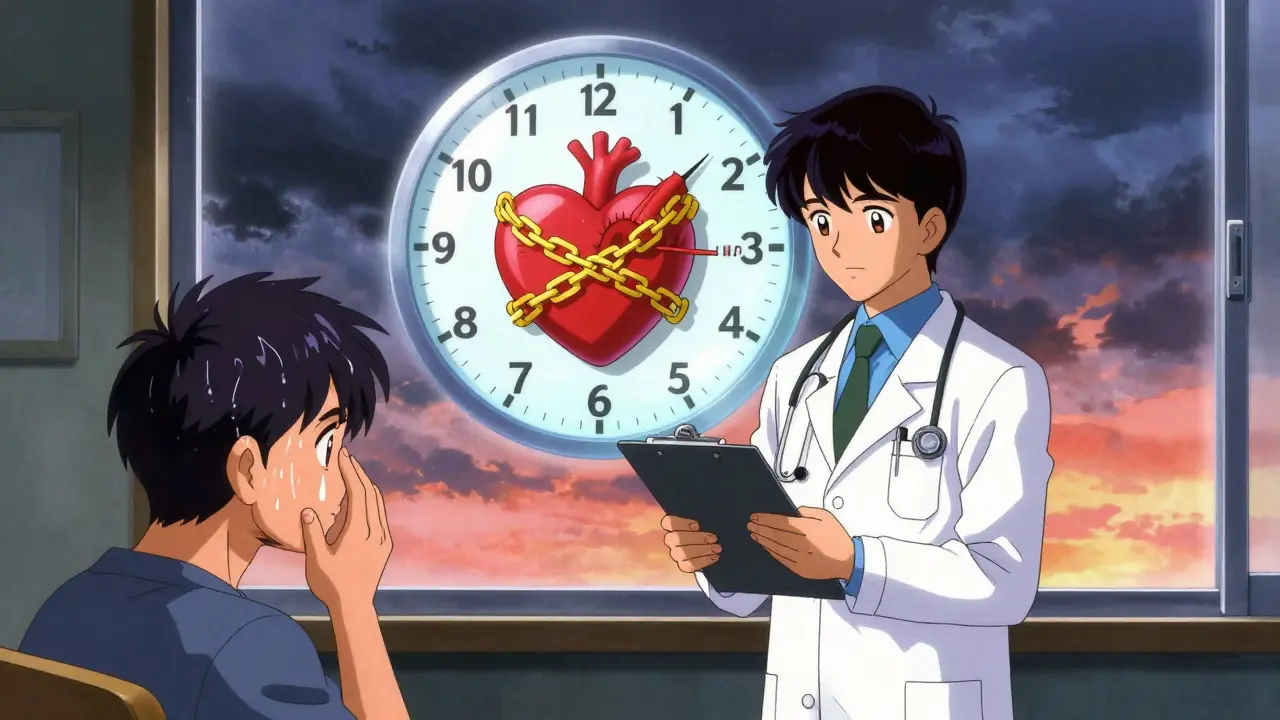
Your thyroid gland sits at the base of your neck and makes two key hormones: T3 and T4. These control how fast your cells burn energy. Too much? Everything runs too hot. Your heart beats faster, your muscles twitch, you can’t sleep, you feel anxious even when nothing’s wrong. That’s thyrotoxicosis-the symptom cluster caused by excess thyroid hormone. About 1.2% of people in the U.S. have this condition, and women are far more likely to be affected than men. The most common cause? Graves’ disease-an autoimmune disorder where your immune system accidentally attacks your thyroid and tells it to overproduce. Other causes include nodules in the thyroid (toxic adenoma or multinodular goiter) that start spitting out hormones on their own. The problem? Treatments that fix the root issue-like antithyroid drugs (methimazole or propylthiouracil), radioactive iodine, or surgery-don’t work overnight. Methimazole can take 3 to 6 weeks just to start lowering hormone levels. But your symptoms? They’re screaming for help now.Why Beta-Blockers Are the First Line of Symptom Control
Beta-blockers don’t touch your thyroid. They don’t reduce hormone production. What they do is block the effects of adrenaline and other stress hormones on your body. Think of them as a circuit breaker for your overactive nervous system. If you’re feeling your heart pound in your chest, your hands trembling, or your mind racing with anxiety, beta-blockers calm that down. They slow your heart rate. Reduce shaking. Help you sleep. Cut the heat intolerance. They work within hours-not days. The American Thyroid Association recommends propranolol as the top choice. Why? Because it’s non-selective. It doesn’t just block heart receptors (beta-1), it also blocks lung receptors (beta-2), and at higher doses, it even helps reduce the conversion of T4 into the more active T3 hormone. That’s a double benefit. Dosing starts low: 10 to 20 mg every 6 hours. Most people feel better within a day. If symptoms persist, doctors may bump it up to 40 mg every 6 hours. In severe cases-like thyroid storm, a life-threatening emergency-patients get esmolol through an IV in the ICU, at 50 to 100 micrograms per kilogram per minute. That’s fast, precise, and life-saving. Other beta-blockers like nadolol (once daily) or atenolol are also used, especially if someone has asthma and needs a less lung-acting option. But propranolol remains the gold standard for symptom control in hyperthyroidism.How Beta-Blockers Compare to Other Treatments
It’s easy to confuse beta-blockers with antithyroid drugs. They’re not the same thing.- Methimazole (MMI): Stops your thyroid from making hormones. Takes 3-6 weeks to work. First-line for Graves’ disease. Usually taken daily for 12-18 months.
- Propylthiouracil (PTU): Similar to MMI, but used mainly in early pregnancy or thyroid storm due to lower placental transfer.
- Beta-blockers: No effect on hormone levels. Only blocks symptoms. Works in hours. Stopped once thyroid levels normalize.
Who Should Avoid Beta-Blockers?
They’re safe for most people-but not everyone.- Asthma or COPD: Beta-blockers can tighten airways. Propranolol is especially risky here. Aténolol or calcium channel blockers are safer.
- Heart block: If your heart’s electrical system is damaged (second- or third-degree heart block), beta-blockers can make it worse.
- Severe heart failure: If your heart is already struggling, slowing it further can be dangerous.
- Diabetes: Beta-blockers can mask low blood sugar symptoms like rapid heartbeat. You still get sweating and shaking, but the warning sign of a fast pulse is gone.
How Long Do You Stay on Beta-Blockers?
This is a common question. You don’t take them forever. The goal is to get your thyroid hormone levels back to normal with antithyroid drugs, radioactive iodine, or surgery. Once you’re euthyroid (normal thyroid levels), beta-blockers can be slowly tapered off. That usually happens within 4 to 8 weeks after starting antithyroid treatment. But if you’re waiting for radioactive iodine to work, you might stay on them for 3 to 6 months. Some patients need them longer if their thyroid is slow to respond. But the rule is clear: beta-blockers are never a long-term fix on their own. They’re a bridge-not the destination.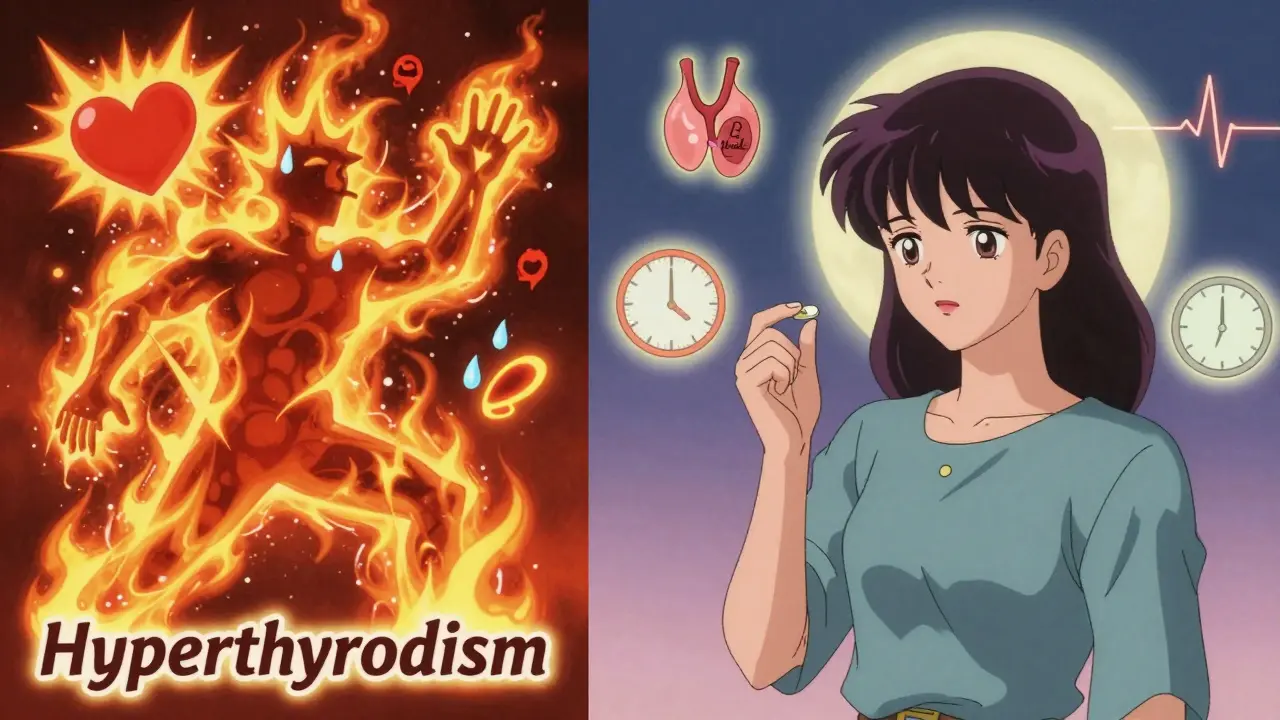
What to Expect When Starting Them
Most people feel better fast. But there are side effects to watch for:- Feeling tired or dizzy (especially at first)
- Cold hands or feet
- Upset stomach
- Sleep changes (some report vivid dreams)
Real-World Impact
A 2021 study found that patients who started beta-blockers within 24 hours of diagnosis had 37% fewer emergency visits for thyrotoxic symptoms. That’s huge. It means fewer hospitalizations, less panic, faster recovery. Endocrinologists use beta-blockers in nearly every case of moderate to severe hyperthyroidism. The 2019 American Association of Clinical Endocrinologists survey showed 98% of specialists prescribe them routinely. And the cost? Propranolol is cheap-often under $10 a month. Esmolol, used in hospitals, is more expensive, but only given for short bursts.What’s Changing in 2026?
No major guideline changes are expected until the next American Thyroid Association update later this year. But research is looking at more selective beta-blockers that target the heart without affecting the lungs. So far, nothing has replaced propranolol’s broad effectiveness. The key takeaway? Beta-blockers are not a cure. But they’re the most reliable way to take back control of your body while you wait for the real treatment to work. They turn a terrifying, exhausting experience into something manageable-fast.Can beta-blockers cure hyperthyroidism?
No. Beta-blockers only manage symptoms like rapid heartbeat, shaking, and anxiety. They don’t reduce thyroid hormone production. To cure hyperthyroidism, you need treatments that target the root cause-like antithyroid drugs, radioactive iodine, or surgery.
How quickly do beta-blockers work for hyperthyroidism?
Symptom relief often starts within a few hours. Heart rate drops noticeably within 1 to 2 hours after taking propranolol. Tremors and anxiety improve over the next 6 to 12 hours. This is much faster than antithyroid drugs, which take weeks to affect hormone levels.
Is propranolol better than other beta-blockers for hyperthyroidism?
Yes, for most people. Propranolol is non-selective and also helps reduce the conversion of T4 to T3, the more active thyroid hormone. Other beta-blockers like atenolol or nadolol are used if you have asthma or need once-daily dosing, but propranolol remains the most effective overall for symptom control.
Can I take beta-blockers if I have asthma?
Generally, no-especially not propranolol. It can trigger bronchospasm. But atenolol or calcium channel blockers like verapamil are safer alternatives for heart rate control in people with asthma or COPD. Always talk to your doctor before starting any new medication.
How long should I stay on beta-blockers?
You take them only until your thyroid hormone levels return to normal, usually 4 to 8 weeks after starting antithyroid drugs. If you’re getting radioactive iodine, you may need them for 3 to 6 months. Never stop abruptly-your doctor will guide you on how to taper off safely.
Do beta-blockers cause weight gain?
Some people gain a little weight after starting beta-blockers, but it’s usually not due to the drug itself. It’s because your metabolism slows down as your thyroid levels normalize. Before treatment, you were burning calories rapidly. Once that stops, your body adjusts. Weight gain isn’t common if you maintain normal eating and activity levels.




Henry Ip - 16 January 2026
Been on propranolol for 3 months now after my Graves diagnosis. First day I actually slept through the night. No more 3am heart palpitations. Still taking methimazole but this stuff is what kept me from calling 911 every other day.
Cheryl Griffith - 16 January 2026
I remember the first time I took it-I was pacing the kitchen, shaking so bad I couldn’t hold my coffee. Took the pill, sat down, and just… stopped. Like someone turned down the volume on my entire nervous system. It didn’t fix me, but it gave me back my body long enough to heal.
Bobbi-Marie Nova - 17 January 2026
So beta-blockers are basically the chill pill for your overactive thyroid? Like, you’re basically saying ‘Hey body, chill the f*ck out’ and it listens? I love that. Also propranolol is cheaper than my Netflix subscription. Win-win.
Rob Deneke - 19 January 2026
Propranolol saved my life. No drama. No fluff. Just stopped the racing and the shakes. Took me 6 months to get my TSH normal but this got me through the hell week
evelyn wellding - 19 January 2026
OMG YES!! I was so scared to start meds but propranolol was like a warm blanket for my nerves 😊 I went from ‘I can’t leave the house’ to ‘I’m going to the grocery store’ in 48 hours. Thank you for writing this!!
Chelsea Harton - 21 January 2026
beta blockers dont cure but they buy time. time is all we got. the body fixes itself if you dont break it
Corey Chrisinger - 21 January 2026
It’s wild how a drug that blocks adrenaline can feel like reclaiming your soul. We’re not just treating a gland-we’re calming a storm inside. The thyroid doesn’t care about your deadlines. But propranolol? It shows up anyway.
Bianca Leonhardt - 23 January 2026
Why are people still surprised beta-blockers work? It’s basic pharmacology. If you don’t know this by now, maybe you shouldn’t be reading medical posts. Also, anyone who takes them for ‘anxiety’ without a diagnosis is just self-medicating. Pathetic.
Travis Craw - 25 January 2026
i read this whole thing and it actually helped me understand why my mom’s shaking stopped after she started her meds. she never explained it well. thanks for writing this. i’ll tell her you said propranolol is the gold standard. she’ll like that.
Christina Bilotti - 26 January 2026
Of course propranolol is the gold standard-only a layperson would think atenolol is ‘good enough’. Honestly, if you’re not taking non-selective beta-blockers for thyrotoxicosis, you’re doing it wrong. Also, why are you still reading this if you don’t know the difference between T3 and T4? Just saying.
brooke wright - 26 January 2026
Wait so if I’m on beta-blockers and I get dizzy… is that the drug or is my thyroid still out of control? I’ve been on it 2 weeks and I still feel like I’m underwater. Am I doing it wrong?