
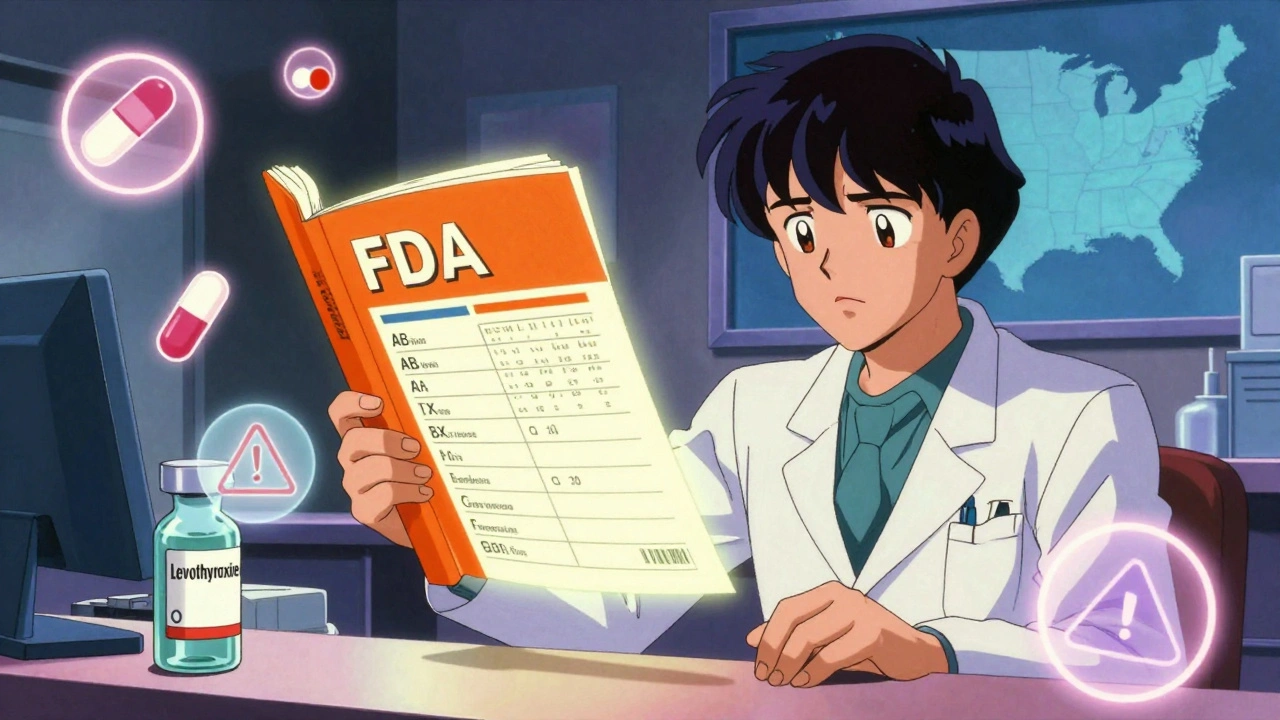
Pharmacists don’t just fill prescriptions-they make critical decisions every day that affect patient safety. One of the most high-stakes areas? Generics. With 90% of prescriptions filled with generic drugs in the U.S., and new ones hitting the market every week, staying current isn’t optional-it’s essential. Yet, many pharmacists still struggle with therapeutic equivalence ratings, state substitution laws, and biosimilar rules that change faster than their CE credits can keep up.
Why Generics Education Isn’t Just Another Box to Check
It’s easy to think of continuing education as something you do to renew your license. But when a pharmacist misreads an Orange Book rating and substitutes a non-interchangeable generic for levothyroxine, the consequences aren’t theoretical. A 2021 ACPE report found that 42.7% of pharmacy malpractice claims involved errors tied to generic substitution. That’s not a small number. That’s nearly half of all legal issues linked to medication errors.
Generics aren’t just cheaper versions of brand-name drugs. They’re complex products with strict FDA requirements. To get approved, a generic must match the brand in identity, strength, purity, and quality. But more than that-it must be bioequivalent. That means its absorption rate in the body must fall within 80-125% of the original. Sounds simple? It’s not. Two generics can both meet that range but still behave differently in patients with narrow therapeutic indices-like warfarin, digoxin, or phenytoin. One wrong substitution can mean hospitalization.
What the Law Actually Requires
All 50 states require pharmacists to complete continuing education to renew their licenses. But the rules vary wildly. Illinois demands 30 hours every two years, including mandatory training on sexual harassment, implicit bias, and-starting January 2025-cultural competency. California requires you to keep proof of completion for two years. New York wants you to submit certificates with your renewal. Texas has its own rules for narrow therapeutic index drugs. And if you hold licenses in multiple states? You’re juggling different deadlines, different topics, and different credit systems.
On the federal side, ACPE sets the standard for accreditation. Only CE courses approved by ACPE or your state board count toward renewal. ACPE breaks CPE into three types: knowledge-based (lectures), application-based (case studies), and certificate programs (hands-on). Here’s the kicker: pharmacists who take application-based courses report 4.7 out of 5 satisfaction ratings. Those who stick to passive lectures? Only 3.2. Why? Because learning by doing works. Reading about therapeutic equivalence isn’t enough-you need to walk through real cases.
The FDA Orange Book: Your Daily Reference Guide
If you don’t know the FDA Orange Book, you’re flying blind. It’s the official list of all approved drug products with therapeutic equivalence evaluations. It’s updated monthly. In 2023 alone, the FDA approved 983 new generic applications-a 17% jump from the year before. That’s over 80 new generics every month.
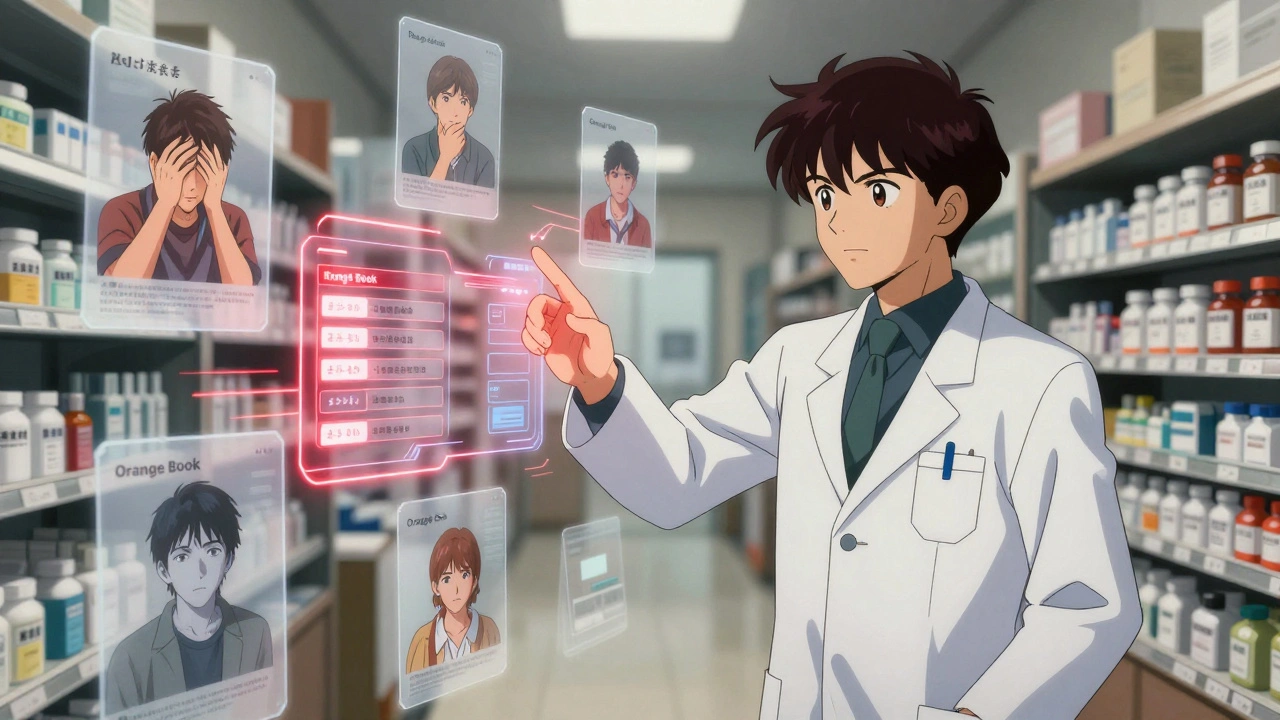
Each drug in the Orange Book gets a rating: AB, BX, or others. AB means interchangeable. BX means not interchangeable. But here’s where it gets messy: some AB-rated drugs are only interchangeable under certain conditions. For example, a generic insulin might be rated AB, but if it’s a biosimilar, you need extra training to know if it’s interchangeable with the reference product. And biosimilars? They’re not even fully covered in most CE courses yet. A 2023 ASHP survey found 78% of hospital pharmacists felt underprepared on biosimilar interchangeability.
Dr. John Smith from the University of Illinois College of Pharmacy puts it bluntly: “You have to track over 1,200 therapeutic equivalence ratings. And they change. Every. Month.”
State Laws Are a Minefield
Even if a generic is rated AB in the Orange Book, your state might still block substitution. Eighteen states require specific training on opioid alternatives-including generic versions. Twelve states mandate biosimilar education. Seven have special rules for narrow therapeutic index drugs. And the CREATES Act? It’s not something you read about in a textbook. It’s a federal law designed to stop brand-name companies from blocking generic manufacturers from buying samples needed for testing. But it’s also reshaping how generics enter the market-and how pharmacists should think about supply chain reliability.
Pharmacists in states like Texas and Florida report confusion over whether they can substitute a generic for a brand even when the prescriber writes “dispense as written.” Some states honor that. Others don’t. And if you get it wrong, you’re liable. No one’s going to say, “Oh, you didn’t know.”
What Works: Real Learning, Not Just Clicking Through
Not all CE is created equal. The best courses don’t just tell you what the law says-they make you use it. Pharmacist’s Letter offers free, ACPE-accredited modules on therapeutic equivalence and ethics. PocketPrep, a rising platform, uses AI to personalize learning based on your gaps. One pharmacist on Reddit shared how a single module helped her catch a dangerous substitution error with levothyroxine last month. That’s the kind of impact real training makes.
Studies show pharmacists who complete at least five hours of generics-specific CE each year make 37% fewer substitution errors. But here’s the problem: most pharmacists spend only 5.2 hours a year on generics topics. The rest? General topics like diabetes management or immunizations. Important? Yes. But not as urgent as getting generics right.
What’s Changing in 2025 and Beyond
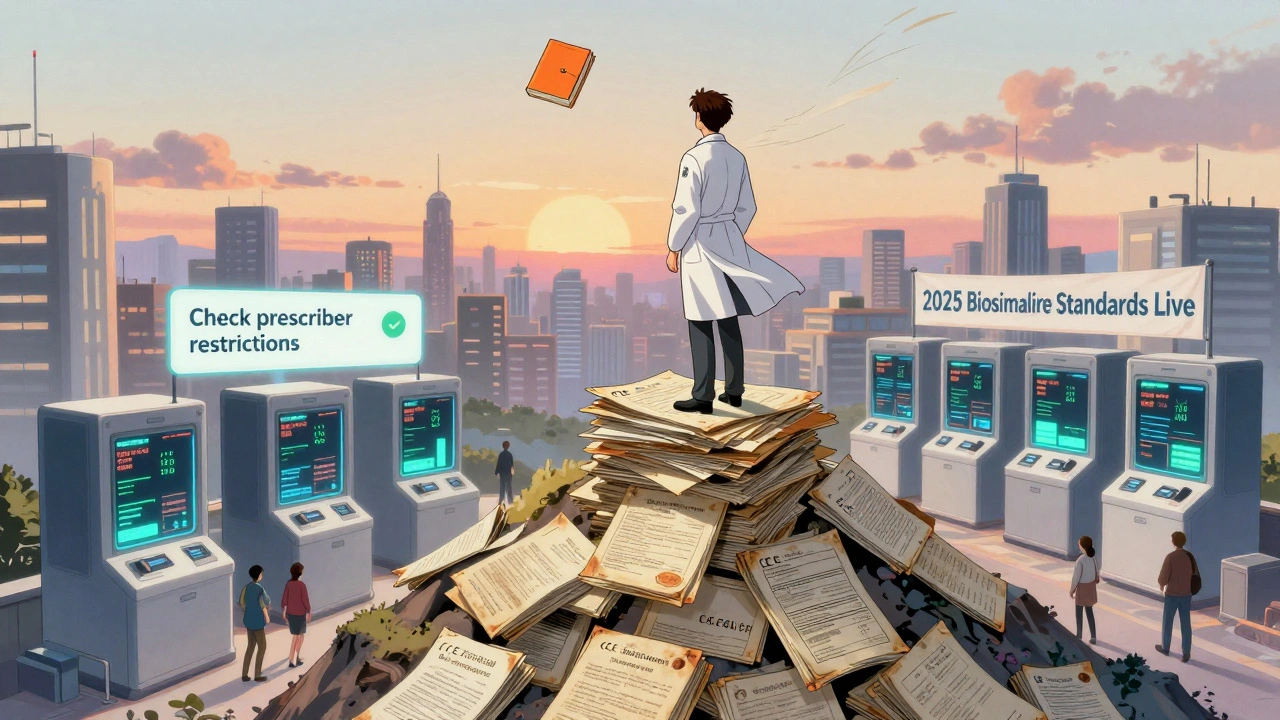
ACPE announced new standards in January 2024: all generics-related CE must now include content on biosimilar interchangeability and FDA REMS programs. That goes live January 1, 2025. If your CE provider hasn’t updated their modules yet, you’re at risk of falling out of compliance.
Meanwhile, the NABP is pushing for 80% alignment across state requirements by 2025. That’s good news-eventually. But for now, you still need to know your state’s rules. And CVS Health is testing something new: just-in-time learning tools built into their dispensing systems. When a pharmacist selects a generic, the system pops up a quick reminder: “This is AB-rated, but check if the prescriber restricted substitution.” Early results? A 28% drop in errors.
By 2027, AI-driven CE platforms could make up 35% of the market. These systems don’t just quiz you-they analyze your practice patterns, flag gaps, and push targeted modules before you even realize you need them.
How to Stay Ahead-Without Getting Overwhelmed
You don’t need to memorize the entire Orange Book. But you do need a system:
- Choose one reliable CE source that’s ACPE-accredited and focuses on generics-like Pharmacist’s Letter or PocketPrep.
- Set a calendar reminder: every quarter, review the latest Orange Book updates. Bookmark the FDA’s generics page.
- Track your state’s specific CE requirements. Don’t assume they’re the same as your neighbor’s.
- Prioritize application-based courses. Case studies beat lectures every time.
- Join a peer group. Talk to other pharmacists about recent substitution dilemmas. Real stories beat textbooks.
If you’re new to the field, aim for 6 hours a year on generics. If you’ve been practicing over a decade? 10 hours. The complexity doesn’t go away-it grows.
Final Thought: Your License Isn’t the Only Thing at Stake
Continuing education isn’t about checking a box. It’s about protecting patients. A single error in generic substitution can lead to seizures, organ rejection, or worse. You’re not just a dispenser-you’re the last line of defense. And the rules? They’re changing faster than ever.
So don’t wait until your license renewal is due. Start now. Pick one module. Review one Orange Book entry. Talk to a colleague. Small steps, done consistently, keep you sharp. And in pharmacy, sharp means safe.
Do all states require the same continuing education for generics?
No. While all 50 states require continuing education for license renewal, the specific hours, topics, and documentation rules vary. For example, Illinois requires 30 hours every two years, including mandatory training on sexual harassment and cultural competency. Texas has unique rules for narrow therapeutic index drugs, and New York requires you to submit CE certificates with your renewal application. Always check your state board’s official website for current requirements.
What’s the difference between AB and BX ratings in the FDA Orange Book?
AB-rated drugs are considered therapeutically equivalent to the brand-name drug and can be substituted unless the prescriber specifies otherwise. BX-rated drugs are not considered interchangeable-either because they lack sufficient bioequivalence data or because they’re complex products like inhalers or topical formulations. Pharmacists must never substitute a BX-rated generic without explicit prescriber approval.
Are biosimilars the same as generic drugs?
No. Biosimilars are highly similar to biologic drugs (like insulin or rheumatoid arthritis treatments), not traditional small-molecule generics. They’re more complex to manufacture and require additional testing to prove similarity. While some biosimilars are labeled as “interchangeable,” others are not. Pharmacists need specific training to understand substitution rules for biosimilars, which differ from standard generic substitution rules.
Can I use free CE courses to meet my license requirements?
Yes-if they’re accredited by ACPE or your state board. Pharmacist’s Letter, for example, offers free, ACPE-accredited modules on generics, therapeutic equivalence, and pharmacy law. Always verify the accreditation status before completing a course. Unaccredited courses won’t count toward your renewal, no matter how helpful they seem.
How often is the FDA Orange Book updated?
The FDA updates the Orange Book monthly. New generic approvals, therapeutic equivalence ratings, and patent information are added regularly. Pharmacists should check the FDA’s website at least once a month to stay current, especially if they handle high-risk medications like anticoagulants, seizure drugs, or thyroid medications.
What’s the CREATES Act, and why does it matter to pharmacists?
The CREATES Act (Creating and Restoring Equal Access To Equivalent Samples) prevents brand-name drug manufacturers from blocking generic companies from obtaining samples needed to prove bioequivalence. This law speeds up generic approval and increases competition. For pharmacists, it means more generic options may become available faster-but it also means you need to stay updated on new products and their therapeutic equivalence ratings as they enter the market.
Do I need to submit my CE certificates to my state board?
It depends on your state. Illinois does not require submission unless you’re audited. California requires you to keep records for two years. New York requires you to submit certificates with your renewal application. Always confirm your state’s policy. Even if you don’t have to submit, keep digital copies of all completed CE certificates for at least two years.
How can I find ACPE-accredited generics courses?
Visit the ACPE website’s provider directory or use trusted platforms like Pharmacist’s Letter, PocketPrep, or Wolters Kluwer. Look for the ACPE accreditation number on the course page (it starts with 0000-). Avoid courses that don’t display this number. Only ACPE-accredited or state-approved courses count toward your license renewal.

Libby Rees - 3 December 2025
Generics aren't just cheaper-they're complex. I've seen patients stabilized on one brand-generic switch to another and crash. It's not about cost, it's about consistency.
Martyn Stuart - 4 December 2025
Let me be clear: the Orange Book is not a suggestion-it’s the law. And yet, I’ve seen pharmacists ignore BX ratings because ‘it’s just a generic.’ That’s not just negligence-it’s reckless.
ACPE’s new standards are long overdue. Biosimilars? They’re not generics. They’re biologics with different rules. If your CE course still treats them like ibuprofen, you’re being misled.
And don’t get me started on state laws-Texas requires a signed protocol for NTI drugs, but Florida doesn’t. If you’re licensed in both, you’re playing Russian roulette with your license.
val kendra - 6 December 2025
Just did a PocketPrep module on levothyroxine substitutions last week. Caught a potential error before it happened. Seriously-5 minutes saved a patient from a thyroid storm.
Do the work. It’s not busywork. It’s lifesaving.
Karl Barrett - 8 December 2025
There’s a deeper epistemological crisis here. We’ve outsourced clinical judgment to regulatory databases, but the FDA doesn’t account for interpatient variability in CYP450 metabolism. The Orange Book gives us AB ratings-but it doesn’t tell us if Patient X has a slow metabolizer phenotype.
When we reduce therapeutic equivalence to binary codes, we’re not just simplifying pharmacology-we’re dehumanizing care.
AI-driven CE platforms? They’re not solutions. They’re bandages on a hemorrhage. We need pharmacists who think, not click.
Jake Deeds - 9 December 2025
Wow. Just… wow. I’ve been doing this for 18 years, and I’ve seen so many colleagues treat generics like candy. One guy even substituted a BX-rated generic for phenytoin because ‘it was cheaper.’
He got suspended. The patient had a seizure. The family sued. And now he’s selling supplements on Instagram.
People think this is about CE credits. It’s not. It’s about integrity. If you can’t get this right, you shouldn’t be behind the counter.
Isabelle Bujold - 11 December 2025
I’ve been in community pharmacy for over two decades, and I can tell you that the biggest barrier isn’t lack of knowledge-it’s time. We’re running from patient to patient, filling scripts, answering calls, dealing with insurance denials. When do we find 30 minutes to read an Orange Book update? Or take a case study module?
Yes, education matters. But if we’re not given the space to learn, we’re set up to fail. I’ve started printing out monthly Orange Book highlights and taping them to the counter. My techs read them while waiting for prescriptions. It’s not perfect-but it’s something.
And the CREATES Act? It’s a good start, but it doesn’t fix the fact that 60% of generic manufacturers still don’t provide samples to pharmacists for verification. We’re left guessing.
Alex Piddington - 12 December 2025
As a mentor to new grads, I emphasize this: never assume a generic is interchangeable just because it’s on the shelf. Always check the Orange Book. Always confirm state law. Always document your decision.
I had a student last month who questioned a substitution-turned out the prescriber had flagged it as ‘dispense as written’ in the EHR, but the system auto-populated the generic. She caught it. That’s the kind of critical thinking we need more of.
George Graham - 13 December 2025
I work in a rural clinic. Our biggest issue? Internet access. Some days, the Orange Book won’t load. So we keep a laminated cheat sheet on the counter: AB = safe to swap, BX = call prescriber.
It’s low-tech, but it works. And we review it every Monday with the whole team. No one’s perfect, but we’re consistent.
Also-free CE? Pharmacist’s Letter is gold. I’ve sent links to every tech and intern. If you’re reading this and you haven’t signed up, do it now.
Ashley Elliott - 14 December 2025
Just a quick note: if you’re using a CE provider that doesn’t show the ACPE number (0000-XXXXX), stop. It’s not worth the risk. I know someone who spent 8 hours on a ‘free’ course… and it didn’t count. Renewal denied. Cost her $400 in late fees.
Trust the system. Check the number. Save yourself the headache.
Joe Lam - 14 December 2025
Let’s be real-this whole generics thing is a scam. Big Pharma pushes these ‘equivalent’ drugs, then charges $200 for the brand. The FDA approves them, but they’re not the same. You think they test on real people? Nah. They test on rats.
And don’t get me started on biosimilars. They’re just rebranded generics with a fancy label. The whole system is rigged to keep prices high while pretending to be ‘safe.’
My advice? Only use brand-name drugs. If your insurance won’t cover it, go to a compounding pharmacy. They know what they’re doing.
Jenny Rogers - 15 December 2025
It is a moral imperative, not merely a professional obligation, to remain current on therapeutic equivalence determinations. To neglect this duty is to participate in the commodification of human health-a practice antithetical to the Hippocratic Oath.
One cannot, in good conscience, rely upon AI-driven platforms or abbreviated modules. True mastery requires immersion in primary literature, peer-reviewed pharmacokinetic studies, and direct consultation with the FDA’s Guidance for Industry documents.
Those who settle for ‘free CE’ are not pharmacists-they are technicians. And technicians, as we know, are easily replaced.
Rachel Bonaparte - 15 December 2025
Have you ever wondered why the Orange Book updates every month? It’s not because new generics are being approved-it’s because Big Pharma is manipulating the ratings to keep their drugs on top.
I’ve seen it happen. A generic gets an AB rating, then a month later, it’s BX. Why? Because the brand-name company paid for a ‘bioequivalence study’ that was never peer-reviewed. The FDA is compromised.
And don’t tell me about ‘ACPE accreditation.’ The same people who approve the CE courses are funded by pharma. It’s all a loop. You think you’re protecting patients? You’re just playing their game.
My solution? I only dispense what the prescriber writes. No substitutions. Ever. Even if it’s AB-rated. I’m not risking my soul for a $0.50 savings.
val kendra - 16 December 2025
^^^ This is why I love this community. Someone actually gets it. I did a 3-hour case study on biosimilars last week and nearly cried when I realized how much I didn’t know.
Don’t just take the course-talk about it. With your team. With your patients. With your kids. This stuff matters.